

Daily Dose of Jazz…
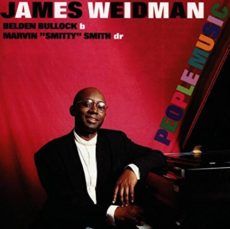
James Edward Weidman, Jr. was born in Youngstown, Ohio on July 23, 1953 to a saxophonist father who led his own band. He began playing piano when he was eight years old and eventually became the electric organist in his father’s group.
Attending Youngstown State University after graduating James spent two years playing locally before he moved to New York City in 1978. There he worked with Pepper Adams, Cecil Payne, Sonny Stitt and Bobby Watson, then became Abbey Lincoln’s pianist in 1982. This association continued into the early Nineties.
He went on to work with Steve Coleman, from 1987 to 1992 replacing Geri Allen in his Five Elements band, and with Jay Hoggard later in the 1980s. Throughout the 1990s he worked with Cassandra Wilson, Talib Kibwe, Kevin Mahogany, Belden Bullock, Max Roach, Woody Herman, Gloria Lynne, Archie Shepp, James Moody, Greg Osby, Slide Hampton, Dakota Staton and Marvin “Smitty” Smith.
Pianist and organist James Weidman who has released several albums as a leader in is a member of Joe Lovano’s Us Five band, continues to perform, tour and record.
Sponsored By

Voices From The Community

#preserving genius
Daily Dose Of Jazz…
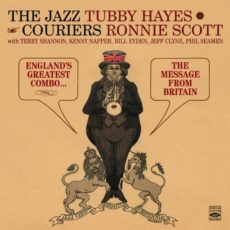
Kenneth Napper was born July 14, 1933 in London, England. He started out on learning to play the piano as a child, then picked up the bass as a student at Guildhall School of Music. Entering the British military in the early 1950s, he played and recorded with Mary Lou Williams in 1953 while on leave. After completing his term of duty, he went on to play with Jack Parnell, Malcolm Mitchell, Vic Ash, and Cab Calloway.
During the late Fifties and early 1960s Kenny was the house bassist at Ronnie Scott’s Jazz Club for several years and played with many British and American jazz musicians. These musicians include Alan Clare, Ronnie Scott, Stan Tracey, Tubby Hayes, Tony Kinsey, Tony Crombie, Jimmy Deuchar, John Dankworth, Pat Smythe, Phil Seamen, Zoot Sims, Carmen McRae, and Paul Gonsalves.
By the late Sixties he worked with Ted Heath, Tony Coe, John Picard and Barney Kessel, as well as with Gonsalves, Tracey, and Dankworth. In 1970 he played with Stephane Grappelli prior to a move to Germany where he played with Kurt Edelhagen from 1970 to 1972. While residing there, Napper focused more on composition and arrangement and then in the late Seventies he moved to the Netherlands.
Through the remainder of the decade and and the Eighties he put down his bass, arranged for radio ensembles, was the staff arranger and conductor for the 50 piece Metropole Orchestra, and then directed his attention to teaching at the Royal Conservatory in The Hague. At 83 years of age, double-bassist arranger, composer, conductor and educator Kenny Napper, it is assumed he has retired and returned to the United Kingdom.
Sponsored By

#preserving genius
More Posts: bass

Daily Dose Of Jazz…
Carolyn Breuer was born on July 4, 1969 in Munich, Germany, the daughter of jazz musician Hermann Breuer. When she was 19 years old, she studied saxophone as a member of the Bundes Jazz Orchestra at the Konservatorium in Hilversum under Ferdinand Povel. After graduation, she moved to New York City where she took private lessons with George Coleman and Branford Marsalis.
She has worked with Coleman, Fee Claassen and Ingrid Jensen before starting her own label, NotNowMom!-Records. Breuer’s Serenade release won her the “Heidelberger Künstlerpreis” which is Heidelberg’s prize for artists in Amsterdam, Netherlands. She is the first jazz musician to receive this award, previously only given to classical musicians.
Breuer has toured internationally and and performed with WDR’s Big Band, the Berlin Jazz Festival and the North Sea Jazz Festival. Her album, Fate Smiles On Those Who Stay Cool, became so popular in the Netherlands that politician Klaas De Vries began a speech in parliament with exactly those words.
Alto and soprano saxophonist Carolyn Breuer has recorded six albums as a leader, two with her father and one with Fee Classen. She continues to perform, record and tour.

#preserving genius
More Posts: saxophone
Daily Dose Of Jazz…
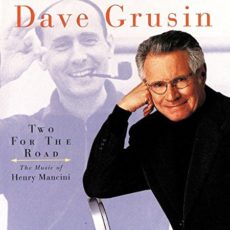
Dave Grusin was born Robert David Grusin on June 26, 1934 in Littleton, Colorado to pianist mother and violinist father who emigrated from Riga, Latvia. He went on to study music at the University of Colorado at Boulder and received his degree in 1956.
He produced his first single Subways Are for Sleeping in 1962 and his first film score for Divorce American Style five years later. He would go on to score Winning, The Friends of Eddie Coyle, The Midnight Man and Three Days of the Condor, The Graduate, The Champ, The Fabulous Baker Boys, On Golden Pond, Tootsie, Mulholland Falls and The Goonies. He has been nominated six times for Academy Awards for his scoring and in 1988, he won an Oscar for Best Original Score for The Milagro Beanfield War.
In 1978 he had started GRP Records with his business partner, Larry Rosen, and began to create some of the first commercial digital recordings. He also composed the original opening fanfare for TriStar Pictures film studio. Through the end of the century he continued to score films, television theme songs and episode music.
From 2000 through 2011, Dave concentrated on composing classical and jazz compositions, touring and recording with collaborators, including guitarist Lee Ritenour, with whom he was nominated three times and won a Grammy for the album Harlequin. won a Grammy Award in 1985.
Throughout his career he has conducted the Andy Williams Show orchestra, was musical director and arranger for the Catarina Valente TV show, lived in Amsterdam, received honorary doctorates from Berklee College of Music and the University of Colorado, College of Music. Pianist, composer, arranger and producer Dave Grusin has and continues to collaborate with James Taylor, Renée Fleming, Paul Simon, Sérgio Mendes, Quincy Jones, Al Jarreau, Patti Austin, Billy Joel, Dave Valentin and Sadao Watanabe, among others.
Sponsored By
Voices From The Community
#preserving genius
More Posts: piano
Daily Dose Of Jazz…
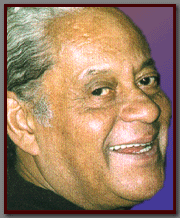
John Parker was born on June 24, 1928 in Queens, New York and began playing jazz trumpet at the age of 16 while attending Flushing High School. Encouraged by the bassist George Duvivier in the late Forties, he began playing in the jazz clubs on Manhattan’s W. 52nd Street where Dixieland, swing and bebop combos held court. It was on 52nd St. that drummer Zooty Singleton nicknamed him Tasty because of his tasty solos.
During the early 1950s, John, who was no relation to the Charlie Parker, began traveling with the Rhythm & Blues band of Roosevelt Sykes. He also played with trumpeter and composer Sy Oliver and vocalist Etta Jones. He also stepped in for trumpeter Cat Anderson in the Duke Ellington band. He would go on to play with Sonny Rollins and Thelonious Monk.
The 1970s saw Parker playing with pianist Brooks Kerr and drummer Sonny Greer in Manhattan venues including the Algonquin Hotel. Over the last 20 years, when Parker was living at Westbeth Artists Community with his wife, the late writer Leslie Gourse, he became a regular at Arthur’s Tavern and played New York City clubs in Little Italy and Chelsea.
Trumpeter John “Tasty” Parker, who never recorded as a leader and had been suffering from emphysema, passed away on Tuesday, March 21, 2006 in his Manhattan apartment at the age of 78.
Sponsored By
#preserving genius
More Posts: trumpet