

Daily Dose Of Jazz…
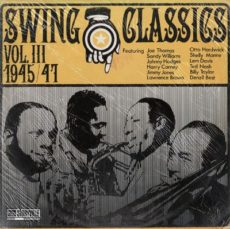
Lem Davis was born Lemuel A. Davis on June 22, 1914 in Tampa, Florida. His career began in the 1940s during the small jazz combo era with pianist Nat Jaffe. He became best known for playing with the Coleman Hawkins Septet as well as Eddie Heywood and Rex Stewart and a variety of jazz groups.
After recording with jazz vocalist Billie Holiday as a member of Heywood’s band in 1944, Davis went on to record with John Kirby, Joe Thomas, and Eddie Safranski. Although he reached his apex in the 1940s, Davis continued to perform in the New York area during the 1950s , leading his own band featuring Emmett Berry on trumpet, trombonist Vic Dickerson and pianist Dodo Marmarosa.
By 1953 Lem appeared soloing on Buck Clayton’s Huckle-buck recording. He continued to play in New York City throughout the 1950s, but as bebop surpassed swing in popularity, he recorded little thereafter.
Unable to make the transition from swing to bebop, he faded into obscurity. Swing and jazz alto saxophonist Lem Davis passed away on January 16, 1970 in New York City.
Sponsored By

#preserving genius
More Posts: saxophone
Daily Dose Of Jazz…
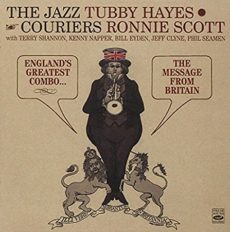
Philip Francis Bates was born June 19, 1931 in Brixton, London. After playing bass on regular gigs at London’s 51 Club with Harry Klein and Vic Ash throughout 1956, he joined The Jazz Couriers with Tubby Hayes and Ronnie Scott. After the Couriers disbanded,
Bates went on tour with Sarah Vaughan and played with the Lennie Metcalfe Band on the Cunard liner the RMS Mauretania. By the early 1960s he was working with Johnny Dankworth and Ronnie Ross, among others, before joining Dick Morrissey’s Quartet from 1962 until 1968. During that period he also played with the Harry South Big Band, as did the other members of the quartet, and with the Tony Kinsey Quintet.
In 1968 he played briefly again with Tubby Hayes and from 1968 on, he worked as a session musician, accompanying visiting American musicians such as Sonny Stitt, Jimmy Witherspoon, Judy Collins and Tom Paxton. He spent five years touring Europe with Stéphane Grappelli in the late 1970s and in the Eighties and 1990s he led his own trio. At 86, double bassist Phil Bates seldom performs, if at all.
Sponsored By

Voices From The Community
#preserving genius
More Posts: bass
Daily Dose Of Jazz…
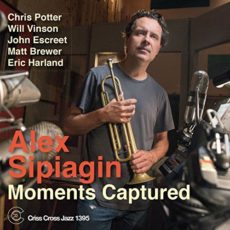
Alex “Sasha” Sipiagin was born June 11, 1967 in Yaroslavl, Russia and began learning to play the trumpet at the age of twelve. He studied at the Moscow Music Institute and the Gnessin Conservatory in Moscow where he received his Baccalaureate. In 1990 he competed in the International Louis Armstrong Competition sponsored by the Thelonious Monk Institute in Washington, D.C. winning top honors. Moving from Russia to the United States in 1991 and began his career shortly thereafter.
His first gigs were with the Gil Evans Band and George Gruntz Concert Jazz Band and soon became a favored player for various bands including the Gil Goldstein’s Zebra Coast Orchestra, drummer Bob Moses’ band Mozamba, the Mingus Big Band, Mingus Dynasty, the Mingus Orchestra, the Dave Holland Big Band, Sextet and Octet groups.
He has recorded and performed with Michael Brecker, Mulgrew Miller, Eric Clapton, Dr.John, Aaron Neville, Elvis Costello, Michael Franks, Dave Sanborn, Deborah Cox, legendary producer Phil Ramone and Gonzalo Rubalcaba, among others. Alex has recorded fifteen albums as a leader, for the most part on the Criss Cross Jazz label.
He is a founding member of the collective Opus 5, along with Seamus Blake, David Kikoski, Boris Kozlov and Donald Edwards. Trumpeter and flugelhornist Alex Sipiagin, who teaches at the Groningen Prince Claus Conservatory, Academy of Music, Basel, Switzerland as well steady professorship at NYU and continues to compose, perform and record.
Sponsored By

www.whatissuitetabu.com
#preserving genius
More Posts: flugelhorn,trumpet
Daily Dose Of jazz…
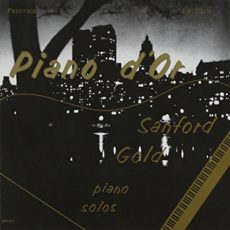
Sanford Gold was born in Cleveland, Ohio on June 9, 1911. He played locally in Cleveland and led regional bands before moving to New York City in the 1930s. It was in New York that he collaborated with Babe Russin and Raymond Scott in 1935.
Forming a trio with Dave Barbour in 1941 by 1942 Gold was working as a studio musician for CBS before serving in World War II from 1942 to 1946. After his discharged from the military, he worked with Don Byas, Mary Osborne and others before he going to work for NBC from 1949-1954. Gold recorded an album as a leader titled Piano d’Or on the Prestige label in 1955. He also performed as a sideman with Johnny Smith, Al Cohn, Vic Dickenson, Stan Getz, Coleman Hawkins and Sally Blair.
As an educator Sanford was considered one of the premier jazz piano teachers of his time. His self-published book, A Modern Approach to Keyboard Harmony and Piano Techniques, distills the complexities of jazz and classical harmony down to a simple yet far-reaching system of pianistic and harmonic exercises. It has become an underground classic for serious students of the instrument.
Pianist Sanford Gold, whose one of his biggest fans was Bill Evans and who often steered students his way, passed away on May 29, 1984 in Danvers. Massachusetts.
Sponsored By

#preserving genius
More Posts: piano
Daily Dose Of Jazz…
Carl Briggs Pruitt was born on June 3, 1918 in Birmingham, Alabama and began his career as a pianist, but switched to bass in 1937. For a brief time he played around Pittsburgh, Pennsylvania and then went on to work through the Forties with Roy Eldridge, the Jeter-Pillars Orchestra, Lucky Millinder, Maxine Sullivan, Cootie Williams, and Mary Lou Williams.
The 1950s saw Pruitt touring with Earl Hines and the Sauter-Finegan Orchestra, but was mostly active as a sideman and session musician on recordings with Shorty Baker, Arnett Cobb, Eddie “Lockjaw” Davis, Bill Doggett, Wynonie Harris, Bull Moose Jackson, Roland Kirk, George Shearing, Sahib Shihab, and Hal Singer among others.
Pruitt did not perform or record frequently in the 1960s or 1970s, but he did play with Woody Herman at the Montreux Jazz Festival in 1967 and recorded with Ray Nance in 1969. He toured France with Doc Cheatham and Sammy Price in 1975.
Double-bassist Carl Pruitt passed away in June of 1977.
Sponsored By

#preserving genius
More Posts: bass