

Daily Dose Of Jazz…
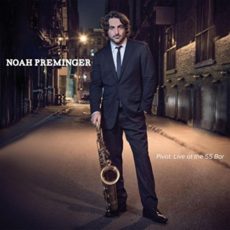
Noah Preminger was born on June 2, 1986 and grew up in Canton, Connecticut. While in high school, he studied with saxophonist Dave Liebman and went on to graduate from the New England Conservatory of Music.
Releasing his debut album Dry Bridge Road, that was a sextet session with guitarist Ben Monder, pianist Frank Kimbrough, trumpeter Russ Johnson, bassist John Hébert, and drummer Ted Poor. Noah’s sophomore album as a leader came three years later in 2011 titled Before the Rain on the Palmetto label and featured a quartet with Kimbrough, Hébert and drummer Matt Wilson. Both albums received critical acclaim from Jazz Review, Hartford Courant, New York Times and DownBeat. Dry Bridge Road was named Debut of the Year in the Village Voice critics poll, making top 10 lists in Stereophile, The Nation and JazzTimes.
Preminger has performed with Billy Hart, Dave Holland, Fred Hersch, Dave Douglas, Victor Lewis, John and Bucky Pizzarelli, Billy Drummond, George Cables, Roscoe Mitchell, Eddie Henderson, Rob Garcia, Andre Matos, Dan Cray and Julian Shore.
Currently based in Brooklyn, saxophonist Noah Preminger has released eight albums since his debut in 2008 and continues to compose, perform and record.
Sponsored By


#preserving genius
More Posts: saxophone
Daily Dose Of Jazz…
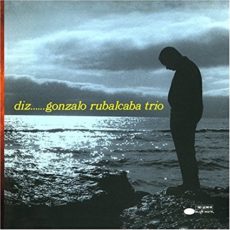
Gonzalo Rubalcaba was born Gonzalo Julio González Fonseca in Havana, Cuba into a musical family on May 27, 1963. He adopted his great grandmother’s name, Rubalcaba, for professional use as did his father. He began studying classical piano and drums at the age of eight. Earning his degree in music composition from Havana’s Institute of Fine Arts in 1983, he began playing in clubs, music halls and toured France with Orquesta Aragón.
Discovered by Dizzy Gillespie in 1985, he garnered international attention in jazz circles and it was soon afterwards that he began performing regularly at major festivals. That same year he formed his own ensemble, Grupo Projecto. Emigrating to America in 1993, since then he has released twenty-nine albums as a leader on Blue Note, Impulse and 5Passion labels, and another so fifteen albums as a sideman with Ignacio Berroa, Ron Carter, Francisco Céspedes, Chick Corea, Al Di Meola, Richard Galliano, Charlie Haden, Katia Labèque, Tony Martinez, David Sanchez and Pat Martino among others.
Grammy Award-winning Afro-Cuban pianist and composer Gonzalo Rubalcaba has been nominated eleven five times for a Grammy Award, Billboard Music Award, and the Latin Grammy Award and brought home two Grammy Awards and two Latin Grammy Awards for Best Latin Jazz Album at both ceremonies. Settling in South Florida in 1996 he balances touring, recording, composing and teaching as a faculty member of the Frost School of Music at the University of Miami.
Sponsored By

#preserving genius
More Posts: piano
Daily Dose Of Jazz…
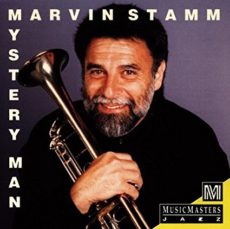
Marvin Stamm was born May 23, 1939 in Memphis, Tennessee and began playing trumpet at age 12. He attended Memphis State University and then went on to matriculate through North Texas State University where he was a member of the One O’Clock Lab Band.
After graduation he played with Stan Kenton’s Mellophonium Orchestra from 1961 to 1963, and then with Woody Herman from 1965 to 1966. For the next six years he performed as a member of the Thad Jones and Mel Lewis Orchestra from until 1972, and went with Benny Goodman from 1974 to 1975.
During the Seventies he began a decades-long career as a prolific studio and session musician, recording with Bill Evans, Quincy Jones, Donald Fagen, Oliver Nelson, Duke Pearson, Wes Montgomery, Freddie Hubbard, Stanley Turrentine, Grover Washington, Jr., Patrick Williams, Michel Legrand, Lena Horne, Frank Foster, Average White Band, Paul Desmond, Frankie Valli, Deodato, Les DeMerle, and George Benson, and played the flugelhorn solo on Uncle Albert/Admiral Halsey by Paul McCartney.
In the 1980s he played with John Lewis’ American Jazz Orchestra, the Bob Mintzer Band, the George Gruntz Concert Jazz Band, Louie Bellson’s Big Band, Maria Schneider’s band and since 2002 the trumpeter has been a member of the Westchester Jazz Orchestra.

#preserving genius
More Posts: trumpet
Daily Dose Of Jazz…
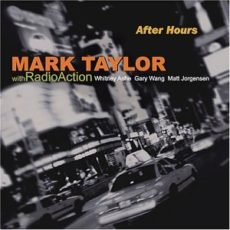
Mark Taylor was born on May 22, 1961 in Seattle, Washington. He earned his Bachelor’s degree from the University of Washington then moved to New York City to get his Masters from the Manhattan School of Music. While there he performed with an array of musicians including Dick Oatts, Jim McNeely, Bob Brookmeyer, Garry Dial, David Liebman, Don Sickler, Steve Turre, Sir Roland Hanna, Bob Mintzer, John Riley, Steve Slagle, and Ted Rosenthal and the Vanguard Jazz Orchestra.
Mark performs and records extensively with such diverse and award winning groups as Matt Jorgensen +451, Jim Knapp Orchestra, Frieze of Life, Victor Noriega Trio + 2, Tom Varner’s Tentet and Quintet, Thomas Marriott, Wayne Horvitz, Seattle Repertory Jazz Orchestra, and the Randy Halberstadt Quintet, as well as having appeared locally with Ray Charles, Quincy Jones, and Ernestine Anderson, Sam Yahel, Maria Schneider, the Seattle Symphony and Pacific Northwest Ballet, among many more.
As a leader, Taylor has released two projects on Origin Records titled After Hours and Spectre which was named NW Jazz Recording in 2009 and a year earlier was honored as the NW Jazz Instrumentalist, both by Earshot Jazz Magazine.
Putting on his educator cap, he has served on the music faculty at Pacific Lutheran University, has full schedule of private students and is a guest artist and clinician for festivals, workshops and clinics throughout the region. One of the most in demand saxophonists in the Pacific Northwest, alto saxophonist Mark Taylor continues to perform and record.
Sponsored By

Voices From The Community
#preserving genius
More Posts: saxophone
Daily Dose Of Jazz…
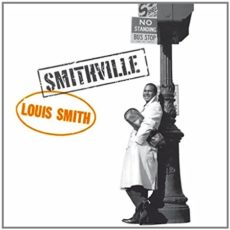
Edward Louis Smith was born May 20, 1931 in Memphis, Tennessee, and while studying at the University of Michigan, he played with visiting musicians such as Dizzy Gillespie, Miles Davis, Thad Jones and Billy Mitchell. He followed this array of musicians by going on to play with Sonny Stitt, Count Basie, Al McKibbon, Cannonball Adderley, Percy Heath, Philly Joe Jones, Lou Donaldson, Donald Byrd, Kenny Dorham and Zoot Sims.
He began his recording career with two albums for Blue Note, the first being Here Comes Louis Smith, originally recorded for the Boston-based Transition Records, featured Cannonball Adderley (then under contract to Mercury) playing under the pseudonym “Buckshot La Funke”, Tommy Flanagan, Duke Jordan, Art Taylor and Doug Watkins.
Smith’s initial music career was brief, opting to become a teacher at the University of Michigan and Ann Arbor’s public school system.He would later recorded for the SteepleChase label. in 2006 Louis suffered a stroke and was seen occasionally enjoying live jazz in the Detroit/Ann Arbor area, but he never returned to performing. He recorded fourteen albums as a leader and recorded Down Home Reunion with his cousin trumpeter Booker Little.
Trumpeter Louis Smith, who recorded both volumes of Blue Lights with Kenny Burrell and Live at Newport ‘58 with Horace Silver, passed away on August 20, 2016, at age 85 in Ann Arbor, Michigan.
Sponsored By
#preserving genius
More Posts: trumpet