

Daily Dose Of Jazz…
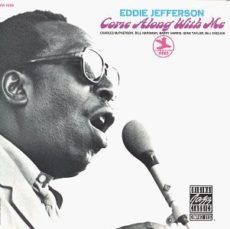
Gene Taylor was born Calvin Eugene Taylor on March 19, 1929 in Toledo, Ohio. Beginning his career in Detroit, Michigan he worked with Horace Silver from 1958 until 1963, then joined the Blue Mitchell Quintet, with whom he recorded and performed until 1965.
From 1966 until 1968, he toured and recorded with Nina Simone, including a Taylor composition she recorded titled Why? (The King of Love is Dead), written following the assassination of Martin Luther King, Jr. He then began teaching music in New York City public schools.
Working with Judy Collins from 1968 until 1976, Gene made numerous television appearances accompanying Simone and Collins. He went on to record with Junior Cook, Barry Harris, Coleman Hawkins, Junior Mance, Eddie Jefferson, Eric Kloss and Duke Pearson.
Double-bassist and songwriter Gene Taylor never led a recording session before passing away on December 22, 2001 in Sarasota, Florida where he had been living since 1990.
Sponsored By

www.whatissuitetabu.com

#preserving genius
More Posts: bass
Daily Dose Of Jazz…
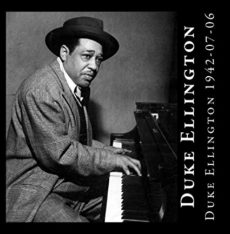
Junior Raglin was born Alvin Raglin on March 16, 1917 in Omaha, Nebraska. He started out on guitar but had picked up bass by the mid-1930s. He played with Eugene Coy from 1938 to 1941 in Oregon, and then joined Duke Ellington’s Orchestra, when Ellington returned to using two basses, then replaced Jimmy Blanton after his departure from the orchestra. He remained with Duke from 1941 to 1945.
After leaving Ellington, Raglin led his own quartet, and also played with Dave Rivera, Ella Fitzgerald, and Al Hibbler. He returned to play with Ellington again briefly in 1946 and 1955. Falling ill in the late 1940s, he quit performing;
Double-bassist Junior Raglin, who performed mainly during the swing era and never recorded as a leader, passed away on November 10, 1955 at age 38.
Sponsored By

#preserving genius
More Posts: bass
Daily Dose Of Jazz…
Arif Mardin was born on March 15, 1932 in Istanbul, Turkey into a family of privilege that included statesmen, diplomats, leaders and business owners of the Ottoman Empire and the Turkish Republic. He grew up listening to Bing Crosby and Glenn Miller, met jazz critic Cuneyt Sermet, who turned him onto this music and eventually became his mentor. After graduating from Istanbul University in Economics and Commerce, he studied at the London School of Economics. Though never intending to pursue a career in music, influenced by his sister’s music records and jazz, he became an accomplished orchestrator and arranger.
In 1956 fate took him down a different path when he met Dizzy Gillespie and Quincy Jones at a Ankara concert. He sent three demo compositions to his radio friend Tahir Sur who subsequently took these compositions to Jones and Mardin became the first recipient of the Quincy Jones Scholarship at the Berklee College of Music in Boston, Massachusetts. Two years later with fiancé Latife, he relocated to Boston. After graduating in 1961, he taught at Berklee for one year and then moved to New York City to try his luck.
His career began at Atlantic Records in 1963 as an assistant to Nesuhi Ertegün. He rose through the ranks quickly, becoming studio manager, label house producer and arranger. In 1969, Arif became the Vice President and later served as Senior Vice President until 2001. He worked closely on many projects with co-founders Ertegün and Jerry Wexler, as well as noted recording engineer Tom Dowd. The three of them, Dowd, Mardin, and Wexler, became legendary and were responsible for establishing the Atlantic Sound.
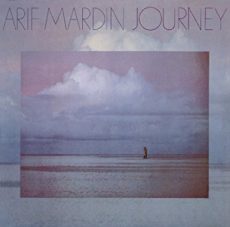
He recorded two solo albums in the Seventies, Glass Onion and Journey, the latter wearing the hats of composer, arranger, electric pianist and percussionist. Mardin performed with Randy and Michael Brecker, Joe Farrell, Gary Burton, Ron Carter, Steve Gadd, Billy Cobham and many others. He composed, arranged, conducted and produced The Prophet in 1974, an interpretation of Kahlil Gibran’s The Prophet voiced by Richard Harris.
Arif produced George Benson, The Manhattan Transfer, Vince Mendoza, and the Modern Jazz Quartet, but not limited to jazz he also produced, among others, Margie Joseph, Roberta Flack, Donny Hathaway, Raul Midón, Patti Labelle, Aretha Franklin, Barbra Streisand, Bette Midler, Diana Ross, Queen, Jeffrey Osborne, and numerous others. In 1975 he discovered Barry Gibb’s distinctive falsetto that became the Bee Gees trademark.
Over a 40 year career Mardin produced forty gold and platinum albums, 11 Grammy Awards, was inducted into the National Academy of Recording Arts and Sciences Hall of Fame, and was a trustee of Berklee and awarded an honorary doctorate
Pianist, percussionist, producer, arranger, studio manager and vice president Arif Mardin passed away at his home in New York City on June 25, 2006 following a lengthy battle with pancreatic cancer.
Sponsored By

#preserving genius
More Posts: arranger,percussion,piano,producer
Daily Dose Of Jazz…
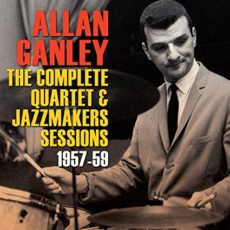
Allan Ganley was born on March 11, 1931 in Tolworth, Surrey, England and was a self-taught drummer. In the early 1950s Ganley played in the dance band led by Bert Ambrose. In 1953 he came to prominence as a member of Johnny Dankworth’s band, then the most popular modern jazz group in the UK. Throughout the 1950s, he worked with pianist Derek Smith, Dizzy Reece, clarinettist Vic Ash, Ronnie Scott and with visiting American musicians. Towards the end of the decade he was co-leader with Ronnie Ross of a small group known as the Jazzmakers.
By the early 1960s, Ganley was often performing with Tubby Hayes, with his small groups or occasionally assembling a big band. He was the house drummer at Ronnie Scott’s Jazz Club and played with numerous Americans including Dizzy Gillespie, Stan Getz, Jim Hall, Freddie Hubbard and Rahsaan Roland Kirk. By the early 1970s he took time out to study at Berklee College of Music in Boston, Massachusetts, then returned to the UK to form and lead a big band, which he maintained sporadically for ten years.
Throughout the Seventies and ’80s and Nineties, Allan appeared on many broadcasts and recording dates, playing jazz and effortlessly slipping from traditional to post-bop to big band to mainstream, all the while swinging with great subtlety. He accompanied pianists as different as Teddy Wilson and Al Haig and for singers from Carol Kidd to Blossom Dearie.
As an arranger, he provided charts for many leading British jazzmen and for the BBC Radio Big Band, thus enhancing the enormous yet understated contribution he made to the British jazz scene over the years. Drummer and arranger Allan Ganley passed away on March 29, 2008.
Sponsored By

Bronze Lens
#preserving genius
More Posts: drums
Daily Dose Of Jazz…
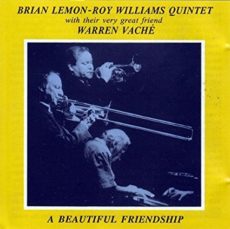
Roy Williams was born on March 7, 1937 in Bolton, Lancashire, England and began his career as a trombonist during the British trad jazz movement of the 1950s. He played with trumpeter Mike Peters and clarinetist Terry Lightfoot in the early Sixties, then joined trumpeter Alex Welsh’s Dixieland outfit in 1965, replacing Roy Crimmins. While with Welsh, he played with visiting American jazz players as Wild Bill Davison, Bud Freeman, and Ruby Braff.
Williams left Welsh in 1978 and joined Humphrey Lyttlelton’s band, staying with the latter for four years. In the ’80s he began working freelance and soon became a first call trombone playing with clarinetist Peanuts Hucko, tenor saxophonist Scott Hamilton, trumpeter Bent Persson and clarinetist John Barnes. He performed with The World’s Greatest Jazz Band.
Among Roy’s recordings are Gruesome Twosome on the Black Lion label, and Interplay for Sine Records, both with Barnes. In 1998 he co-led a swing-oriented quintet date with saxophonist Danny Moss titled Steamers! on the Nagel-Heyer label. Though not as active as he was up through the Nineties, trombonist Roy Williams won numerous jazz polls, toured Europe and the United States and remains a popular presence when he’s on the British mainstream jazz scene.

#preserving genius
More Posts: trombone