

Daily Dose Of Jazz…
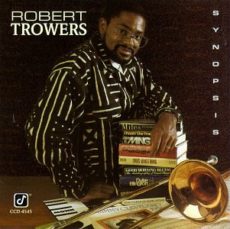
Robert Trowers was born on March 3, 1957 in Brooklyn, New York into a family of musicians that fostered a love for music at an early age. After the mandatory piano lessons during early childhood, he developed an interest in the trombone from listening to the music of the Swing Era. Among the bands that sparked his interest in jazz were those of Count Basie, Duke Ellington, Glenn Miller, and Artie Shaw. The trombonists that influenced Robert were Laurence Brown, “Tricky Sam” Nanton, Tyree Glenn, Tommy Dorsey, Glenn Miller and Jack Teagarden, J.J. Johnson, Jimmy Cleveland, Curtis Fuller, and Frank Rosolino.
During his college years Trowers played around New York City with Jaki Byard’s Apollo Stompers, Ray Abrams/Hank Doughty Big Band, Charles Byrd, Ray Draper, Cecil Payne, Harold Cumberbatch, Bill Hardman, Junior Cook, and Mario Escalera. His first European tour and Carnegie Hall date were with Abdullah Ibrahim’s band Ujammah in 1979.
In 1982, he joined Lionel Hampton for three and a half years, then a year freelancing in New York and teaching in the Public School system, before another European tour with Illinois Jacquet. Upon returning he joined the Count Basie Orchestra, under the direction of Frank Foster, playing the trombone in this band for the next eight years, leaving in 1995 to pursue other opportunities. The years with those stellar bands put him onstage with some of the greatest names in jazz, including Sarah Vaughan, Dizzy Gillespie, Billy Eckstine, Nancy Wilson, Cab Calloway, Jay McShann, Sonny Stitt, Benny Carter, Al Grey, Frank Sinatra, Joe Williams, Tony Bennett, Randy Weston, George Gee and many others.
He went on to record two albums as a leader, Synopsis and Point of View in the Eighties, toured with Lincoln Center Jazz Orchestra led by Wynton Marsalis, and later became a member of the Carnegie Hall Jazz Band under Jon Faddis. Robert worked a short tour with T.S. Monk, did a European tour with a traveling theatre production of the Broadway show Black and Blue, and gained membership into the Vanguard Jazz Orchestra.
Along with Derrick Gardner and Frank Foster, he started a nonprofit arts organization named Progressive Artistry that promoted jazz in all its various forms in concerts and lecture/demonstrations in inner city neighborhoods until 2004. Most recently, trombonist Robert Trowers has been on the faculty of North Carolina Central University.
Sponsored By


#preserving genius
More Posts: trombone
Daily Dose Of Jazz…
Ronald Maxwell Jones was born on February 28, 1917 in London, England and together with his brother Cliff, taught himself to play the saxophone, before the two of them founded the semi-professional Campus Club Dance Band in 1930. Dissolved in 1935 he tried to establish himself as a professional musician, becoming a member of a combo led by trumpeter Johnny Claes, with musicians who played in the style of Coleman Hawkins.
In 1942 and 1943, Max worked for the BBC radio program Radio Rhythm Club; and in 1942, together with authors Albert McCarthy and Charles Fox, founded the magazine Jazz Music, which became meritorious as it set out to reassert the pioneering role of the African-American, to emphasize the music’s social dimensions, and to attack the glossy commercialism of big-band swing.
Since 1944, Jones had a full-time job writing features for the Melody Maker in the column Collectors’ Corner. In the following years he gained more and more high recognition as a proven expert of New Orleans Jazz, swing, and mainstream jazz.
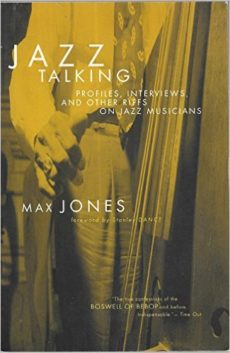
In 1971 Jones published a Louis Armstrong biography, Louis: The Louis Armstrong Story, together with John Chilton. He also wrote a number of liner notes, such as for the CD edition of the Kenny Clarke/Francy Boland Big Band, the Spirits of Rhythm, and wrote the preface for the Lee Collins, Mary Spriggs Collins, Frank Gillis, John W. Miner book Oh, Didn’t He Ramble: The Life Story of Lee Collins. A collection of his articles on musicians such as Coleman Hawkins, Johnny Hodges, Billie Holiday, and Mary Lou Williams was published as a book entitled Talking Jazz in 1987.
Jones was the first jazz musician to become a professional journalist and exclusively dealt with jazz in his publications. He was a model and a mentor for a younger generation of rock music critics and authors. Author, radio host, and journalist Max Jones passed away on August 1, 1993 in Chichester, England.

#preserving genius
More Posts: saxophone
Daily Dose Of Jazz…
Don Randi was born Don Schwartz on February 25, 1937 in New York City and raised in the Catskill Mountains, where he received training in classical music. After his father’s death in 1954, he and his mother moved to Los Angeles, California and the following year he started working at a record distribution company where he heard and became influenced by jazz musicians, particularly Horace Silver.
He began his career as a professional pianist and keyboard player in 1956, gradually establishing a reputation as a leading session musician. By the early 1960s, he was a major contributor, as musician and arranger, to record producer Phil Spector’s Wall of Sound. He became a member of Nancy Sinatra’s touring band for decades and also played piano on These Boots Are Made For Walkin’ as well as every album she recorded, and played on the Beach Boys’ Good Vibrations.
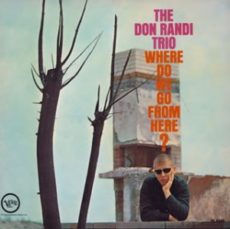
Playing on over three hundred hit records, Don worked with musicians such as Gerald Wilson, Quincy Jones, Cannonball Adderley, Herb Alpert, Sarah Vaughan, Linda Ronstadt and Frank Zappa. He recorded a number albums of piano jazz under his own name and as the leader of a trio with Leroy Vinnegar and Mel Lewis between 1960 and 1968 that included Feelin’ Like Blues, Where Do We Go From Here, Last Night, Revolver Jazz, and Love Theme From Romeo And Juliet. He also wrote film scores for Bloody Mama, Up in the Cellar, J. W. Coop, Stacey, and Santee in the Seventies.
In 1970 he opened The Baked Potato jazz club in Studio City, California, and forming his own group, Quest, serving as the house band. The band subsequently recorded over 15 albums and were nominated for a Grammy in 1980 for the album New Baby. In 2008, as a member of the Wrecking Crew, Randi was inducted into the Hollywood RockWalk.and in 2010 the club was named Best Jazz Club in Los Angeles magazine. Pianist, bandleader and songwriter Don Randi continues to perform, record and releasing his own jazz records.
Sponsored By

#preserving genius
More Posts: piano

Daily Dose Of Jazz…
Leroy Jones was born on February 20, 1958 in New Orleans, Louisiana and began playing trumpet at the age of ten. By the time he was 12 he was leading the Fairview Baptist Church Marching Band, a group of young musicians organized by guitar and banjo player Danny Barker.
The musicians’ union forced Barker to disband the group in 1974, so Leroy became a union musician and took over the running of the group, renaming it the Hurricane Brass Band. By 1976 he had left the group, touring for a time with Eddie Vinson and Della Reese before forming his own group, the Leroy Jones Quintet.
In 1991 Jones joined the big band of Harry Connick, Jr., and that exposure with the band, including the opportunity for the Leroy Jones Quintet to open for Connick. This in turn led to him releasing his first album under his own name titled Mo’ Cream From The Crop on the Columbia Records in 1994. Trumpeter Leroy Jones, who has ten albums as a leader, has also appeared with the Preservation Hall Jazz Band and Dr. John and continues to tour and record with his quintet.
Sponsored By

Voices From The Community
#preserving genius
More Posts: trumpet
Daily Dose Of Jazz…
Hans Koller was born February 12, 1921 in Vienna, Austria. He attended the University of Vienna from 1936 to 1939 and served in the armed forces from 1940 to 1946. Following World War II he returned home and played with the Hot Club of Vienna.
Emigrating to Germany in 1950, Hans formed a small ensemble there. During the decade of the Fifties he played with Freddie Brocksieper, Albert Mangelsdorff, Jutta Hipp, Dizzy Gillespie, Bill Russo, Lee Konitz, Stan Kenton, Eddie Sauter, Benny Goodman, Attila Zoller, Oscar Pettiford, Kenny Clarke, Zoot Sims and Jimmy Pratt.
From 1958 to 1965 he directed the jazz workshops of the Norddeutscher Rundfunk in Hamburg, Germany before returning to Vienna in 1970. Soon after his return he formed his own ensemble, Free Sound, and later that decade he worked with the International Brass Company. In addition to playing and bandleading, Koller also composed; among his original works are a 1968 ballet titled New York City.
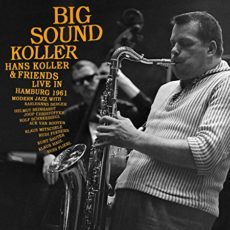
Tenor saxophonist and bandleader Hans Koller, who was also a recognized abstract painter, passed away on December 21, 2003 in his hometown of Vienna.
Sponsored By

www.whatissuitetabu.com
#preserving genius
More Posts: saxophone