

Daily Dose Of Jazz…
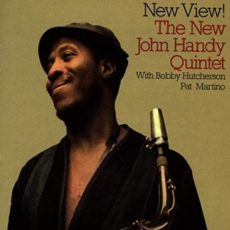
John Richard Handy III was born on February 3, 1933 in Dallas, Texas and first came to prominence while working with Charles Mingus in the 1950s. By the 1960s, he was leading several groups, among them a quintet with violinist Michael White, Jerry Hahn on guitar, Don Thompson on bass, and drummer Terry Clarke. This group’s performance at the 1965 Monterey Jazz Festival was recorded and released as an album and he received Grammy nominations for jazz performance of Spanish Lady and jazz composition for If Only We Knew.
As an educator Handy has taught music history and performance at San Francisco State University, Stanford University, the University of California, Berkeley, the San Francisco Conservatory of Music, and other schools.
The 1980s saw John working on the Mel Martin project Bebop & Beyond, recording tribute albums to Dizzy Gillespie and Thelonious Monk. He has recorded some eighteen albums as a leader for Roulette, Columbia, Impulse!, Warner, MPS, Milestone, Koch Int’l and Boulevard record labels. He has had one compilation released of selections from In The Vernacular and No Coast Jazz, and and has recorded two albums with Brass Fever, as well as, five albums during his time with Mingus.
Alto saxophonist John Handy, who also plays tenor and baritone saxophone, saxello, clarinet, oboe and sings, continues to perform and record.
Sponsored By


#preserving genius
Daily Dose Of Jazz…
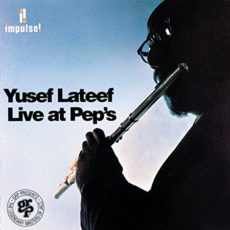
James Black was born on February 1, 1940 in New Orleans, Louisiana and though he’s little known outside of his native city and never recorded an album under his own name, the drummer was a Crescent City legend. Soaking up the city’s trademark “second line” rhythms from a young age, by the early 1960s he was already doing session work for the likes of Fats Domino. His main interest was jazz, however, and he played in a group with the young Ellis Marsalis on piano and Nat Perrilliat on saxophone. This trio was part of the Nat Adderley 1962 session In the Bag, to which he contributed two compositions. The following year, Marsalis cut an underrated album of modern jazz called Monkey Puzzle and this time out Black handled four of the seven compositions, including the intricate 5/4 piece Magnolia Triangle, which ranks as perhaps his greatest work.
James went on to play with Yusef Lateef and Lionel Hampton in the mid-’60s. However, his career was interrupted by a stint in the Angola State Penitentiary,during which time he actually played in a prison band with blues pianist James Booker and saxophonist Charles Neville. The late Sixties saw him on the R&B circuit around New Orleans, and in 1968 became the house drummer at the Scram label. He played on Eddie Bo’s Hook and Sling, helping to make it one of the great New Orleans funk singles, and soon took his place alongside Smokey Johnson and the Meters’ Ziggy Modeliste as one of the city’s top funky drummers.
He continued to play jazz on the side as part of Ellis Marsalis’ band ELM Music Company. They took up residency at Lu and Charlie’s beginning in 1972 and became local favorites. During the ’70s, Black also led his own group, the James Black Ensemble, which often featured his longtime girlfriend “Sister Mary” Bonette on vocals. He attempted several times to record a full-length album, including once for the Sound of New Orleans label and another time at Allen Toussaint’s studio, but the sessions never progressed beyond a few tracks.
He would continue performing in New Orleans into the ’80s playing with Ellis Marsalis and then teenager Harry Connick Jr., and served as the drummer for the 1982 Marsalis Family album Fathers and Sons. Drummer James Black passed away of a drug overdose on August 30, 1988 in New Orleans.
Sponsored By

#preserving genius
More Posts: drums
Daily Dose Of Jazz…
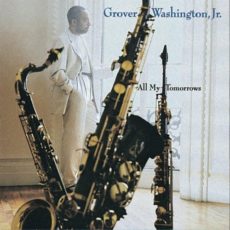
Grover Washington Jr. was born on December 12, 1943 in Buffalo, New York. His mother was a church chorister and his father was a saxophonist and collected old Jazz gramophone records, which put music everywhere in the home. Growing up he listened to Benny Goodman, Fletcher Henderson, and others like them. At the age of eight his father gave him a saxophone and he practiced and would sneak into clubs to see famous Buffalo blues musicians.
Leaving Buffalo he played with a Midwest group called the Four Clefs and then the Mark III Trio from Mansfield, Ohio. Then drafted into the U.S. Army he met drummer Billy Cobham, who as a mainstay in New York City, he introduced Washington to musicians around the city. After leaving the Army, he freelanced around New York City, but eventually landed in Philadelphia in 1967. The first two years of the Seventies decade provided his first recording sessions on Leon Spencer’s debut and sophomore albums on Prestige Records, together with Idris Muhammad and Melvin Sparks.
His big break came when alto saxophonist Hank Crawford couldn’t make a recording date with Creed Taylor’s Kudu Records and Grover took his place. This led to his first solo album, Inner City Blues in which he displayed his talent on the soprano, alto, tenor, and baritone saxophones.
His rise to fame with his first three albums established him as a force in jazz and soul music, but it was his fourth album in 1974, Mister Magic, that became his major commercial success. The album crossed over all the charts and with guitarist Eric Gale in tow again for the 1975 follow-up album Feels So Good proved both could reach #10. A string of acclaimed records brought Washington through the 1970s, culminating in the signature piece Winelight in 1980, in which he collaborated on Just The Two Of Us with Bill Withers and dedicated Let It Flow to Dr. J of the Philadelphia 76ers. The album went platinum, won two Grammy awards for Just the Two Of Us and Winelight and was nominated for both Record and Song Of The Year.
During the late 1980s and early 1990s Washington gave rise to Kenny G, Walter Beasley, Steve Cole, Pamela Williams, Najee, Boney James and George Howard. Over the course of his career he performed and recorded with Kathleen Battle, Kenny Burrell, Charles Earland, Dexter Gordon, Urbie Green, Eddie Henderson, Masaru Imada, Boogaloo Joe Jones, Gerry Mulligan, Don Sebesky, Johnny “Hammond” Smith, Mal Waldron and Randy Weston.
On December 17, 1999 while waiting in the green room after performing four songs for The Saturday Early Show, at CBS Studios in New York City, saxophonist Grover Washington Jr. collapsed. He was pronounced dead at about 7:30 pm at St. Luke’s-Roosevelt Hospital and his doctors determined he had suffered a massive heart attack. He was 56. In tribute, a large mural of him, part of the Philadelphia Mural Arts Program, is just south of the intersection of Broad and Diamond streets.

Give The Gift Of Knowledge
Daily Dose Of Jazz…
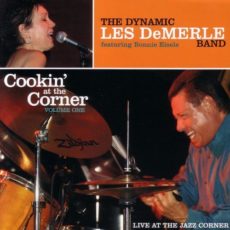
Lester William DeMerle was born on November 4, 1946 in Brooklyn , New York and studied drums and percussion from 1960 to 1965 with Bob Livngstone in New York, then music theory and harmony with Alf Clausen . At 16 he was jamming with Lionel Hampton and in 1966 he played with the Lee Castle led Dorsey band.
1967 found Les with Randy Brecker and Arnie Lawrence in the first band formation called Sound 67. By the late 1960s he joined with Joe Farrell and Lee Konitz in New York. By 1971 Les was moving to Los Angeles,California where he founded the band Transfusion, that became the house band at the Cellar Theatre. He also played with Michael Brecker, Eric Marienthal, David Benoit and Raul De Souza. In 1974 he joined Harry James at the Newport Jazz Festival and stayed for 12 years.
He recorded with the Heath Brothers on the album Smilin’ Billy Suite / A Day in the Life in 1976 on the Strata-East label, worked with Bunk Gardner and in the 1980s he worked on albums with his wife Bonnie Eisele. DeMerle has led big bands and made a series of albums on the Origin label including a tribute album to the classic Blue Note Records, Hittin’ the Blue Notes.
Les DeMerle is one of the few drummers who sings. He has accompanied Frank Sinatra, Sammy Davis Jr., Tony Bennett, Sarah Vaughan, Mel Tormé and Eddie Jefferson. He continues to perform, record and tour.
Dose A Day-Blues Away
Daily Dose Of Jazz…
Rudolph “Rudy” Van Gelder was born on November 2, 1924 in Jersey City, New Jersey. His interest in microphones and electronics can be traced to a youthful enthusiasm for amateur radio. Named for his uncle who had been the drummer in Ted Lewis’s band in the mid-1930s, he took trumpet lessons and trained as an optometrist at the Pennsylvania College of Optometry, in Philadelphia, thinking he could not earn a living as a recording engineer.
From 1943, after graduating, Van Gelder had an optometry practice in Teaneck, New Jersey, and moonlighted recording local musicians in the evenings who wanted 78-rpm recordings of their work. From 1946, Van Gelder recorded in his parents’ house in Hackensack, New Jersey, in which a control room was built adjacent to the living room, which served as the musicians’ performing area. The dry acoustics of this working space were partly responsible for Van Gelder’s inimitable recording aesthetic.
Interested in improving the quality of the playback equipment he acquired everything that could play back audio: speakers, turntables and amplifiers. One of Rudy’s friends, baritone saxophonist Gil Mellé, introduced him to Alfred Lion, a producer for Blue Note Records, in 1953. Within a few years he was in demand by many other independent labels based around New York City, such as Bob Weinstock, owner of Prestige Records. To accommodate each label – Blue Note, Prestige, Savoy, Impulse, Verve he assigned them to different days as Lion was more stringent with the sound of original music, Weinstock had essentially blowing sessions for some of the best musicians in jazz history.He also engineered and mastered for the classical label Vox Records in the Fifties.
Van Gelder worked during the day as an optometrist until the summer of 1959, when he moved his operations to a larger studio in Englewood Cliffs, New Jersey and became a full-time recording engineer. The new studio’s design was inspired by the work of Frank Lloyd Wright had high ceilings and fine acoustics with “no food or drink and do not touch microphones” policy as he himself always wore gloves when handling equipment.
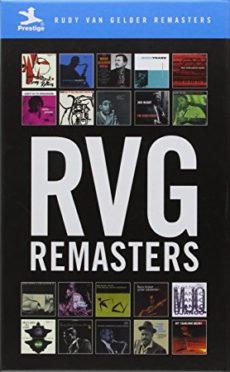
By 1967 the labels were beginning to utilize other engineers more regularly but Rudy remained active engineering nearly all of Creed Taylor’s CTI Records releases, a series of proto-smooth jazz albums that were financially successful, but not always well received by critics. He was not without his detractors. Despite his prominence in the industry, like Lion who didn’t care for the overuse of reverb, and Charles Mingus refused to work with him because he change the sound of his bass. He remastered the analog Blue Note recordings into 24-bit digital recordings in its RVG Edition series and also remasters of some of the Prestige albums, and was happy to see the LP go by the wayside because it was hard for him to get the sound the way he thought it should be.
He received awards and honors being named a fellow of the Audio Engineering Society (AES), received the society’s most prestigious award, the AES Gold Medal, named a Jazz Master by the National Endowment for the Arts, received the Grammy Trustees Award, and Thelonious Monk composed and recorded a tribute to Van Gelder titled Hackensack.
Producer and recording engineer Rudy Van Gelder, who specialized in jazz and regarded as the most important recording engineer of jazz by some observers, passed away at home in Englewood Cliffs, New Jersey on August 25, 2016. Among the several thousand jazz sessions he recorded are the acknowledged classics John Coltrane’s A Love Supreme, Miles Davis’s Walkin’, Herbie Hancock’s Maiden Voyage, Sonny Rollins’s Saxophone Colossus and Horace Silver’s Song for My Father.
Take A Dose On The Road