

Daily Dose Of Jazz…
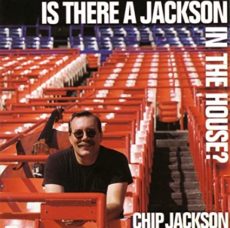
Chip Jackson was born on May 15, 1950 in Rockville, New York. He became a jazz bassist and over the course of his career, he became a member of the Chuck Mangione Quartet, Manhattan Jazz Orchestra, Pratt Brothers Big Band, Red Rodney Quintet, The Danny Gottlieb Trio, The Super Septet, Woody Herman And His Orchestra, Woody Herman And The Thundering Herd.
As a sideman and session musician, he has recorded with Al Di Meola, Teddy Edwards, Danny Gottlieb, Elvin Jones, Jack Walrath, Ernestine Anderson, Michael Wolff, Liza Minelli, Sonny Fortune, Anita O’Day, Ian Shaw Chris Connor, and Gerry Mulligan among others.
Bassist Chip Jackson, who was Billy Taylor’s favorite, continues to perform and record.

More Posts: bandleader,bass,history,instrumental,jazz,music
Daily Dose Of Jazz…
Oscar Valdambrini was born on May 11, 1924 in Turin, Italy and his professional career didn’t begin until the late 1940s when he played with Rex Stewart. Soon afterward he co-led a small ensemble with Gianni Basso and his association with Basso would continue through the early 1960s.
He also arranged and played as a sideman for Armando Trovajoli toward the end of the Fifties. During the 1960s he played with Gil Cuppini, Duke Ellington, and Giorgio Gaslini, and by the early Seventies, he was working with Maynard Ferguson.
Joining forces once again with Basso the two performed together from 1972 to 1974. He went on to also play with Franco Ambrosetti, Conte Candoli, Dusko Goykovich, Freddie Hubbard, Mel Lewis, Frank Rosolino, Ernie Wilkins, and Kai Winding in the 1970s.
Growing increasingly sick from the middle of the 1980s, trumpeter and flugelhornist Oscar Valdambrini, had a central role in the emergence of a modern jazz movement in Italy, receded from active performance and passed away on December 26, 1996 in Rome, Italy.
More Posts: arranger,bandleader,flugelhorn,history,instrumental,jazz,music,trumpet

Daily Dose Of Jazz…
Krzysztof Komeda was born Krzysztof Trzciński on April 27, 1931 in Poznań, Poland and grew up in Częstochowa and Ostrów Wielkopolski. He took music lessons from early childhood and became a member of the Poznań conservatorium at the age of eight, but World War II thwarted his plans. He explored the theory of music, and learned to play piano during this period.
While attending the Liceum for Boys, where he graduated from in 1950, he participated in the Music and Poetry Club. After high school he entered the Medical Academy in Poznań to study medicine. He finished his six-year-long studies and obtained a medical doctor diploma in 1956. He chose to specialize as a head and neck surgeon.
Komeda was interested in light and dance music and met Witold Kujawski, a graduate of the same school and already a well-known swinging bass player. He introduced him to jazz and took him to Kraków where the romantic period of Polish jazz, called the catacombs, was in the spotlight. Jam sessions with famous musicians as Matuszkiewicz, Borowiec, Walasek, and Kujawski took place in Witold’s legendary small apartment in Kraków.
Fascinated with be-bop performed by Andrzej Trzaskowski, his fascination with jazz and the friendship with famous musicians strengthened his connections with the music. He worked for some time with the first, postwar, pioneer Polish jazz band called Melomani. Later, he played with various pop groups, a Dixieland band before turning his attention to modern jazz and the creation of the Komeda Sextet.
Trzciński used the stage name ‘Komeda’ for the first time to protect his medical profession from the scutiny of those of Polish society who regarded jazz as a cheap suspicious music of night clubs. The sextet became the first Polish jazz group playing modern jazz, and its pioneering performances opened the way for jazz in Poland. He played jazz that related to European traditions and which was the synthesis of the two most popular groups at that time: The Modern Jazz Quartet and the Gerry Mulligan Quartet.
He would go on to tour Moscow, Grenoble, Paris, Copenhagen, Stockholm, Prague, Blend, Koenigsberg, Bulgaria and both West and East Germany. He was a part of a show called Jazz and Poetry, began scoring films and overall, Komeda composed more than 70 soundtracks. While staying in Los Angeles, California in 1968 he composed the film music for Roman Polanski’s Rosemary’s Baby and Kulik’s The Riot.
In 1968, in Los Angeles, while having a friendly rough-and-tumble with writer Marek Hłasko he was pushed over an escarpment and suffered a haematoma of the brain. Medical treatment in the US hospital did not save his life. After being transported home to Poland in a coma and in a terminal state. Pianst Krzysztof Komeda, who is credited with creating an original style, often described as the Polish school of jazz, hung on until passing away on April 23, 1969 at the age of 37.
More Posts: bandleader,composer,history,instrumental,jazz,music,piano
Daily Dose Of Jazz…
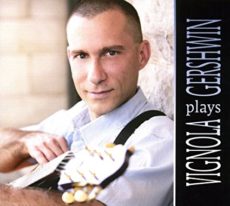
Frank Vignola was born December 30, 1965 in Long Island, New York where his father played accordion and banjo and his brother plays trumpet. When he was five, he picked up the guitar, learning from his father and from records by Django Reinhardt, Bucky Pizzarelli, Joe Pass, and Johnny Smith. At 12 he started on the banjo, and two years later he won a national championship in Canada.
He studied guitar at the Cultural Arts Center and early in his career, he went to used record stores to buy albums by musicians whose work he didn’t know, so that he could study their music. 1987, when he was 23, saw Frank forming the Hot Club quintet, named after the Quintette du Hot Club de France. In the early 1990s, a move to New York City he was playing in groups with Max Morath, Andy Stein, Herman Foster, Joe Ascione, and tuba player Sam Pilafian.
Vignola formed the Concord Jazz Collective with veteran guitarists Howard Alden and Jimmy Bruno and has worked with includes Leon Redbone, Ken Peplowski, Susannah McCorkle, Charlie Byrd, Joey DeFrancesco, Gene Bertoncini, Johnny Frigo, Bucky Pizzarelli, Wynton Marsalis, David Grisman, Jane Monheit, Mark O’Connor, and Donald Fagen.
He has recorded two dozen albums as a leader, recorded another 50+ as a sideman, has written over fifteen instructional books for Mel Bay, produced several instructional DVDs, and teaches courses over the internet. Sadly, in May 2017, guitarist Frank Vignola was in a serious ATV accident where he was thrown into a tree, sustaining numerous injuries. In November of 2017, friend and fellow guitarist Tommy Emmanuel posted an update on Vignola’s status, stating that he would be unable to play the guitar and may only recover after many surgeries and a long period of physical therapy.

More Posts: guitar
Daily Dose Of Jazz…
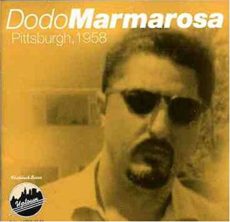
Dodo Marmarosa was born Michael Marmarosa on December 12, 1925 in Pittsburgh, Pennsylvania and received the uncomplimentary nickname Dodo as a child because of his large head, short body, and bird-like nose. He began taking piano lessons at the age of 9, receiving classical music lessons, but was influenced by the jazz playing of Art Tatum, Teddy Wilson, and others after fellow pianist Erroll Garner, four years his elder, introduced him to their music. Attending Peabody High School, he practiced a lot, until his left and right hands were equally strong.
Beginning his professional career in 1941 by joining the Johnny “Scat” Davis orchestra at the age of 15, he followed this stint with Gene Krupa around the end of 1942. After Krupa’s orchestra broke up he played in Ted Fio Rito’s band then moved to Charlie Barnet’s big band. He recorded debut was with Barnet in 1943 with “The Moose”, on which the 17-year-old pianist played, combining bebop and Count Basie-style minimalism. Marmarosa recorded some trio tracks with Krupa and DeFranco in 1944. He then worked with Tommy Dorsey and appeared in the MGM film Thrill of a Romance. After Dorsey he joined Artie Shaw’s big and small bands.
From the early 1940s Dodo had searched for and experimented with advanced progressive forms of jazz and became attracted to bebop after meeting and jamming with Dizzy Gillespie and Charlie Parker. In 1945 Marmarosa moved to Los Angeles, California and played piano on Parker’s first recordings for Dial Records. For the next two years he recorded extensively as a sideman in both bebop and swing contexts with Wardell Gray, Lionel Hampton, Mel Tormé, Willie Smith, Lester Young, and, became the house pianist for Atomic Records, Slim Gaillard and Barney Kessel.
Making his first recordings as leader in 1946, with trio tracks that included Ray Brown on bass and Jackie Mills on drums, and in a quartet with adding saxophonist Lucky Thompson, he also recorded his only vocal track, I’ve Got News for You, in the same year. He would go on to lead the first pizzicato jazz cello sessions for Dial with Harry Babasin on cello and Jackie Mills on drums.
The Fifties were not particularly productive, suffering from psychological problems and his family getting him no help, his behavior became erratic with him disappearing for weeks at a time. He recorded an Argo Records trio session in 1962 released as Dodo’s Back!, and made his final studio recordings that same year with saxophonist Gene Ammons and another with trumpeter Bill Hardman. His last public performance was contributed to his diabetes somewhere between the late Sixties to early to mid Seventies, leading to his permanent retirement.
Living in obscurity for the rest of his life, pianist, composer and arranger Dodo Marmarosa, who played in the bebop, modern, progressive and swing genres, passed away of a heart attack on September 17, 2002, in a veterans’ hospital in his hometown of Pittsburgh.

More Posts: piano