

Daily Dose Of Jazz…
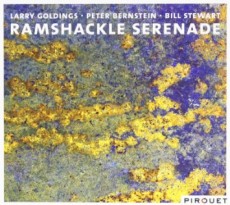
Larry Goldings was born August 28, 1968 in Boston, Massachusetts and studied classical piano until the age of twelve. While in high school at Concord Academy his primary influences were Erroll Garner, Oscar Peterson, Dave McKenna, Red Garland and Bill Evans. As a young teenager, Larry studied privately with Ran Blake and Keith Jarrett.
Goldings moved to New York in 1986 to attend a newly formed jazz program under the leadership of Arnie Lawrence at The New School. During college he studied piano with Jaki Byard and Fred Hersch. While still a freshman, Sir Roland Hanna invited him to accompany him to a three-day private jazz party in Copenhagen. While there, he met Sarah Vaughan, Kenny Biurrell, Tommy Flanagan and Hank Jones and had the opportunity to play in the band with Vaughan, Harry Sweets Edison and Al Cohn.
As a college student, Larry embarked on a worldwide tour with Jon Hendricks, working with him for a year. A collaboration lasting almost three years with guitarist Jim Hall followed. By 1988 he began developing his organ chops and secured a regular gig at Augie’s Jazz Bar, now Smoke on Manhattan’s Upper West Side. He was featured with several bands, and his own trio with guitarist Peter Bernstein and drummer Bill Stewart got its start there.
His first release was Intimacy Of The Blues in 1991 followed by sixteen more albums as a leader and has appeared as a sideman on hundreds of recordings. Over the course of his career, Goldings distinctive keyboard sound has been sought out more and more by pop, R&B, Brazilian, and alternative artists, such as, Madeleine Peyroux, John Scofield, Carla Bley, Michael Brecker, De La Soul, India Arie, Tracy Chapman, Pat Metheny, Dave Grusin, Norah Jones, John Mayer, Sia, John Pizzarelli, Steve Gadd, Rickie Lee Jones, Jack DeJohnette, Luciana Souza, and the list goes on and on.
In 2007, Larry, DeJohnnette and Scofield captured a Grammy nomination for Best Jazz Instrumental Album Individual or Group for their live album, Trio Beyond – Saudades. He has been twice awarded Best Organist/Keyboardist of the Year by the Jazz Journalists Association, and twice Best Jazz Album for Awareness and Big Stuff by the New Yorker Magazine.
As a composer his music has been used in the films Space Cowboys, Proof and Funny People. Brecker, Scofield, DeJohnette, Hall, Sia, Toots Thielemans, Curtis Stigers, James Taylor and Jane Monheit among others have recorded his compositions. Organist and keyboardist Larry Goldings continues to perform, record, tour and compose.
Selected discography[edit]

Jazz Is Global – Share
More Posts: organ
Daily Dose Of Jazz…
Warren Harding “Sonny” Sharrock was born on August 27, 1940 in Ossining, New York. His first love as a child was the saxophone after hearing John Coltrane play on Miles Davis album Kind Of Blue. Unfortunately asthma prevented him from the course so he began playing the guitar. By the time he was a teenager, he started singing in doo-wop groups.
By the late 60s he was collaborating with Pharoah Sanders and Alexander Solla during the first wave of free jazz. He made his recording debut on the 1966 Sanders album Tauhid. Sharrock performed with flautist Herbie Mann, made an un-credited guest appearance on Miles Davis’s project A Tribute To Jack Johnson and the Complete Jack Johnson Sessions, arguably his most famous cameo. He recorded three albums as a leader in the late 1960s through the mid-1970s: Black Woman, Monkey-Pockie-Boo, and an album his wife Linda titled Paradise.
Sonny semi-retired for much of the 1970s, got divorced, got divorced, and worked as a chauffeur and caretaker for mentally challenged children. He returned at the urging Bill Laswell in 1981 and recorded Laswell’s project Memory Serves. He went on to work on the punk/jazz session with the band Last Exit, and during the late 1980s, he recorded and performed extensively with the New York-based improvising band Machine Gun, as well as leading his own bands.
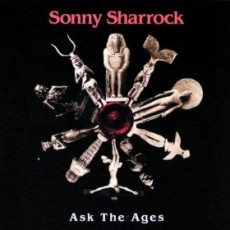
Sharrock flourished with Laswell’s help, performing together, as well as producing his albums such as his solo project Guitar, the metal-influenced Seize the Rainbow, and the well-received Ask the Ages where he featured Pharoah Sanders and Elvin Jones. He would go on to compose the soundtrack for the Cartoon Network program Space Ghost Coast To Coast, recording a total of twelve albums as a leader and six with Last Exit. He would perform and record as a sideman with Ginger Baker, Don Cherry, Pheeroah akLaff, Roy Ayers, Brute Force, and Wayne Shorter among others.
On May 26, 1994 guitarist Sonny Sharrock died unexpectedly of a heart attack in his hometown of Ossining, just as he was on the verge of signing the first major label deal in his entire career. He was 53.
Give A Gift Of Jazz – Share
More Posts: guitar

Daily Dose Of Jazz…
Eldad Tarmu was born on August 26, 1960 in Los Angeles, California where he began studying drums and percussion. Upon graduating from Tel Aviv University in Israel, he returned to the States and got a master degree in Afro-Latin music from California State University Los Angeles and a master degree in Classical composition from Stony Brook University in New York.
Tarmu established a partnership in 2006 with the American Cultural Centre in Bucharest to improve cultural ties between Romania and the United States and promote American music.]
Eldad has recorded and performed with Poncho Sanchez, Ernie Watts, Taj Mahal, Cybil Shepherd, Freddie Hubbsrd, Billy Higgins, Frank Morgan, and Ron Affif just to name a few. He has performed in over twenty-five countries around the world in various festivals and concert tours, recorded seven albums with his latest mixing jazz, Middle Eastern and strings with chamber ensemble arrangements.
Along with performing vibraphonist Eldad Tarmu keeps his education hat ready as a professor teaching World Music Studies, Intro to Music and African-American Music at Hudson County Community College. In addition he has developed a Latin American Music Studies course for the college and also reaches at SUNY Stony Brook Manhattan. He holds clinics and workshops at festivals and music camps worldwide.
Inspire A Young Mind
More Posts: vibraphone
Daily Dose Of Jazz…
Keith Tippett was born Keith Graham Tippetts on August 25, 1947 in Bristol, England. He attended Greenway Boys Secondary Modern School in Southmead where he studied piano and formed his first jazz band called The KT7 whilst still at school, performing numbers popular at the time by The Temperance Seven. In the late 1960s, he led a sextet with saxophonist Elton Deanon, trumpeter Mark Charig and Nick Evanson on trombone.
By the early Seventies, Tippett formed the big band Centipede that brought together much of a generation of young British jazz and rock musicians. As well as performing some concerts, limited economically by the size of the band, they recorded one double-album, Septober Energy.
Keith, along with Harry Miller and Louis Moholo, put together a formidable rhythm section at the centre of some the most exciting combinations in the country, including the Elton Dean Quartet and the Elton Dean Ninesense. Around the same time, he was also in the vicinity of King Crimson and contributed piano to several of their records and appeared with them on Top of the Pops. His own groups, such as Ovary Lodge, leaned towards a more contemplative form of European free improvisation.
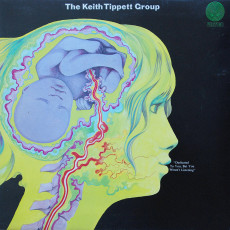
Pianist and composer Keith Tippett has recorded and performed on over 100 albums in variety of settings including duets with Stan Tracey, his wife Julie Tippetts, and solo performances. He continues to perform with the improvising ensemble Mujician and Work in Progress.
Dose A Day – Blues Away
More Posts: piano
Daily Dose Of Jazz…
Tim Hagans was born on August 19, 1954 and grew up in Dayton, Ohio. His early inspiration came from Miles Davis, Freddie Hubbard and Thad Jones. In 1974 he joined the Stan Kenton band with whom he played until 1977, when he then toured with Woody Herman. Leaving for Europe he lived in Malmo, Sweden, which was a hotbed of the European jazz scene. He toured extensively and played with Dexter Gordon, Kenny Drew, Horace Parlan and Thad Jones. He would later dedicate For the Music Suite, a 40-minute piece for jazz orchestra to Jones.
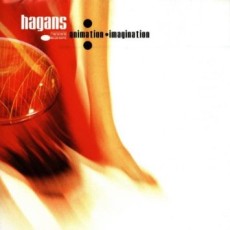
Tim’s first recorded composition, I Hope This Time Isn’t The Last, appears on Thad Jones Live at Slukefter. In 1987 he moved to New York City and has since performed with Maria Schneider, the Yellowjackets, Steps, Secret Society, and Gary Peacock. He has worked extensively with producer and saxophonist Bob Belden on a variety of recordings and live performances, including their ongoing Animation/Imagination project.
As an educator Hagans has taught master classes at universities both stateside and abroad including the University of Cincinnati and Berklee College of Music. He has held the position of Artistic Director and Composer-in-Residence for the Norrbotten Big Band in Lulea, Sweden for which his Avatar Seesions: The Music of Tim Hagans was nominated for a Grammy. He has had several commissions by the NDR Big Band, Jazz Baltica, and the Barents Composers Orchestra.
Trumpeter Tim Hagans has been honored with awards, a featured subject in the documentary Boogaloo Road, a featured soloist on the soundtrack for the film The Score with Marlon Brando, Edward Norton and Robert DeNiro. He currently performs, tours, and records with the Tim Hagans Quartet: Tim Hagans, trumpet; Vic Juris, guitar; Rufus Reid, bass, and Jukkis Uotila, drums.
Inspire A Young Mind
More Posts: trumpet