

Daily Dose Of Jazz…
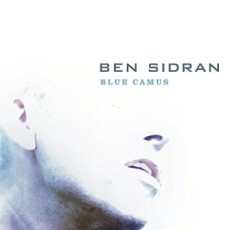
Ben Hirsh Sidran was born in Chicago, Illinois on August 14, 1943 and raised in Racine, Wisconsin. Attending the University fo Wisconsin he became a member of The Ardells along with Steve Miller and Boz Scaggs. When Miller and Scaggs left Wisconsin for the West Coast and stardom, he stayed behind to earn a degree in English literature. After graduating in 1966, he enrolled in the University of Sussex, England to pursue a PhD degree in American Studies.
Sidran rejoined Miller in an English recording studio the next year, playing on the album Children of the Future and while in England, he was a session musician for Eric Clapton, The Rolling Stones, Peter Frampton and Charlie Watts. When Scaggs and Jim Peterman departedfrom Miller’s band in 1969, he joined as a full-time keyboardist. After a brief stint in Los Angeles, where he began his career as a recording artist, he returned to Madison in 1971 and has kept the university town as a home-base ever since, playing often with such Madison-based talents as drummer Clyde Stubblefield and his keyboardist-composer son, Leo.
Over the years, while continuing to travel, perform and produce, he taught the business of music courses at the University and, beginning in 1981, hosted a variety of jazz programs for NPR, including the Peabody Award Winning “Jazz Alive” series and for VH1 television where his “New Visions” series in the early 1990s won the Ace Award.
As a musician and a producer Ben has released thirty-four solo recordings and collaborated with jazz and pop artists that include Mose Allison, Van Morrison, Diana Ross and Rickie Lee Jones. His written works include the book “Black Talk,” (on the sociology of black music in America), the memoir “A Life in the Music,” “Talking Jazz,” a collection of his historic interviews with jazz musicians.
He authored “There Was a Fire: Jews, Music and the American Dream,” a cultural history of the Jewish contribution to American popular music during the 20th century and a finalist for the 2012 National Jewish Book Award. He has recorded 33 albums for Capitol, Blue Thumb, Arista, Bluebird/RCA, Horizon, Polystar, Island, Go Jazz, Nardis and Bonsai record labels. Pianist, organist, vocalist, writer and educator Ben Sidran continues to expand his legacy or performance and education.

Jazz Is Global – Share
More Posts: piano

Daily Dose Of Jazz…
Léonardo Gandelman was born Leonardo Gandelman on August 10, 1956, in Rio de Janiero, Brazil. He spent his childhood studying classical music and by age sixteen he was a soloist with the Brazil Symphony Orchestra. He furthered his studies on saxophone, composition and arrangements at Berklee College of Music.
Returning home in 1979 he began his professional career combining Brazilian rhythms and jazz. Eight years later he launched his solo career and to date has participated in over 800 recordings.
Leo has played with Luis Santos, guest appeared in Titas’ single Telecisao and is famous for composing Brazilian telenovelas, films and series soundtracks. He has performed at Lincoln Center and festivals such as Hollywood Rock and the Montreux Festival. The Jornal do Brasil has voted him the most popular instrumental artists 15 consecutive years.
Composer, arranger and saxophonist Leo Gandelman has performed with Caetano Veloso, Chico Buarque, Milton Nascimento, Luiz Melodia, Leny Adrade, Ney Matogrosso, Joel Nascimento and Leila Pinheiro as well as with the Bahia Symphony Orchestra, the Ribeirai Preto Symphony Orchestra and the Young Orchestra of Caracas. He continues to perform, record and tour.
Take A Dose On The Road

Daily Dose Of Jazz…
Mike Davis was born on August 9, 1972 in Rosenberg, Texas not far from Houston. Mike grew up in a small Texas town not far outside of Houston called Rosenberg. Though music was in his blood from a very early age, he didn’t begin seriously playing an instrument until around age 14. His began with the bass and soon was playing in his high school big band as well as in the Symphonic band. He borrowed other instruments from the school and began to practice and experiment with clarinet, trombone, trumpet, French horn, drums and piano. Ultimately the bass was his best fit as he discovered his first great jazz album – Chick Corea’s ‘Now He Sings-Now He Sobs’.
Davis studied bass, theory and jazz with Dave Foster, Eric Late, Shelly Berg and Bruce Dudley. He played gigs in Houston with his first influential peers – Todd Harrison, Mike Wheeler, Harry Shepard, Joe LoCascio, Tony Campisi, Woody Witt, Clark Erickson, Ted Wenglisnski. In 1993 Mike began studying jazz, classical bass, arranging, composition, improvisation, table and North Indian classical music. During this time Mike performed regularly with Dave Zoller, Pete Peterson and the Collection Jazz Orchestra, Allison Wedding, Pablo Mayor and many others. He was a regular member of the bands Little Jack Melody and his Young Turks, Sol Caribe and The Great Escape. Mike also formed his original avant-garde ensemble Sand with guitarist Niclas Höglind, saxophonist Jacob Duncan and drummer Chris Michael.
In 1998 Mike moved to New York City and focused on jazz performance playing with the likes of Lynne Arriale and Steve Davis, Cheryl Pyle, Tom Chang, Rez Abbasi, Dave Phelps, the SoHa Big Band, Jonathan Kreisberg, Dave Wood, Billy Eric and Mike Freeman. He moved into the pop rock and folk genres as a producer, editor and mixer but eventually returned to his own creative endeavors. Launching Tmpf Records he released three albums, I See Better With My Eyes Closed, It Won’t Get Dark and Fortunes and Hat-tricks, Vol. 1, as a leader of a quartet, duo and trio respectively.
Over the years bassist Mike Davis has perform and recorded with Airto Moreira, Norah Jones, Steve Gadd, Ed Thigpen, Doc Cheatham, Bobby Womack, Ellen Greene, Peter Erskine and Poncho Sanchez to name a few. He continues to compose, perform, collaborate and record.
Give The Gift Of Knowledge
More Posts: bass
Daily Dose Of Jazz…
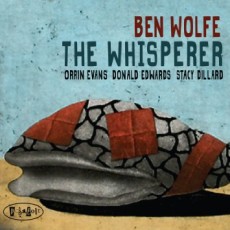
Ben Wolfe was born on August 3, 1962 in Baltimore, Maryland but was raised in Portland, Oregon. Early on in his career he formed a duo with Harry Connick Jr. and went on to be his musical director, recording over a dozen albums and soundtracks. He then joined the Wynton Marsalis Septet, remaining until it disbanded. This engagement was followed being an part of Diana Krall’s touring band, playing on many of her recordings, including the Grammy Award winning project When I Look In Your Eyes.
As a member of The Jazz at Lincoln Center Orchestra (JLCO), Ben has performed with Joe Henderson, Doc Cheatham, Jon Hendricks, Harry “Sweets” Edison, and Billy Higgins as well as recording with Branford Marsalis, James Moody, Eric Reed, Carl Allen, and Benny Green.
Wolfe has been awarded the 2004 New Works: Creation and Presentation Program Grant by Chamber Music America and funded through the Doris Duke Charitable Foundation. As a result he composed his extended composition Contradiction: Music for Sextet. He has also composed the score for Matthew Modine’s film short I Think I Thought.
Double bassist, composer and educator Ben Wolfe currently performs, records and teaches in the Jazz Division of the Juilliard School in New York City.
Put A Dose In Your Pocket
More Posts: bass
Daily Dose Of Jazz…
Billy Kilson was born William Earl Kilson on August 2, 1962 in Washington, DC. He started on trumpet at ten, switched to trombone at 11, then to drums at 16. He studied at the Berklee College of Music from 1980 to 1985, took private lessons from Alan Dawson during 1982-89, and then toured Europe with Walter Davis.
Kilson has played with such notable jazz musicians as Ahmad Jamal, Dianne Reeves, Greg Osby, George Duke, Steps Ahead, Tim Hagans, Terumasa Hino, Bob James, Dave Bob Belden, Kevin Mahogany, Kirk Whalum, Chris Botti, Freddie Jackson, Donald Brown and Paula Cole.
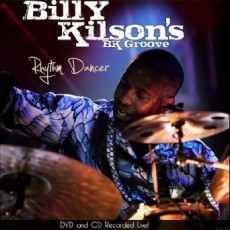
He is perhaps best known for his work with Dave Holland playing on the 1999 Grammy Award nominated album Prime Directive and his Grammy-winning 2002 release What Goes Around. He also has chops as a leader with his own quartet ensemble along comprised of James Genus and Tim Hagans. Releasing his debut compact disc in 2006 as a leader, titled Pots and Pans, it was followed by a sophomore DVD project, Rhythm Dancer, in 2012. Drummer Billy Kilson continues to record, perform and tour.
Jazz Is Global – Share
More Posts: drums