

Daily Dose Of Jazz…
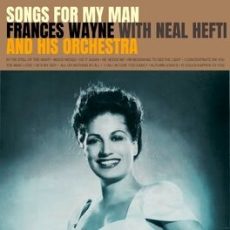
Frances Wayne was born Chiarina Francesca Bartocci or Clara Bertocci on August 26, 1924 in Boston, Massachusetts. She graduated from Somerville High School. Moving to New York City in her teens she sang in an ensemble led by her brother, saxophonist Nick Jerret.
In the early 1940s she recorded with Charlie Barnet’s big band, and in 1943 sang with Woody Herman’s band. Marrying Neal Hefti in 1945, Frances soloed in her husband’s big band formed in 1947. In addition to her solo career she sang with Hefti into the 1950s.
She later sang with smaller ensembles featuring Hank Jones, Milt Hinton, Jerome Richardson, Richie Kamuca, John LaPorta, Billy Bauer and Al Cohn. On The Woody Herman Show broadcasted on the radio, Wayne was his female vocalist.
On February 6, 1978, vocalist Frances Wayne, who received the 1946 Esquire Award as Best New Female Vocalist, died after suffering from cancer over an extended period in her hometown at age 58.
More Posts: bandleader,history,instrumental,jazz,music,vocal
Daily Dose Of Jazz…
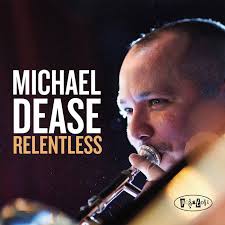
Michael Patrick Dease was born August 25, 1982 in Augusta, Georgia. He attended John S. Davidson Fine Arts Magnet High School where he studied saxophone and voice. He achieved all-state vocal honors for three consecutive years.
At 17 Michael taught himself to play trombone and was soon invited to join the inaugural class of the Juilliard jazz studies program by Wycliffe Gordon. He earned both his bachelor’s and master’s degrees while at the school. While at Juilliard he won many awards, including the Frank Rosolino Award, J.J. Johnson Award, the Sammy Nestico Jazz Composers Award, ASCAP Young Jazz Composer Award, and the Fish Middleton Jazz Competition.[2]
He began his career in Illinois Jacquet’s Big Band in 2002, and has performed as a featured member of the big bands of Christian McBride, Roy Hargrove, Nicholas Payton, Jimmy Heath, Charles Tolliver and the Dizzy Gillespie All-Stars. He also performs with small groups led by Claudio Roditi, Rodney Whitaker, Wycliffe Gordon, and David Sanborn. He has toured extensively throughout Europe, Asia, North America and Latin America. In addition to performance, Dease serves as president and producer at his jazz record label, D Clef Records.
Dease conducts master classes and workshops at universities and conservatories around the world, holds the position of Associate Professor of Jazz Trombone at the Michigan State University College of Music. He has held similar positions at Queens College, CUNY, and The New School for Jazz and Contemporary Music in New York City.
Tenor and bass trombonist, composer, producer and educator Michael Dease continues to perform, compose, record and educate.
More Posts: bandleader,bass,composer,educator,flugelhorn,history,instrumental,jazz,music,piano,producer,saxophone,trombone,trumpet
Daily Dose Of Jazz…
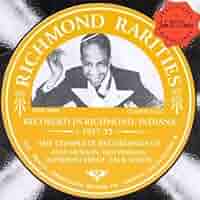
Alphonse “Alphonso” Trent was born on August 24, 1905 in Fort Smith, Arkansas and played piano from childhood, working in local bands in Arkansas through his youth.
He led his first band in the mid-1920s, possibly as early as 1923. In 1924 he played with Eugene Cook’s Synco Six, then took over leadership of the band until 1934. They played mostly in the American South and Midwest, as well as on steamboats.
Despite success in New York around 1930, Trent chose not to work further on the East Coast. He left music in the mid-1930s but returned with another band in 1938. His sidemen included Terrence Holder, Alex Hill, Stuff Smith, Snub Mosley, Charlie Christian, Sweets Edison, Mouse Randolph, and Peanuts Holland.
As a leader he only recorded eight sides: four in 1928, two in 1930, and two in 1933. His small recorded legacy has made him a somewhat obscure figure today, but the sophistication of his arrangements and the precision with which they were executed inspired awe in contemporaries.
Pianist and territory band leader Alphonso Trent, who performed in the biggest and finest hotels in the South, died on October 14, 1959.
More Posts: bandleader,history,instrumental,jazz,music,piano
Daily Dose Of Jazz…
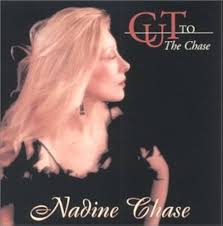
Nadine Chase was born August 23rd and grew up in Brooklyn, New York. A versatile vocalist over the years, she has performed with her trio and big band orchestras in many of Boston’s finer hotels and jazz clubs.
Each year, she and her trio volunteer their time and talents to Brookline’s First Light celebration to help support the arts in Brookline schools. They play major fundraisers for the Fenway Community Health Center and perform at inaugural celebrations and special events.
She is active in the Institute of Noetic Sciences, and the Society for Organizational Learning about creativity in business and assisting individuals to help find their voice. In 2001 she recorded and released her debut album Cut To The Chase which was nominated for a Grammy as Best Jazz Vocal Album.
Vocalist Nadine Chase, who is a member of the National Academy of Recording Arts & Sciences, the Boston Musicians Local 9-535, and the Boston Association of Cabaret Artists, continues to perform.
More Posts: bandleader,history,instrumental,jazz,music,vocal
The Jazz Voyager
Since I’ve been hanging out in the Big Apple for two weeks, I thought I’d head upstate to Tarrytown for a change of seasons and take in the fall colors that are always so beautiful. This week I’ll be at the Lyndhurst Mansion overlooking the Hudson River on the land that was originally hunting grounds of the indigenous Lenape/Munsee tribe that were the first inhabitants of the Hudson Valley. I’m traveling to this location to partake in the Summer Concert Series promoted by the Jazz Forum Arts.
The concert series is free but there is a ten dollar fee to enter the estate. Little expense to view the grounds and be entertained by swing/bop vocalist Nancy Kelly who is headlining this evening. I love being introduced to new places and performers I’ve never heard before. This should prove to be an amazing time.
Lyndhurst is located at 635 S Broadway, Tarrytown, NY 10591. For more information visit https://www.jazzforumarts.org.

More Posts: adventure,bandleader,club,genius,preserving,travel,vocal