

Daily Dose Of Jazz…
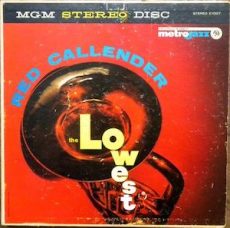
William Douglass was born on February 28, 1923 in Sherman, Texas. His extended family relocated to Los Angeles, California when he was six months old in an effort to escape Jim Crow laws. As a member of a musical family he took an early interest in music and when he heard drummer Gene Krupa performing Sing, Sing, Sing on the radio his path was set. He met and befriended Dexter Gordon while attending McKinley Junior High School in Los Angeles, at which point he first began playing drums.
At Jefferson High School, both he and Gordon began taking band under teacher Lloyd Reese, and took private keyboard instructions. Never taking private drum lessons, Bill eventually made the acquaintance of drummer Cozy Cole, who allowed him to watch him practice. What he learned by watching him and other drummers helped him evolve a style of his own.
While still in schoo he, Dexter and Lammar Wright, Jr. he began playing in Central Avenue night clubs. Eventually he began drumming for pianist Gerald Wiggins, along with double bass and tuba player Red Callender, until he and Callender left to form a trio with blind pianist Art Tatum.
In 1941 upon graduating from high school he enlisted in the United States Army and was assigned to the Black 10th Cavalry Regiment at Camp Lockett. This led to his start to seeing the world being stationed in Casablanca, Oran, Algiers, Naples and Rome. During these travels, Bill became drum major of his 28-piece ensemble, a position he attributed to his great height.
Leaving the service he went on to a stint with Benny Goodman, where he was at the time the only black member of the band. Bill eventually became part of the union struggle for integration and equality. Even as a working musician, Douglass expanded into teaching drums at Drum City. Among his students, were Ray Brown, Jr., Karen Carpenter, and Ella Fitzgerald.
Drummer and educator Bill Douglass, who was an active proponent of desegregation in the American Federation of Musicians, died on December 19, 1994.

More Posts: bandleader,drums,history,instrumental,jazz,music
Daily Dose Of Jazz…
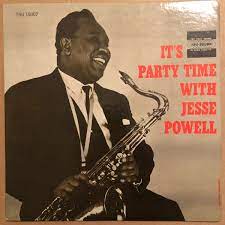
Jesse Powell was born in Smithville, Bastrop County, Texas, on February 27, 1924. He received his formal music training before he began his professional career at age eighteen, when he toured with fellow Texan, Oran “Hot Lips” Page beginning at the age of eighteen during 1942–43.
During the war years he went on to play with Louis Armstrong in 1943–44, then with the Luis Russell Orchestra in 1944–45. He replaced fellow Texas tenorist Illinois Jacquet in the Count Basie Band for a tour of California in 1946. At this time Powell also worked with blues singers Champion Jack Dupree and Brownie McGhee.
1947 saw Jesse joining Curly Russell’s band, and in 1948 he formed his own band in New York City. That same year he performed with trumpeter Howard McGhee at the first international jazz festival in Paris. In 1949–50, he was a member of the Dizzy Gillespie Big Band, with whom he recorded a solo on Tally Ho. In 1953 he once again formed another jump-rhythm band, and in 1964 a Powell quintet played at Birdland in New York City.
Tenor saxophonist Jesse Powell died on October 19, 1982 in New York City.
More Posts: bandleader,history,instrumental,jazz,music,saxophone
Daily Dose Of Jazz…
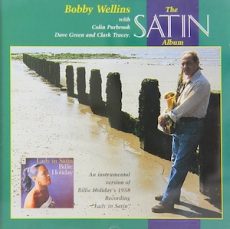
Colin Thomas Purbrook was born February 26, 1936 in Seaford, East Sussex, England and learned piano from the age of six from his father, who was also a professional pianist. As an eleven year old, in 1947 he won three Challenge Cups at the Brighton Music Festival. He went on to study music at the Fitzwilliam College, Cambridge. As well as playing piano, he also played the trombone with the Cambridge University Jazz Band.
Leaving Cambridge in 1957 he joined Sandy Brown’s quintet on double bass for a six-month period at the popular Oxford Street 100 Club. He played piano for three years with Al Fairweather’s All Stars, and also played with Kenny Ball, both as a pianist, trumpeter and double bassist. In the early 1960s he worked with Kenny Baker, Ian Carr, Tony Coe, Bert Courtley, Jimmy Deuchar, Wally Fawkes, Alan Ganley, Derek Hogg, Dudley Moore, John Picard, Don Rendell, Ronnie Ross, and Ronnie Scott.
In 1961 he worked alongside composer and musician Charles Mingus on the music score for the film All Night Long which was eventually released in 1962. Later in the decade he continued working with Brown and Coe, as well as with Brian Lemon, Humphrey Lyttelton, and Phil Seamen on drums. He played piano for the BBC 2’s music programme Jazz 625 with Dakota Staton and the Keith Christie All Stars respectively and was a member of Benny Goodman’s sextet when the clarinetist recorded a special gala performance for BBC2 in 1964.
He often played with drummer Phil Seamen, joining his trio during the late 1960s and early ’70s. Colin was a frequent sideman for Americans touring the UK, and worked over the course of his career with Chet Baker, Ruby Braff, Benny Carter, Doc Cheatham, Eddie Lockjaw Davis, Art Farmer, Dexter Gordon, Barney Kessel, Howard McGhee, James Moody, Annie Ross, Zoot Sims, and Buddy Tate. He was involved with the production of a number of stage plays from the 1970s through the 1990s. He led trios and quartets into the 1990s, took up a couple of residencies as a solo pianist, and continued to tour and appear on radio and television and, despite the fact that he began to suffer from rheumatoid arthritis in 1995.
Pianist, double bassist, trumpeter and songwriter Colin Purbrook, who also led his own smaller and larger ensembles, died in London, England of cancer on February 5, 1999.
More Posts: double bass,history,instrumental,jazz,music,piano,songwriter,trumpet
Daily Dose Of Jazz…
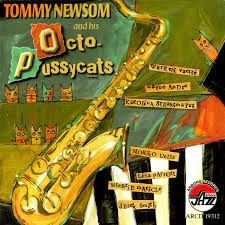
Thomas Penn Newsom was born in Portsmouth, Virginia on February 25, 1929 and earned degrees from the Norfolk Division of the College of William & Mary, the Peabody Conservatory of Music, and Columbia University. He went on to serve in the United States Air Force during the Korean War where he played in the band.
He toured with the Benny Goodman Orchestra and performed with Vincent Lopez in New York. Newsom joined the Tonight Show Band in 1962, and left it when Carson retired in 1992. In addition to Carson’s orchestra, he performed with the orchestra for The Merv Griffin Show.
Well known within the music industry as an arranger as well as a performer, he arranged for groups as varied as the Tonight Show ensemble and the Cincinnati Pops Orchestra, and musicians Skitch Henderson, Woody Herman, Kenny Rogers, Charlie Byrd, John Denver, and opera star Beverly Sills.
He won two Emmy Awards as a music director, one in 1982 with Night of 100 Stars, and in 1986 for the broadcast of the 40th Annual Tony Awards. He also recorded six albums as a bandleader and another four as a sideman.
On April 28, 2007 saxophonist Tommy Newsom, who was nicknamed Mr. Excitement by Johnny Carson and was the band’s substitute director, died of bladder and liver cancer at his home in Portsmouth. He was 78 years old.
More Posts: arranger,bandleader,history,instrumental,jazz,music,music director,saxophone
Daily Dose Of Jazz…
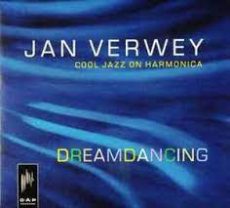
Jan Verwey was born on February 24, 1936 in Vlissingen, The Netherlands. A self-taught harpist, he created his own style on this characteristic instrument. He is the only one who plays octaves on the harmonica.
Very much a bebopper and his unique self-developed instrumental technique, he boldly brings about his desired harmony and melody to his solo’s. During his first visit to the United States in 1990 he was immediately rushed into the recording studio by producer Bill Goodwin, Phil Woods drummer, to record The Dutch Connection which led to a performance at the North Sea Jazz Festival in the Netherlands.
In 1991 he was back in the States being the only European invited to play at the festival Celebration Of The Arts in Watergap, as a soloist. He also gave a duo concert with pianist Hod O’brien who recorded with Chet Baker at The Dearhead Inn. In 2007 he was playing at festivals in Medicine Hat and Calgary in Canada. He has toured Europe, playing in Copenhagen, Denmark as well as Frankfurt, Hamburg, Dusseldorf, Rhede and Darmstadt in Germany.
He has a nomination for the Pall Mall Export Award, was a guest soloist with the Metropole Orchestra, in addition to guest performances on television- and radio shows. As a composer he has written for television series, documentaries and commercials.
He has recorded eight albums as a leader with his last being his 2019 The Music of Horace Silver. Harmonica player Jan Verwey, who plays bebop and cool jazz, continues to perform.
More Posts: bandleader,harmonica,history,instrumental,jazz,music