

Daily Dose Of Jazz…
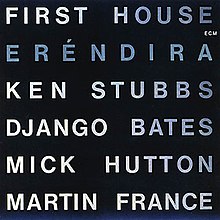
Mick Hutton was born on June 5, 1956 in Chester, United Kingdom. Making a name for himself in the British jazz scene, he worked with a number of musicians and groups including but not limited to Harry Beckett, Julian Argüelles, Iain Ballamy, Django Bates and Ken Stubbs of First House, the Chris Biscoe Sextet and Bill Bruford’s Band Earthworks.
A hand injury forced Mick to abandon the upright bass and he started working as bass guitarist, percussionist, and synthesizer player and as a composer. He works with his own band of saxophonist Andy Panayi, pianist Barry Green, and drummer Paul Robinson. With his quartet, including saxophonist Iain Ballamy, pianist Ross Stanley and drummer Paul Robinson, he frequently visits venues around the world.
Throughout his career Hutton has performed with Alan Barnes, Peter Erskine, Tina May, Jim Mullen, John Scofield, Alan Skidmore, Tommy Smith, John Taylor, Stan Tracey, and Kenny Wheeler. In 2002 he recorded on Robin Williamsons album Skirting the River Road, and the same year he played in a trio with Martin Speake and Paul Motian, recording Change of Heart.
Bassist, guitarist, percussionist and composer Mick Hutton, who also plays synthesizer, continues to perform and record.

More Posts: bass,composer,guitar,history,instrumental,jazz,music,percussion,synthesizer
Daily Dose Of Jazz…
Ginger Smock was born Emma Smock on June 4, 1920 in Chicago, Illinois and grew up in Los Angeles, California. She graduated from Jefferson High School and studied violin privately with Bessie Dones. By the time she hit the age of 10 she appeared as a soloist at the Hollywood Bowl. She was featured on Clarence Muse’s radio program at the age of thirteen performing Edward MacDowell’s To A Wild Rose. She earned degrees in music from Los Angeles City College, and the Zoellner Conservatory of Music. At the latter institution she was a pupil of Edith Smith.
During 1944 she led a trio with Nina Russell and Mata Roy. In 1951, she led an all-female sextette, featuring Clora Bryant, on the Chicks and the Fiddle show hosted by Phil Moore that broadcasted for six weeks on CBS. The next year she was the featured soloist on KTLA’s variety show, Dixie Showboat.
1953 had Smock recording as part of a group with Gerald Wiggins, Freddie Simon, Red Callender, and Rudy Pitts, accompanying the vocalist Cecil “Count” Carter.
During the mid 1970s, she spent ten years as concertmaster of show orchestras in Las Vegas. In addition to her work in jazz and rhythm & blues, she performed with the All City Symphony Orchestra of Los Angeles. A violin owned by Smock is in the collection of the National Museum of African American History and Culture
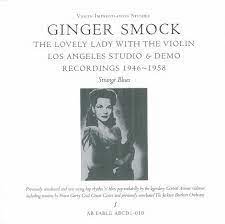
Violinist, orchestra leader, and local Los Angeles television personality Ginger Smock, who recorded as a leader but is perhaps best known from her recordings with the Vivien Garry Quintet, transitioned on June 13, 1995.
More Posts: bandleader,concertmaster,history,instrumental,jazz,music,violin
Daily Dose Of Jazz…
Robert Wallis was born on June 3, 1934 in Bridlington, East Riding of Yorkshire, where his father became harbour master. At an early age he joined the local Salvation Army band with his friend, Keith Avison, who was to play trombone with Wallis for a number of years. By the age of twenty, he discovered jazz and set up his own band in his seaside town,which also played in Hull, England.
He went to Denmark for a short spell, and recorded a couple of records there as the vocalist with the Washboard Beaters. Relocating to the UK, Bob went to London and played for a short time with Ken Colyer’s Omega Brass, as well as joining Acker Bilk. These bands were recording mainly for the specialist 77 Records label.
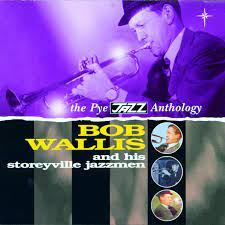
He joined up with Hugh Rainey’s All Stars whereGinger Baker was their drummer at the time. Shortly afterwards the band changed its name to The Storyville Jazz Band, fronted by Wallis. In 1959 the band recorded an album for Top Rank Records, Everybody Loves Saturday Night. The band recorded several singles before moving to Pye Records where they recorded three more albums and released a few singles.
1963 saw Wallis and his band disbanded and he played with one or two other bands before moving to the Continent where he spent most of his remaining years, still playing with reconstituted versions of the Storyville Jazzmen. That same year he participated in the biggest trad jazz event staged in Britain at Alexandra Palace which included George Melly, Diz Disley, Acker Bilk, Chris Barber, Kenny Ball, Ken Colyer, Monty Sunshine, Alex Welsh, Bruce Turner and Mick Mulligan.
Ultimately he settled in Zurich, Switzerland with a residency at the Casa Bar. He continued to make records for European record labels Storyville Records, WAM and Pebe. Trumpeter Bob Wallis, whose influence was Henry Red Allen, returned to England with his wife, Joyce, where he transitioned in hospital on January 10, 1991 at the age of 56.
More Posts: bandleader,history,instrumental,jazz,music,trumpet
Daily Dose Of Jazz…
Ronnie Bedford was born in Bridgeport, Connecticut on June 2, 1931. He started early on the drums, taking lessons from Fred Albright of the NBC Orchestra when he was ten. Later he started listening to radio airchecks of the great big bands on the radio which, among other things, resulted in Gene Krupa becoming his idol. Although he was already in jazz, the defining moment when he fully committed to the jazz life came in 1970 while he was with the Morris Nanton Trio.
He went on to perform with Broadway shows, big bands, small groups, TV, and the recording studio. A very short list of those he has sat in at drums are Hank Jones, Sylvia Sims, Arnett Cobb, Benny Carter, Walter Norris, and Bill Watrous. The drummer has also performed at key jazz festivals and major concert halls including the Newport Jazz Festival, Royal Albert Hall in London and New York’s Avery Fisher Hall, both with Benny Goodman, and the Smithsonian Museum with Benny Carter.
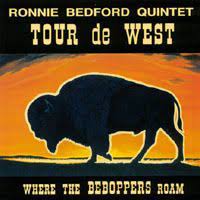
In 1993 he released a self-published album titled Tour de West. He later produced three more albums before the turn of the century on the Progressive Records label. As a sideman he recorded with Carter, Cobb, Jones, Chris Connor, Buddy DeFranco, Don Friedman, Rod Levitt, Pee Wee Russell, Derek Smith and Chuck Wayne.
He was one of the founders of the Yellowstone Jazz Festival held annually in Cody, Wyoming, and was the recipient of the 1993 Wyoming Governor’s Award for the Arts. Living in Powell, Wyoming he taught percussion at Northwest College. Drummer and professor Ronnie Bedford transitioned on December 20, 2014.
More Posts: bandleader,drums,educator,history,instrumental,jazz,music
Daily Dose Of Jazz…
Harry Alexander White was born on June 1, 1898 in Bethlehem, Pennsylvania. As a teenager, he played drums, then switched to trombone after moving to Washington, D.C. around 1919. In the early Twenties he played with Duke Ellington, Elmer Snowden, and Claude Hopkins. Then in 1925 he formed the family band called the White Brothers Orchestra, which played the mid-Atlantic states for several years with regular gigs in New York City and Philadelphia, Pennsylvania.
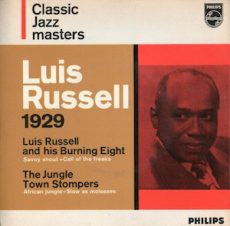
Late in the 1920s, he played with Luis Russell, then joined the Mills Blue Rhythm Band in 1931. The following year he joined Cab Calloway’s orchestra, working as an arranger and composer in addition to his duties on trombone. One of Calloway’s trumpeters, Edwin Swayze, overheard Harry use the term “jitterbug”, and wrote a tune called The Jitterbug. Calloway’s 1934 recording of the song brought the term into widespread currency.
Returning to play with Russell in 1935 when the band was backing Louis Armstrong, he eventually quit playing for part of the Thirties decade. He would later perform with Manzie Johnson, Hot Lips Page, Edgar Hayes, and Bud Freeman.
Trombonist, pianist, saxophonist, arranger and composer Harry White, who was affectionately known as Father White, transitioned on August 14, 1962 in New York City.
More Posts: arranger,bandleader,composer,history,instrumental,jazz,music,piano,saxophone,trombone