

Daily Dose Of Jazz…
Lurlean Hunter was born in Clarksdale, Mississippi on December 1, 1919 and was taken to Chicago, Illinois when she was two months old. She attended Englewood High School in Chicago.
Her first paid singing performance came when she appeared with Red Saunders and his orchestra at Club DeLisa on Chicago’s South Side. Hunter was signed by Discovery Records in 1950 and subsequently was a featured performer with George Shearing and his quintet at Birdland in New York City.
In 1951 Lurlean was among a group of rising young stars of jazz, that were presented at the Streamliner night club in Chicago. She performed at the Cloister Inn, where an initial four-week booking turned into a 2.5-year stay. She went on to work in New York and Ottawa, Ontario, Canada.
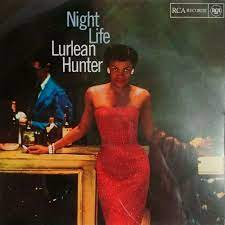
Leaving Discovery, she began recording for Atlantic Records in 1961, with Blue and Sentimental as her first album for that label. She later recorded for RCA Victor. By 1963, Hunter became the first Black performer hired by WBBM radio in Chicago. After a successful on-air audition, she became a member of the staff of the all-live Music Wagon Show. Five years later the National Educational Television jazz broadcast featured her, accompanied by the Vernel Fournier Trio.
In 1958, she sued RCA Record Division after it used her image and her name on the cover of its, not her Lonesome Gal record album. The suit alleged “unfair competition, infringement of trade name, unfair business practices, unjust enrichment and invasion of the right of privacy.” Though the court acknowledged that the album contained the song “Lonesome Gal”, and that the use of one song’s title for an album’s title was common practice in the recording industry, it ruled in Hunter’s favor on the basis that she was the first person to “adopt and establish the name Lonesome Gal as a personality” and that name was exclusively associated with her. Damages of $22,500 were awarded to Hunter, and the company was ordered to destroy all material containing Hunter’s likeness in conjunction with “Lonesome Gal”.
Vocalist Lurlean Hunter, who was a contralto and made commercials for products such as peas and telephone directories, transitioned on March 11, 1983 in Kalamazoo, Michigan.

More Posts: bandleader,history,instrumental,jazz,music,vocal
Daily Dose Of Jazz…
Bill Reichenbach was born William Frank Reichenbach Jr. on November 30, 1949 in Takoma Park, Maryland. He began playing in high school for bands in the Washington, D.C. area and also sat in with his father’s group, playing with Milt Jackson, Zoot Sims, and others.
He went to Rochester, New York to study at the Eastman School of Music with the legendary teacher Emory Remington and after graduating joined the Buddy Rich band. He would go on to work in the Toshiko Akiyoshi – Lew Tabackin Big Band in Los Angeles, California in the mid/late 1970s. After that move he became known for music for television and film.[2]
He played trombone on The Wiz and, with the Seawind Horns including Jerry Hey on Michael Jackson’s albums Off the Wall, Thriller, and HIStory. He was a composer for Cartoon All-Stars to the Rescue.
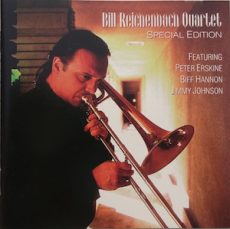
He recorded a solo album, Special Edition, where he is featured on bass trombone as well as tenor. Trombonist, euphoniumist, composer and session musician Bill Reichenbach, who has collaborated on eighty-six albums with artists from Al Jarreau and George Benson to Barbra Streisand, Patti Austin and Bette Midler to Christopher Cross and Selena, continues his career in television, films, cartoons, and commercials.

More Posts: bandleader,composer,euphonium,history,instrumental,jazz,music,trombone
Daily Dose Of Jazz…
Joe Bishop was born November 27, 1907 in Monticello, Arkansas and learned piano, trumpet, and tuba when he was young. He also played flugelhorn and mellophone. He attended Hendrix College and played professionally with the Louisiana Ramblers in 1927, including in Mexico.
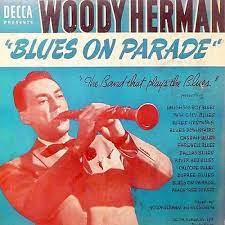
Bishop played with Mart Britt, Al Katz, and Austin Wylie before joining the Isham Jones band for five years. He was a founding member of Woody Herman’s band in the 1930s, but he contracted tuberculosis in 1940 and had to leave the group. He was rehired by Herman as a staff arranger later in the 1940s, and his arrangements and compositions were recorded frequently by Herman, appearing on some 50 of Herman’s albums.
As a performer, Joe played with Cow Cow Davenport and Jimmy Gordon’s Vip Vop Band, but retired from studio work due to his health in the 1950s. Joe quit music and opened a store in Saranac Lake, New York, and later retired to Texas. His compositions include Midnight Blue, Woodchopper’s Ball, and Blue Prelude with Gordon Jenkins.
Tubist, pianist and composer Joe Bishop, whose work has been covered by musicians as diverse as Ten Years After and Lawrence Welk, transitioned on May 12, 1976.
More Posts: composer,history,instrumental,jazz,music,piano,tuba
Daily Dose Of Jazz…
William “O’Neil” Spencer was born on November 25, 1909 in Cedarville, Ohio and began his career with local bands in the Buffalo, New York area. In 1931, he began working for Al Sears before joining up with the Mills Blue Rhythm Band from 1931 to 1936, which later became the Lucky Millinder Orchestra.
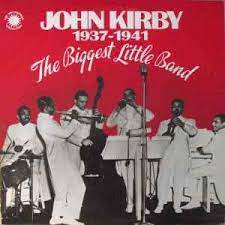
However, it wasn’t until 1937 after joining the popular John Kirby Sextet that he truly became an influential force on the jazz scene. Unfortunately, Spencer had to leave for a time in 1941 due to tuberculosis. However, during the late Thirties he recorded with numerous other groups, including Red Allen, Sidney Bechet, Jimmie Noone, Johnny Dodds, Frankie Newton, Milt Hearth, and Lil Armstrong.
He left the Kirby sextet in 1941 to work briefly with Louis Armstrong, but returned in ’42. His career, however, was cut short in 1943 when he contracted tuberculosis. Drummer and singer O’Neil Spencer transitioned on July 24, 1944 in New York City at the age of thirty-five.
More Posts: drums,history,instrumental,jazz,music
Daily Dose Of Jazz…
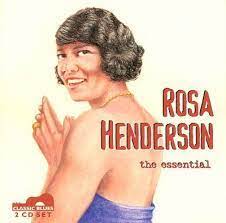
Rosa Henderson was born Rosa Deschamps on November 24, 1896 in Henderson, Kentucky. Her career as an entertainer began in 1913 when she joined her uncle’s circus troupe. She married Douglas “Slim” Henderson in 1918 and began traveling with his Mason-Henderson show. As a musical comedian she started during the early 1920s after moving to New York City, where she performed on Broadway. She would eventually perform in London.
Over the course of nine years she recorded over one hundred songs beginning in 1923. During that time she sometimes used pseudonyms such as Sally Ritz, Flora Dale, Sarah Johnson, Josephine Thomas, Gladys White, and Mamie Harris. She was accompanied by the Virginians, Fletcher Henderson’s Jazz Five, Fletcher Henderson’s Orchestra, Fletcher Henderson’s Club Alabam Orchestra, the Choo Choo Jazzers, the Kansas City Five, the Three Jolly Miners, the Kansas City Four, the Three Hot Eskimos, and the Four Black Diamonds.
She recorded for Ajax Records, Columbia, Paramount, Victor, and Vocalion Records. Her recordings include Afternoon Blues, Doggone Blues, Do Right Blues, He May Be Your Dog But He’s Wearing My Collar, and Papa If You Can’t Do Better (I’ll Let a Better Papa Move In).
After 1926, due largely in part to the death of her husband her recordings became limited, however, she continued performing until 1932. At that point Rosa took a job in a New York department store, but continued to perform benefit concerts until the Sixties.
Unrelated to Fletcher, Horace, Katherine, or Edmonia Henderson, vocalist Rosa Henderson, who sang jazz, blues and was a vaudeville performer of the Harlem Renaissance era, transitioned from a heart attack in 1968 on April 6, 1968.
More Posts: bandleader,history,instrumental,jazz,music,vocal