

Daily Dose Of Jazz…
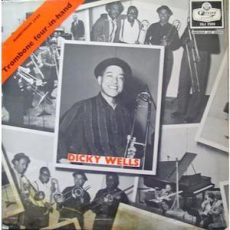
George Matthews was born on September 23, 1912 in Dominica, British West Indies and received classical training in New York City and played with local dance and jazz bands. In the early 1930s he joined Tiny Bradshaw’s group, being adept on tuba, trumpet, and trombone.
Later in the decade he worked with Willie Bryant, Louis Armstrong, Chick Webb, and in the Forties he recorded with Ella Fitzgerald, Lucky Millinder, and Sister Rosetta Tharpe. After World War II, Matthews worked extensively with Count Basie, then joined Erskine Hawkins’s group in the early 1950s, while recording with Dizzy Gillespie, and Dicky Wells. In the 1960s he played with Lucille Dixon, Clark Terry, and recorded with Cannonball Adderley and Ray Charles in the Sixties.
Trombonist George Matthews, who never led a recording session, transitioned on June 28, 1982.

More Posts: bandleader,history,instrumental,jazz,music,trombone

Daily Dose Of Jazz…
Samuel “Savoirfaire” Williams was born on September 22, 1973 in Chicago, Illinois. At the age of three he began playing violin at his parents’ church and two years later joined a group of child prodigies under the tutelage of Suzuki Violin instructor, Betty Haag. His first performance was at Chicago’s Orchestra Hall during a public television broadcast which became an annual event spanning more than 35 years.
He attended the Merit School of Music in Chicago, studying music theory while participating in youth orchestras including the City Youth Symphony, Chicago Youth Symphony Orchestra, Protégé, All-City and All-State. He took private lessons from Afro-Panamanian musician Joseph Williams when he was 16. During this time he played lead for the City Youth String Ensemble’s viola section, then received a scholarship at Interlochen where he sat in with vibraphonist Milt Jackson.
Meeting and performing with Wynton Marsalis while working at the Chicago Symphony Center, Williams continued his studies and busked on the streets to pay for violin lessons. During one of his street performances, guitarist Kenny Burrell observed his skill and invited him to collaborate with himself, Willie Pickens and Larry Gray on a Bebop performance at Chicago’s Jazz Showcase.
In 2000, he was voted into the Chicago Chapter of the Association for the Advancement of Creative Musicians (AACM), which earned him the moniker “Savoirfaire.” That same year, he began an apprenticeship with luthier Martin Sheridan to learn the art of violin-making, later owning the violin shop and managing it for three years.
After self-releasing three live albums, Bob Koester discovered his work and in 2004 Delmark Records produced the internationally acclaimed release Running Out of Time. Over the years, Savoirfaire has been invited to record with a plethora of artists in various genres and at international Jazz festivals.
In 2015, Williams founded the Chicago Gypsy Project with guitarist Dave Miller and bassist Charlie Kirchen. He continues to perform with his group Savoirfaire Jazz Quartet as well as busking on the streets, and in various venues throughout Chicago.
More Posts: bandleader,history,instrumental,jazz,music,violin
Daily Dose Of Jazz…
Sunny Murray was born James Marcellus Arthur Murray on September 21, 1936 in Idabel, Oklahoma and was raised by an uncle who later died after being refused treatment at a hospital because of his race. He began playing drums at the age of nine, however, during his teen years he lived in a rough part of Philadelphia, Pennsylvania and spent two years in a reformatory.
By 1956, he was in New York City working in a car wash and as a building superintendent. During this time, he played with among others, trumpeters Red Allen and Ted Curson, pianist Willie “The Lion” Smith, and saxophonists Rocky Boyd and Jackie McLean. 1959 saw him playing for the first time with pianist Cecil Taylor and subsequently turned his direction towards experimenting with creative new ideas. In 1961, Murray made a recording with Taylor’s group that was released under the auspices of Gil Evans as one side of Into the Hot.
In 1962 Sunny went to Europe for the first time with Taylor and saxophonist Jimmy Lyons. During that time, the group made a stylistic breakthrough while in Sweden and started playing free. While in Denmark later that year, the trio recorded the influential concerts released as Nefertiti the Beautiful One Has Come.
That same year Taylor and Murray met saxophonist Albert Ayler, with whom the group recorded together for Danish television as the Cecil Taylor Unit. Upon their return to the United States, the group performed at the Take Three club in Greenwich Village and at Philharmonic Hall, Lincoln Center in New York City on New Year’s Eve 1963 as the Cecil Taylor Jazz Unit, with a healthy Grimes on bass.
Continuing to play with Ayler, Sunny went on to join Ayler’s trio with bassist Gary Peacock. He recorded a number of albums with Ayler, and his unchained approach to percussion gave Ayler the freedom to travel his own road that had hitherto been lacking. In 1964 he played with John Coltrane, however, declined the offer to join the band.
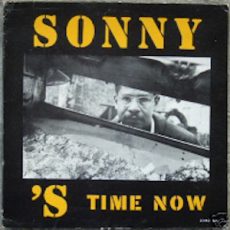
He recorded his debut album as a leader in 1965 with Sonny’s Time Now, which was released on Leroi Jones’s Jihad label. This was followed by twenty more leader albums on various labels until 2011 with the recording of Boom Boom Cat. Over the course of his career he would record as a sideman for a host of musicians, but his final recording session as a sideman was Corona, once again teamed with Cecil Taylor, released posthumously in 2018. Drummer Sunny Murray, who had a documentary made in 2008 titled Sunny’s Time Now: A Portrait of Jazz Drummer Sunny Murray, transitioned on December 7, 2017 from multiple organ failure at the age of 81.
More Posts: bandleader,drums,history,instrumental,jazz,music
Daily Dose Of Jazz…
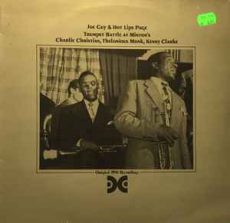
Joseph Luke Guy was born in Birmingham, Alabama on September 20, 1920 but much of his early personal life is obscured. He began his professional music career performing in New York City, and joined Fats Waller’s backup band in the late 1930s. Following that, in 1938, he succeeded Dizzy Gillespie in Teddy Hill’s orchestra.
Patterning his playing style after his musical role model, Roy Eldridge, despite his range, speed, and potential, Joe never managed to surpass Eldridge’s abilities, though he was considered a musical talent when taking into account his young age.
In 1940 he became a key soloist in Coleman Hawkins’ short-lived big band. 1941–42 saw Guy as a regular performer as a member of the after-hours band at Minton’s Playhouse alongside Nick Fenton, Kenny Clarke, and Thelonious Monk in jam sessions with early bop music. During this period he was actively involved in numerous recordings by Jerry Newman, and also appeared on songs by Charlie Christian, Hot Lips Page, Roy Eldridge, and Don Byas.
Incorporating Gillespie’s influences into his playing, Joe’s performance on Monk’s 1942 song Epistrophy is arguably the highlight of his recording career. Much of his appearances as an instrumentalist are marked by his enthusiasm and tempo, however, on occasions would over exert himself and consequently sound erratic.
Struggling with a heroin addiction throughout the majority of his brief career, in 1945–46 Guy was involved with Billie Holiday both professionally and intimately. When they were both busted for drug possession, the two cut ties thereafter. Afterwards, sidelined him from further success, he moved back to his hometown and fell into relative obscurity among the music industry.
Trumpeter Joe Guy, who performed locally in his hometown and advised others about the dangers of his addiction, transitioned on June 1, 1962, at the age of 41.
More Posts: history,instrumental,jazz,music,trumpet
Daily Dose Of Jazz…
Cuong Vu was born on September 19, 1969 in Saigon, Vietnam and immigrated to Seattle with his family when he was six. At 11 he began to play the trumpet and later received a scholarship from the New England Conservatory of Music.
After graduation, in 1994 Vu moved to New York City and formed the group Ragged Jack with Jamie Saft, Andrew D’Angelo, and Jim Black. Since that time he has worked with Laurie Anderson, David Bowie, Dave Douglas, Myra Melford, Gerry Hemingway, and Mitchell Froom.
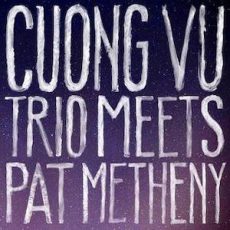
While a member of the Pat Metheny Group, he won two Grammy Awards for Best Contemporary Jazz Album: Speaking of Now and The Way Up. Cuong worked with Metheny mainly as a trumpeter, but also contributed vocals, guitar and various small percussion.
As an educator, he serves as chair and professor in the jazz studies department of the University of Washington’s School of Music. Trumpeter Cuong Vu has recorded eleven albums as a leader, thirty-three as a sideman, and continues to lead his own band with bassist Stomu Takeishi and drummer Ted Poor.
More Posts: bandleader,guitar,history,instrumental,jazz,music,trumpet,vocal