


Daily Dose Of Jazz…
Bob Whitlock was born on January 21, 1931 in Roosevelt, Utah and began playing bass as a teenager. After relocating to Los Angeles, California was active as a session musician from the early 1950s. He was heard working with Gerry Mulligan, Art Pepper, Chet Baker, Stan Getz, Buddy DeFranco, Joe Albany, Jack Sheldon, Warne Marsh, and numerous others.
Late in the Fifties decade Bob led his own small group while attending the University of California. He went on to work in France in the early 1960s, playing with Zoot Sims, Vi Redd, Curtis Amy, Peggy Lee and Victor Feldman. Towards the end of the Sixties he worked with Joe Pass and extensively with George Shearing. In the 1970s he worked with Albany once again.
Between 1957 and 1972 he recorded fourteen albums as a sideman, never as a leader. Double-bassist Bob Whitlock transitioned on June 20, 2015 in Long Beach, California
More Posts: bandleader,bass,history,instrumental,jazz,music
Daily Dose Of Jazz…
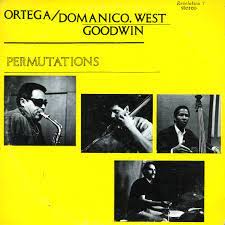
Charles Louis Domanico, better known professionally as Chuck Domanico, was born on January 20, 1944 in Chicago, Illinois. Settling in Los Angeles, California in the mid-1960s, for nearly forty years, he was a central jazz figure in Hollywood who contributed to many movies and TV programs.
Domanico worked with Frank Sinatra, Barbra Streisand, Carmen McRae, Joni Mitchell, Taj Mahal, Diane Schuur, Natalie Cole, and The Manhattan Transfer. He participated in instrumental jazz performances by Chet Baker, Henry Mancini, Shelly Manne, Oliver Nelson, John Klemmer, Roger Kellaway, Barney Kessel, and Art Pepper.
His bass can be heard in themes for television shows like M*A*S*H, Cheers and Frasier, and he contributed to the soundtracks of more than two thousand films.
Double bassist and bass guitarist Chuck Domanico, who played on the West Coast jazz scene, transitioned from lung cancer on October 17, 2002 at the age of 58.
More Posts: bass,bass guitar,history,instrumental,jazz,music
Daily Dose Of Jazz…
Albert “Abbie” Brunies was born on January 19, 1900 in New Orleans, Louisiana into a famous musical family, which counted among its members George Brunies and Merritt Brunies.
He was the leader of the Halfway House Orchestra from 1919 to about 1927, playing at the Halfway House Club in New Orleans. This ensemble recorded for Okeh Records in 1925. Among the musicians who played in this group were New Orleans Rhythm Kings members Charlie Cordella, Mickey Marcour, Leon Rappolo, Sidney Arodin, Bill Eastwood, Joe Loyacano and Leo Adde.
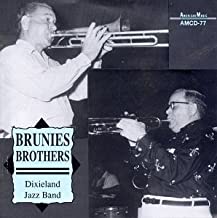
He played in New Orleans into the mid-1940s, after which time he moved to Biloxi, Mississippi. There he played with Merritt in the Brunie Brothers Dixieland Jazz Band. Unfortunately, this ensemble recorded sparsely. Cornetist Abbie Brunies transitioned on October 2, 1978.
More Posts: cornet,history,instrumental,jazz,music
Daily Dose Of Jazz…
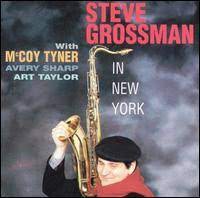
Steven Mark Grossman was born on January 18, 1951 in Brooklyn, New York to Rosalind, an amateur pianist, and Irving, an RCA salesman and later president of KLH Research and Development Corporation. At 18, he went on to replace Wayne Shorter in Miles Davis’ jazz-fusion band. Then, from 1971 to 1973, he was in Elvin Jones’ band.
In the late 1970s, he was part of the Stone Alliance trio with Don Alias and Gene Perla. The group released four albums during this period, including one featuring Brazilian trumpeter Márcio Montarroyos. The albums also feature an array of other musicians. They went on to release three live reunion albums during the 2000s.
Fusion and hard bop saxophonist Steve Grossman passed away of cardiac arrest in Glen Cove, New York, on August 13, 2020, at the age of 69.
More Posts: bandleader,history,instrumental,jazz,music,saxophone
Daily Dose Of Jazz…
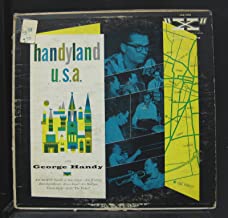
George Handy, born George Joseph Hendleman on January 17, 1920 in New York City, where his musical beginnings were fostered under the tutelage of composer Aaron Copland.
He first worked professionally as a swing pianist for Michael Loring in 1938. Soon afterward George was drafted into the United States Army in 1940. Post WWII, from 1944 to 1946 he became a member of the Boyd Raeburn Orchestra, composing and performing on piano. This was during a time when many big bands were transforming their musical tendencies toward bebop. Leaving the orchestra briefly to work for Paramount Studios, he returned to Raeburn quickly. During this period he entered one of his most creative periods, doing arrangements of older standards with a distinctly bebop quality.
A rift between him and Raeburn, just as he was entering his prime, forced him to depart the group. Handy continued to arrange for other musicians in his later career.
Pianist, arranger and composer George Handy, best remembered in retrospect for his bebop arrangements, transitioned in Harris, New York, on January 8, 1997 at the age of 76, from heart disease.
More Posts: arranger,composer,history,instrumental,jazz,music,piano