

Daily Dose Of Jazz…
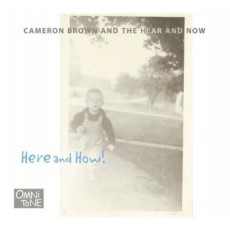
Cameron Brown was born December 21, 1945 in Detroit, Michigan. He started studying music at age 10, first on piano, later on clarinet. But, drawn to the bass, he found himself playing a tin bass in a student dance band. As an exchange student in Europe, he worked with George Russell’s sextet and big band for one year.
Brown went on to play with Don Cherry, Aldo Romano, Booker Ervin and Donald Byrd. In 1966 he returned to the States to matriculate and graduate in 1969 from Columbia College, Columbia University with a degree in sociology.
In 1974, Cameron met Sheila Jordan, gigged with free jazz pioneers Roswell Rudd and Beaver Harris, joined Archie Shepp’s quintet in 1975 and recorded with Harris and The 360 Degree Music Experience around that time.
The Don Pullen/George Adams Quartet had Brown and drummer Dannie Richmond helping to develop into an intense and rewarding partnership that lasted during the 1980s. In addition to this quartet, he played with Art Blakey’s Jazz Messengers, and various groups led by Rudd, and Richmond. He has performed and recorded with Ted Curson, Lee Konitz, Chet Baker, Joe Lovano, Mal Waldron, Ricky Ford, Steve Grossman, Betty Carter, John Hicks, Etta Jones and Jane Ira Bloom, to name a few.
Cameron has appeared on more than 80 recordings as a sideman and his first recording as a leader after nearly 40 years of performing, was published in 2003 with his group The Hear and Now featuring Dewey Redman.
In addition to playing gigs and touring nationally and internationally, he is an educator currently teaching jazz double bass at Green Meadow Waldorf School in Chestnut Ridge, New York, offers private lessons and substitute teaches music theory classes at The New School for Jazz and Contemporary Music in New York City.
v

Dose A Day – Blues Away
More Posts: bass
Daily Dose Of Jazz…
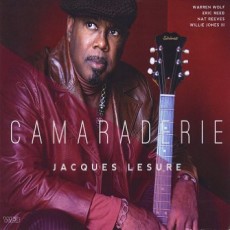
Jacques Lesure was born on December 19, 1962 in Detroit, Michigan. He began playing guitar when he was ten years old, attended Renaissance High School and Interlochen Arts Academy every summer. Started playing in church, he played with the Clark Sisters for many years. He went on to attend Wayne State University.
Signed to WJ# Records, owned by Willie Jones III, he is label mates with Eric Reed and Warren Wolf. He has performed with Kenny Burrell, Oscar Brown Jr., Jimmy Smith, Stanley Turrentine, Freddy Cole, Wynton Marsalis, George Benson, Jack McDuff, Les McCann, Carmen Lundy, Oliver Lake, Paula West and the list goes on and on.
In a career that has spanned 30 years to date, he has collaborated in the creation of and performed in stage plays, movie scores and special projects for television. Active in the Los Angeles, California community where he resides, as an educator he mentors many up and coming musicians. He is the Musical Director for the Living Legends Foundation, President of the African-American Jazz Caucus, is an Artist Teacher for the Monk Institute, Music LA and The Dolo Coker Jazz Foundation, and a national adjudicator, judging student competitions nationwide. Guitarist Jacques Lesure continues to perform and tour with his group and as a sideman.
Give The Gift Of Knowledge
More Posts: guitar
Daily Dose Of Jazz…
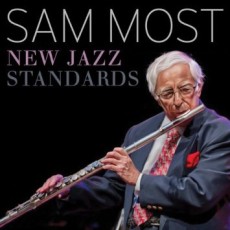
Samuel Most was born on December 16, 1930 in Atlantic City, New Jersey and learned to play the flute, saxophone and piano. He began his career in music at the age of 18 with the bands of Tommy Dorsey, Shep Fields, Boyd Raeburn and Don Redman. He also performed many times with his older brother Abe, a clarinetist.
His first recording was at age 23, a single called Undercurrent Blues and the following year he was awarded Down Beat magazine’s “Critic’s New Star Award”. Between 1953 and 1958 Sam led and recorded sessions for the Prestige, Debut, Vanguard and Bethlehem record labels. He also worked as a session player for Chris Connor, Paul Quinichette and Teddy Wilson and was a member of the Buddy Rich band from 1959 to 1961. He would go on to work as a sideman with Clare Fischer, Lalo Schifrin and Louie Bellson.
Most resurfaced in the late 1970s and recorded six albums on the Xanadu label, was given a gift of an expensively carved flute by Frank Sinatra who had used it for breath control, and in the late Eighties recorded four albums, including Solo Flute with producer Fernando Gelbard of Liquidjazz.com. He was the guest of and played for the King of Thailand three times and was the subject of Edmond Goff’s 2001 documentary film Sam Most, Jazz Flutist.
Flautist and tenor saxophonist Sam Most, who according to jazz historian Leonard Feather, was probably the first great jazz flutist, passed away on June 13, 2013 from cancer, at the age of 82.
Give A Gift Of Jazz – Share
Daily Dose Of Jazz…
Reginald Volney Johnson was born December 13, 1940 in Owensboro, Kentucky. After playing trombone with school orchestras and army bands, he switched to double bass and started working with musicians such as Bill Barron and recording with Archie Shepp in the mid–1960s, before joining Art Blakey’s band for a month-long residency at the Five Spot Café in 1965.
In 1966 Johnson traveled with the Blakey band to The Lighthouse in Hermosa Beach, California and recorded Buttercorn Lady alongside Frank Mitchell, Chuck Mangione and Keith Jarrett.
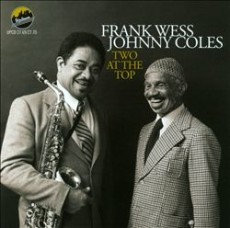
Reggie’s playing and/or recording in America reads like a who’s who list not limited to Bill Dixon, Sun Ra, Burton Greene, Lonnie Liston Smith, Stanley Cowell, Bobby Hutcherson,, Harold Land, Blue Mitchell, Walter Bishop Jr., Sonny Rollins, Sonny Stitt, Sarah Vaughan, Carmen McRae, Art Pepper, Clark Terry, The Crusaders, Charles Mingus, Eddie “Lockjaw” Davis, Johnny Coles, and Frank Wess.
Equally so is his mid–1980s he move to Europe working with Johnny Griffin, Horace Parlan, Monty Alexander, Kenny Barron, Tom Harrell, Phil Woods, Cedar Walton, Alvin Queen, Jesse Davis, Freddie Redd and Alvin Queen.
As a leader double-bassist Reggie Johnson released one album titled First Edition in 1985 on the JR Record label and he continues to be the consummate sideman performing all over the world.
Discography[edit]
Take A Dose On The Road
More Posts: bass

Daily Dose Of Jazz…
Tim Armacost was born on December 8, 1962 in Los Angeles, California. He began his musical training on clarinet in Tokyo at the age of eight but by sixteen he had switched to tenor saxophone, and was working in big bands around Washington. His turning point into a jazz career came at eighteen when he returned to Los Angeles and met his two primary teachers, Bobby Bradford and Charlie Shoemake. Through them he learned the fundamentals of melody and harmony, and was exposed to the giants of modern jazz, who would give shape to his early development.
Armacost graduated Magna Cum Laude from Pomona College in 1985, moved to Amsterdam later that year, established himself on the jazz scene, learned fluent Dutch and became the head of the Sweelinck Conservatory’s saxophone department. After seven years of performing, teaching and recording in Europe, he headed for India. There he studied under table master Vijay Ateet. He would go on to perform with Indian jazz and classical musicians and at festival.
Fluent in Japanese, Tim has studied as an exchange student at Waseda University, and has performed with Terumasa and Motohiko Hino, Fumio Karashima, Nobuyoshi Ino, Fumio Itabashi, Shingo Okudaira, Benisuke Sakai, Kiyoto Fujiwara, and Yutaka Shiina.
Moving to New York in 1993 he established himself and released his first two albums Fire and Live at Smalls. With his quartet, the cooperative group Hornz in the Hood with fellow saxophonists Craig Handy and Ravi Coltrane he continues to perform as well as with Ray Drummond’s “Excursion Band,” and co- leads the Brooklyn Big Band with Craig Bailey.
Tenor saxophonist Tim Armacost has performance and recording credits alongside Al Foster, Jimmy Cobb, Kenny Barron, Tom Harrell, Billy Hart, Victor Lewis, Jeff “Tain” Watts, Ray Drummond, Roy Hargrove, Paquito D’Rivera, Claudio Roditi, Bruce Barth, Dave Kikoski, Don Friedman, Lonnie Plaxico, Robin Eubanks, Charlie Shoemake, Pete Christlieb, Randy Brecker, Akira Tana, Valery Ponomarev, the Maria Schneider Orchestra, and the David Murray Big Band. He continues to tour throughout East and West Europe, Japan, India, and the United States.
Jazz Is Global – Share
More Posts: saxophone