

Daily Dose Of Jazz…
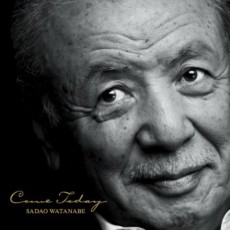
Sadao Watanabe was born on February 1, 1933 in Utsunomiya, Japan and first began learning music at the age of 18. He started performing professionally in 1953. By 1958 he had established himself as a world-class saxophonist having performed with leading musicians and quartets. In 1962 he left Japan to study at Berklee College of Music in Boston.
Known for his bossa nova recordings, Sadao’s work encompasses a large range of styles with collaborations from musicians all over the world. Of his 72 albums to date, he has had 13 albums reach the top 50 Billboard charts and two within the Top 10. He has also had numerous albums reach number one on the jazz charts.
Watanabe has been awarded the Order of the Rising Sun – the imperial medal of honor, the Fumio Nanri Award, and an honorary Doctorate Degree from Berklee College of Music.
In addition to his musical career, alto and soprano saxophonist and flutist Sadao Watanabe is also a published photographer with six books to his credit in Japan. He is also a U.S. citizen sharing his time between his homeland and Los Angeles, California as he continues to perform, record and tour.

Jazz Is Global – Share
Daily Dose OF Jazz…
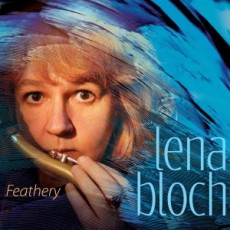
Lena Bloch was born on January 31, 1971 in Moscow, Russia. She immigrated to Israel in 1990, to attend Rubin Academy of Music and Dance, and then received a full scholarship for Jazz In July workshop. Acquiring her Artist Diploma cum laude from Cologne Conservatory, she was granted another full scholarship to attend the Jazz Workshop in Banff, Canada. Bloch has studied with Yusef Lateef, Billy Taylor, Joe Lovano, Kenny Werner, Dave Holland and Lee Konitz.
By 2001 Lena met her most important teacher, Lee Konitz, who she studied and was introduced to the music of Lennie Tristano’s school, especially Warne Marsh. She played the first tenor chair in the Jazz Ensemble and got a “Downbeat Student Award” 2005 and MENC Award 2004 in Minneapolis. She has won the “Outstanding Performance Award”.
Since 1993 Lena has been leading her own quartet and trio, writing music and arranging and she played in the legendary “Embryo” band touring Italy. She is an inventive improviser who incorporates Middle-Eastern and Eastern European elements into the jazz idiom, achieving a unique sound.
She has performed with Mal Waldron, Johnny Griffin, Horace Parlan, Keith Copeland, John Marshall, Alvin Queen, Steve Reid Vishnu Wood, Arturo O’Farrill, George Schuller, Billy Mintz, Dave Shapiro, Roberta Picket, Scott Wendholt, Dan Tepfer, Bertha Hope, Ray Drummond and Matt Wilson among many others. Alto saxophonist Lena Bloch is also a creative and inventive educator, who continues to successfully teach woodwinds and jazz improvisation to all ages and levels since 1990.
Put A Dose In Your Pocket
More Posts: saxophone
Daily Dose Of Jazz…
Bobby Scott was born Robert William Scott on January 29, 1937 in Mount Pleasant, New York and began his studies at the La Follette School of Music under Edvard Moritz at age 8, and by 11 was working professionally. He became a pianist, vibraphonist and singer, but could also play the accordion, cello, clarinet and double bass.
In 1952 he began touring with Louis Prima, and also performed with Gene Krupa and Tony Scott in the 1950s. In 1956 he hit the U.S. Billboard Hot 100 with the song “Chain Gang”, peaking at #13. (not the same Sam Cooke song) It sold over one million copies, and was awarded a gold disc.
As a bandleader, he recorded sessions for Verve, ABC-Paramount, Bethlehem and Musicmasters. Booby won a Grammy Award for Best Instrumental Composition for the song “A Taste of Honey”, and co-wrote the song “He Ain’t Heavy, He’s My Brother”.
In the 1960s he became a music teacher and studied again under Moritz, but occasionally recorded as well, including a Nat King Cole tribute album released in the 1980s. He also arranged for jazz and easy listening musicians.
Musician, songwriter and record producer Bobby Scott died of lung cancer on November 5, 1990, at the age of 53. He left a catalogue of twenty-seven recordings from 1953 to 1990 that include performing on soundtracks such as The Pawnbroker, Joe, Slaves, In The Heat of the Night and The Color Purple.
Take A Dose On The Road
More Posts: piano,vibraphone,vocal
Daily Dose Of Jazz…
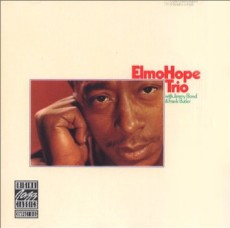
Jimmy Bond was born on January 27, 1933 in Philadelphia Pennsylvania. He started playing bass in junior high school in Philadelphia. While only so much interest can be generated with accounts of a player’s high school days, in this case the details include jamming with the likes of Gene Ammons and Charlie Parker.
Starting in the summer of 1955, the bassist was working with the extremely popular trumpeter and vocalist Chet Baker, a connection that resulted in dozens of record releases. He went on to backup Ella Fitzgerald from 1956 to 1957, but in the ’60s he began to break away from what had seemed to be his genre of choice.
The Bond studio recordings of the ’60s and ’70s involved sessions with Randy Newman, the Jazz Crusaders, Phil Spector and Fred Neil among others. As one of a few studio players who shunned the electric bass and his studio involvements included stints with Tim Buckley, Frank Zappa and Lightnin’ Hopkins as well as Jimmy Witherspoon and Nina Simone.
Adolescent boys couldn’t help noticing the name of this dependable bassist in the wake of James Bond becoming a superhero in the ’60s. When he attended a conference, it was no doubt to get a recording session started. The talk would have been about what key a song is in or how quickly it should move, hardly the stuff of international intrigue. But the main reason these aforementioned lads were noticing the Bond name in the first place was because this was a bassist who shifted his talents from the jazz bandstand to the recording studio, perhaps out of necessity but with great skill and subtlety nonetheless.
Inspire A Young Mind
More Posts: bass
Daily Dose Of Jazz…
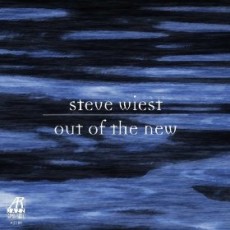
Steve Wiest was born John Stephen Wiest on January 26, 1957 in Cleveland, Ohio. Taking up the trombone in his youth he attended Blair High School and played in the band. He went on to matriculate through University of Southern Mississippi and then through University of North Texas.
From 1981 to 1985, Steve was a featured trombonist and arranger with the Maynard Ferguson Band, he has been a professor for twenty-six of the thirty-four years that he has been a professional trombonist, composer, and arranger. From 2006 to 2014, he was Associate Professor of Music in Jazz Studies at the University of North Texas College of Music and during that time he was also the director of the One O’Clock Lab Band.
A three-time Grammy nominee individually, for composing and collaboratively for ensemble, Steve Wiest has in excess of two dozen albums to his name and 58 arrangements and compositions to his credit, which include 10 original compositions from his current project, The Dover Stone: Concerto for Folded Space.
His resume of performances or recordings reads like a who’s who list with Weather Report, Sarah ‘Vaughan, Bill Cosby, Buddy Rich, Freddie Hubbard, McCoy tner, Al Foster, Eddie Gomez, Slide Hampton, Dizzy Gillespie, Chick Corea and the Gil Evans Orchestra on it, just to name a few.
Trombonist and educator Steve Wiest is currently in his first year as Associate Professor of Jazz Studies and Commercial Music at the University of Denver Lamont School of Music, and is the Coordinator of the 21st Century Music Initiative at the school. He continues to perform, compose and arrange jazz and big band.
Give A Gift Of Jazz – Share
More Posts: trombone