

Daily Dose Of Jazz…
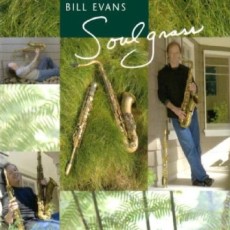
Bill Evans was born William D. Evans on February 9, 1958 in Claredon Hills, Illinois to a father who was a classical piano prodigy. Until junior high school he studied classical clarinet but early in his studies he was able to hear such artists perform live as Sonny Stitt and Stan Getz at the jaz Showcase in Chicago. He attended Hinsdale Central High School and studied with tenor saxophonist Vince Micko. His stylistic influences include Sonny Rollins, Joe Henderson, John Coltrane, Steve Grossman and Dave Liebman.
Evans attended the University of North Texas and William Patterson University where he studied with Miles Davis alum Dave Liebman. His move to New York City in 1979 saw him spending countless hours in lofts playing jazz standards and perfecting his improvisational style. By the age of 22 he joined Miles Davis and was part of his musical comeback in the early to mid-1980s, recording on The Man With The Horn, We Want Miles, Star People and Decoy.
During the 1980s and 1990s Bill was a member of the jazz fusion group Elements. Beginning in 1990 Evans has been touring with his own band playing close to 90 concerts a year worldwide. He has recorded over 17 solo CD’s, received two GrammyAward nominations for his albums Soul Inside and Soulgrass, and recorded an award-winning CD called Bill Evans – Vans Joint with the WDR Orchestra in 2009.
Tenor and soprano saxophonist Bill Evans has played a wide variety of music with his solo projects including bluegrass influenced jazz, funk and contemporary groove and has played, toured and recorded with Herbie Hancock, Michael Franks, Gil Evans, Willie Nelson, Mick Jagger, Les McCann, Mark Egan, Danny Gottlieb, Ian Anderson, Randy Brecker, The Allman Brothers and Medeski, Martin and Wood to name a few. He continues to perform, tour and record.

Give A Gift Of Jazz – Share
Daily Dose Of Jazz…
Javier Vercher was born in Madrid, Spain on February 7, 1978. At the age of 6, his family moved to Valencia where he began studying with his father music theory, piano and clarinet. By 17 years old he won the title of medium degree in classics Clarinet, plan 66, in the Conservatory Joaquín Rodrigo de Valencia.
After finishing his studies at the conservatory began exploring jazz and attended several seminars with Kurt Rosenwinkel, Perico Sambeat, Chris Cheek and Jorge Pardo in 1995. At 18, Berklee College of Music in Boston and the Association of Interpreters and Performers gave him a scholarship to study, graduating with a degree in Performance.
In 1999, he met the legendary drummer and composer Bob Moses Rakalam and soon after was playing around town with his band. In 2002, he moved to New York and began playing with local musicians such as Lionel Loueke, Henry Cole, David Doruzka, Ferenc Nemeth and RJ Miller.
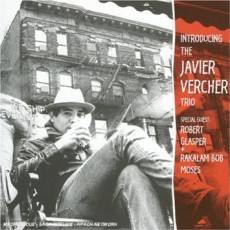
In 2003, Vercher formed a trio and began composing for began to develop compositions for this format. He recorded his first solo album “Introducing The Javier Vercher Trio for Fresh Sound. His trio would later enlist the talents of guitarist Lionel Loueke at several festivals in Spain including the Madrid Jazz Festival, Jazz Festival Vitoria-Gasteiz, Jazz Festival Valencia and Almansa Jazz Festival to name a few.
Javier received the Musician Revelation Tete Montoliu Award, produced his second album “Wheel Of Time”, recorded with Alejandro Sanz on his 2007 Warner Bros. album “El Tren de los Momentos”. His quartet worked throughout the Caribbean, South America and Spain.
In late 2009 he moved to Barcelona and the following year released his next album “Wish You Were Here” in 2010 with Larry Grenadier, Lionel Loueke, Sam Yahel and Francisco Mela. Since then tenor saxophonist Javier Vercher has continued to perform, record and tour.
Put A Dose In Your Pocket
More Posts: saxophone
Daily Dose Of Jazz…
Rick Laird was born Richard Quentin Laird on February 5, 1941 in Dublin, Ireland. He played music from a young age and enrolled for guitar and piano lessons. He started playing jazz after moving to New Zealand at the age of 16 with his father. He played guitar in jam bands in New Zealand before buying an upright bass. After extensive touring in New Zealand he moved to Sydney, Australia, where he played with many top jazz musicians.
He moved to England in 1962 and became house bassist at Ronnie Scott’s Jazz Club in London, where he had the opportunity to play with Wes Montgomery and Sonny Stitt among others. In 1963 Laird attended London’s Guildhall School of Music and Drama. In 1965 He performed with Victor Feldman and recorded on the Sonny Rollins album ”Alfie” and then went on to play in The Brian Auger Trinity and The Brian Auger Group.
Heading to the States, Rick enrolled in Berklee College of Music in Boston where he studied arranging, composition and string bass. He then teamed up with ex-pat John McLaughlin and The Mahavishnu Orchestra as a founding member to play electric bass until 1973, when the band broke up. Moving to New York he joined Stan Getz’s tour in 1977 followed by Chick Corea the next year.
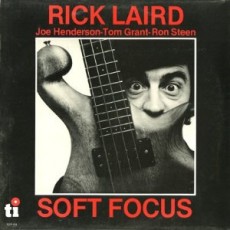
He put out one album as a leader, Soft Focus. Today, he is a successful photographer as well as a private bass tutor and an author of a number of intermediate to advanced level bass books. Richard Laird, as he is known in the art world, in March 2009 came across a collection of photographs in a file cabinet that he had taken in years past. The legendary jazz artists like Miles Davis, Chick Corea, Wayne Shorter, the Mahavishnu Orchestra, Elvin Jones, and Keith Jarrett are now a part of an online archive.
Take A Dose On The Road
More Posts: bass
Daily Dose Of Jazz…
Craig Bailey was born on February 3, 1960 in Cincinnati, Ohio. His interest in music began at age 8, learning to play the recorder with a small group of classmates. Following that, he became a part of the All City Boys Choir. He enrolled in the beginning band program in junior high and took up the clarinet, saxophone and flute, perfecting his skills in playing all three instruments in high school and college.
Bailey earned his undergraduate degree from the University of Miami and headed to New York in 1985. He worked with drummer Charlie Persip’s Superband. He went on to join the world-renowned group of Panama Francis and his Savoy Sultans, learning traditional swing music and traveling to Europe for the first time.
Two years later Craig landed an audition with Ray Charles and became his lead alto saxophonist from 1988-2004. During this period he collaborated the Tana Reid Quintet, Bobby Watson’s Tailor Made Big Band, Nancy Banks Orchestra and the Tom Harrell Big Band among others. He developed his small group writing and playing style, leading him to his own arranging and composing.
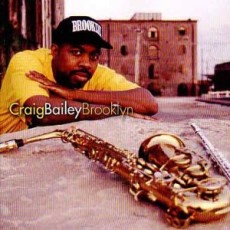
Bailey dropped his debut album, A New Journey in 1995 to critical acclaim and is referenced in The Encyclopedia of Jazz. His sophomore release, Brooklyn, received favorable review. He is one of the most consistently inventive and potentially significant reed players of his generation. In between his performing duties Craig Bailey currently holds the position of Assistant Professor of Music in Jazz Saxophone at the University of Cincinnati.
Inspire A Young Mind
Daily Dose Of Jazz…
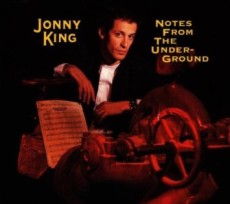
Jonny King was born Jonathan Z. King on February 2, 1965 in New York City, New York. Raised in New York City, he graduated from Princeton and Harvard Law School. A jazz pianist primarily self-taught, he has neither received any formal music education nor attended any jazz schools. His school of music was life – obsessively listening to records, going to jam sessions and soaking up as much live and recorded music as possible from traditional to avant-garde.
He credits pianist Mulgrew Miller and Tony Aless as his important influences, mentors and personal teachers. As well as recording under his own name, he has performed with, among others Roy Hargrove, Kenny Garrett, Bobby Watson, Christian McBride, Joe Lovano, Ira Coleman, Billy Drummond, Mark Turner, Vincent Herring, Steve Nelson, Peter Washington, Joshua Redman, Steve Davis, David Sanchez, Milton Cardona and Larry Grenadier.
He has released three albums in the 90s on the Criss Cross and Enja labels – In From the Cold, Notes From The Underground and Meltdown. In between his duties as an attorney at a copyright practice, he continues to approach music the way he learned, both as a performer and composer.
Give A Gift Of Jazz – Share
More Posts: piano