

Daily Dose Of Jazz…
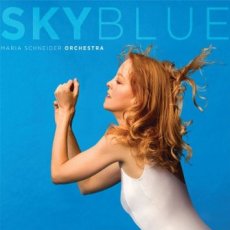
Maria Schneider was born on November 27, 1960 in Windom, Minnesota and started playing piano as a child. She studied music theory and composition at the University of Minnesota, followed by earning a Masters of Music from the Eastman School of Music and studying for one year at the University of Miami.
After Eastman she became an apprentice arranger under Gil Evans, collaborating with him for the next several years, producing arrangements commissioned by Sting and scoring the films “The Color of Money” and “Absolute Beginners”. Schneider went on to study with Bob Brookmeyer from 1986 to 1991, concurrently worked as a freelance arranger in New York.
She formed The Maria Schneider Jazz Orchestra in 1993, appearing weekly at Visiones in Greenwich Village for five years, then hit the festival circuit and toured Europe. In 2005, her album “Concert In The Garden” won a Grammy for “Best Large Ensemble Album” and was the first Grammy for a work sold entirely via the Internet. Her second Grammy came for Cerulean Skies from her 2007 Sky Blue project for Best Instrumental Composition.
Maria was one of the first artists to use ArtistShare to produce an album, and the composer, arranger and big-band leader has garnered recognition from the Jazz Journalist Association as Composer of the Year, Arranger of the Year and Large Jazz Ensemble of the Year.

Jazz Is Global – Share
Daily Dose Of Jazz…
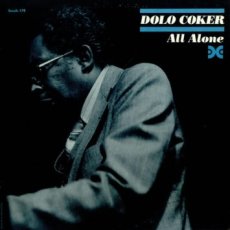
Dolo Coker was born Charles Mitchell Coker on November 16, 1927 in Hartford, Connecticut but was raised in Florence, South Carolina and Philadelphia, Pennsylvania. The first musical instruments Coker played in childhood were the C-melody and alto saxophones, learning them at a school. By age thirteen he was starting to play piano and after moving to Philadelphia he studied piano at the Landis School of Music and at Orenstein’s Conservatory.
During his Philadelphia years Coker played piano with Jimmy Heath, then became a member of Frank Morgan’s quartet, but it wasn’t until 1976 that he recorded as a leader. Signing with Xanadu Records he cut four albums and worked extensively as a sideman for Sonny Stitt, Gene Ammons, Lou Donaldson, Art Pepper, Philly Joe Jones and Dexter Gordon.
For the next several years pianist Dolo Coker continued to work as a sideman until he passed away of cancer at the age of fifty-five on April 13, 1983.
Dose A Day – Blues Away
More Posts: piano
Daily Dose Of Jazz…
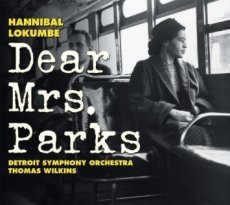
Hannibal Lokumbe was born Marvin Peterson in Smithville, Texas on November 11, 1948. As a child he was inspired by the spirituals and hymns of his grandparents but by 13 was given a trumpet and a year later his band The Soul Masters was backing icons such as Jackie Wilson, Otis Redding, Etta James, Lightning Hopkins and T-Bone Walker.
He attended North Texas State University from 1967 to 1969, and then moved to New York in 1970. Lokumbe spent the next twenty-five years in New York City playing trumpet and recording with some of his jazz heroes including Gil Evans, Pharaoh Sanders, Roy Haynes, Elvin Jones, and McCoy Tyner among many others. In 1974 he formed the Sunrise Orchestra and for more than fifteen years toured the world playing in every major music festival from Istanbul to China.
The recipient of numerous awards including the Bessie’s, the NEA, and a Lifetime Achievement Award from the Detroit Symphony Orchestra, Hannibal has composed works for The Kronos String Quartet, the Philadelphia, Baltimore, Cleveland, Detroit and Houston Symphonies. His groundbreaking opera African Portraits was performed and recorded by The Chicago Symphony under the direction of Daniel Barenboim and has been performed nearly two hundred times since its November 11, 1990 Carnegie Hall debut.
His works range from string quartets to full orchestral and choral compositions; he has written two books of poems, wrote and starred in an autobiographical play entitled Diary of an African American, and has lectured extensively at The University of Pennsylvania and at Harvard University. He currently has a catalogue of 14 recordings as a leader and twenty-two as a sideman having worked with Richard Davis, Grachan Moncur, Elvin Jones, Pharoah Sanders and numerous others. Trumpeter Hannibal Lokumbe steadfastly composes works for choir, jazz and vocal soloist; mentors and teaches children in history, music composition, teaching choral music to his community choir and he also gardens.
Give The Gift Of Knowledge
More Posts: trumpet
Daily Dose Of Jazz…
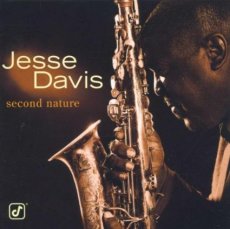
Jesse Davis was born on November 9, 1965 in New Orleans, Louisiana and showed signs of musical talent at a very young age. When he was eleven, his brother Roger, an accomplished tuba player bought Jesse a saxophone and taught him how to play it. He went on to study with Ellis Marsalis, whose teachings inspired him to become a music student at North-Eastern Illinois University on a full scholarship. He eventually transferred to William Patterson College in New Jersey, then to the New School in New York City, enrolling in their Jazz and Contemporary Music Program under the tutelage of Ira Gitler.
After graduating, alto saxophonist Jesse Davis embarked on a productive jazz career and has recorded eight albums on the Concord Jazz label. He has collaborated with such artists as Jack McDuff, Major Holley, Cecil Payne, Jay McShann, Cedar Walton, Benny Golson, Illinois Jacquet Kenny Barron and Roy Hargrove amongst a long list of notables.
Davis has received a “Most Outstanding Musician award” from magazine, won several awards at jazz festivals for outstanding soloist, toured Europe several times fronting his quartet and a member of the Sax Machine and made his debut as an actor in the celebrated Robert Altman movie “Kansas City”.
Jesse was equally influenced by Charlie Parker, Cannonball Adderley and Sonny Stitt and contributes a flawless technique and a natural feeling for the blues to every one of his performances as he continues to perform, record and tour.
Dose A Day – Blues Away
More Posts: saxophone
Daily Dose Of Jazz…
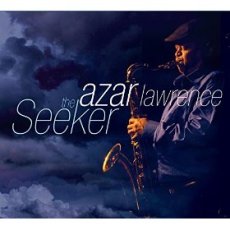
Azar Lawrence was born in Los Angeles, November 3, 1953 and started playing drums at the age of three. By five he began formal studies on piano and violin, encouraged by his mother, who was an elementary school music teacher. At 11, while performing with the USC Junior Orchestra, he became enamored with the sound of the alto saxophone and his father, a stalwart supporter of his son’s musical endeavors, promptly bought him a Selmer and his fate was sealed.
Playing in the Dorsey High Jazz Band, Lawrence met Herbert Baker, a piano prodigy who was playing with Freddie Hubbard. It was Baker who first introduced Lawrence to piano master Horace Tapscott, an important mentor who helped shape Lawrence’s musical philosophy and prepared him for the formidable task of playing with Elvin Jones.
Becoming a sideman with McCoy Tyner, replacing John Coltrane, he also worked with Miles Davis, Freddie Hubbard and Woody Shaw, released his album Bridge to the New Age in 1974 with Jean Carn, Julian Priester, Hadley Caliman and Ndugu Chancler followed by his sophomore project Summer Solstice working with Ron Carter and Albert Dailey.
He has release five albums as a leader and went on to work with Henry Franklin, Gene Harris, Patrice Rushen, Phyllis Hyman, Earth Wind & Fire, Lee Ritenour, Paul Jackson, Stanley Turrentine and Harvey Mason.
However, success has its monkey and Lawrence fell victim to drug abuse and all but disappeared from the jazz scene working only occasionally with Billy Higgins when he could borrow a saxophone. He eventually pulled himself into sobriety and embraced a new period of creativity releasing Mystic Journey in 2010 and the tenor saxophonist continues to perform.
Take A Dose On The Road
More Posts: saxophone