

Daily Dose Of Jazz…
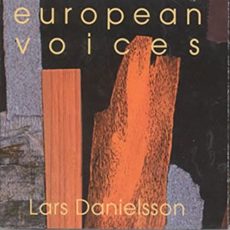
Lars Danielsson was born on September 5, 1958 in Smålandsstenar, Sweden and was educated at the music conservatory in Gothenburg and studied double bass, electric bass and cello. In 1985, he formed a quartet with saxophonist Dave Liebman, pianist Bobo Stenson and drummer Jon Christensen, producing several albums. He also worked with big bands.
He played and recorded with, among others, John Scofield, Jack DeJohnette, Mike Stern, Billy Hart, Charles Lloyd, Terri Lyne Carrington, Leszek Możdżer, Joey Calderazzo, Gino Vannelli and Dave Kikoski.
Since 1980, he has released eight solo albums with the Lars Danielssons Quartet. In these albums, Alex Acuña, John Abercrombie, Bill Evans, Kenny Wheeler, Rick Margitza and Niels Lan Doky were featured.
As a producer he has been responsible for productions with Cæcilie Norby and the Danish radio orchestra among others. Bassist, cellist, composer and record producer Lars Danielsson continues to compose, record, perform and tour.

Daily Dose Of Jazz…
Leroy “Hog” Cooper was born on August 31, 1928 in Dallas, Texas and started his career touring with Ernie Fields’ territory band from 1948 to 1951. With his childhood friend David “Fathead” Newman, the two played together in 1954 in the saxophone section backing Lowell Fulson on his first single Reconsider Baby for Chess Records.
In 1957, Newman recommended Cooper to Ray Charles who joined the band the same summer as bassist Edgar Willis, both musicians staying on with Charles for some twenty years. He also played, recorded or toured with Lightnin’ Hopkins, Clarence “Gatemouth” Brown, The Righteous Brothers, Dr. John, Del Shannon, Joe Cocker and Bobby Short..
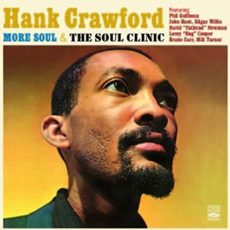
Leroy recorded not only with Ray Charles but also with Newman, Hank Crawford, Curtis Amy, Kenny Neal, Noble “Thin Man” Watts and Nat Adderley. Moving to Orlando, Florida baritone saxophonist Leroy Cooper performed locally in Orlando till he passed away on January 15, 2009 with the Smokin’ Torpedoes & Josh Miller Blues Band.

More Posts: saxophone
Daily Dose Of Jazz…
Gilbert Bibi Rovère was born on August 29, 1939 in Toulon, France and grew up in Nice, where he also attended the Conservatory beginning in 1954. He became part of the jazz scene there and for 17 years played the San Remo Festival.
In 1956, a move to Paris saw him working in the jazz clubs and by 1957 he started playing the double bass with Barney Wilen. Over the coming years he accompanied Duke Ellington, Sonny Rollins and Billie Holiday with Mal Waldron. Between 1962 and 1974 he was always part of the combos of Martial Solal and between 1962 to ‘63 he joined Bud Powell, Kenny Drew, Johnny Griffin, Dexter Gordon and Kenny Clarke.
During the Sixties Bibi went on to play with Art Simmons and Jean-Luc Ponty on his first album Jazz Longplaying. He also worked with the Swingle Singers, René Thomas and Cannonball Adderley. In 1966 he received the Prix Django Reinhardt.
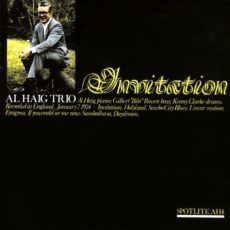
During the Seventies he accompanied Al Haig on his album Invitation and in 1978 he retired from the music industry only to become re-active eight years later, performing with Bud Shank and Jackie McLean. In 1990 he played on Steve Grossman’s album My Second Prime.
On March 13, 2007 double bass and violincello player Bibi Rovère passed away in Menton on the French Riviera.
More Posts: bass,violincello
Daily Dose Of Jazz…
Pat Martino was born Pat Azzara in South Philadelphia, Pennsylvania on August 25, 1944 and began playing professionally at the age of 15 after moving to New York City. He resided with Les Paul for a while before moving into a suite in the President Hotel on 48th Street. He started playing jazz clubs like Smalls Paradise and would play at Smalls for six months of the year and then in the summer play at Club Harlem in Atlantic City.
Early in his career Martino played and recorded with Lloyd Price, Willis Jackson, Eric Kloss, Charles Earland, Richard “Groove” Holmes, Jack McDuff, Don Patterson, Trudy Pitts, Jimmy Smith, Gene Ludwig, Bobby Pierce and Joey DeFrancesco.
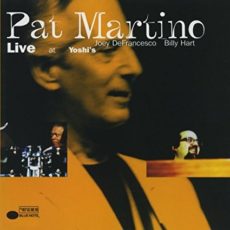
He has been awarded Guitar Player of the Year in Down Beat Reader’s Poll in 2004, NARAS Songs from the Heart Award, been nominated for a Grammy for Best Jazz Instrumental Album, Live at Yoshi’s, and Best Jazz Instrumental Solo on ‘All Blues‘ and has received Philadelphia Alliance Walk of Fame Award and National Academy of Recording Arts & Sciences “2nd Annual Heroes Award among others.
The list of jazz musicians he has performed and recorded as a sideman with are John Handy, Jimmy Heath, Charles McPherson, Sonny Stitt, The Philadelphia Experiment as well as released three-dozen albums as a leader. Guitarist and composer Pat Martino, noted for his mathematical approach to the instrument and plays in the post-bop, fusion, mainstream and soul jazz idioms, continues to perform and tour.
More Posts: guitar
Daily Dose Of Jazz…
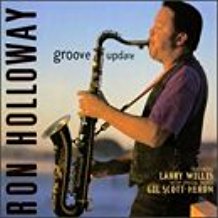
Ronald Edward Holloway was born on August 24, 1953 in Washington, D.C. to parents who met at Howard University and were avid jazz fans. He got his initial introduction from his father who favored saxophone and trumpet led albums and would add to his collection of Prestige and Blue Note jazz albums. Though he started with R&B-influenced Willis Gator Jackson it wasn’t long before he identified the sounds of Sonny Rollins, John Coltrane and Miles Davis as his principal influences.
After high school graduation, Holloway routinely practiced 8–12 hours a day, sat in with bands of all kinds and jam sessions, becoming familiar and performed with jazz, R&B, funk, rock, jazz fusion, blues, country and folk music groups. During the Seventies he had the great fortune to meet, play a tape of a performance and get standing invitations to play with anytime they were in town from Freddie Hubbard, Sonny rollins and Dizzy Gillespie. The latter would invite him to sit in with him at Ronnie Scott’s Jazz Club in London, England, an association that lasted well into the Eighties.
Straying from jazz Ron would move into funk and go on to become a member of Root Boy Slim and the Sex Change Band, Osiris, Gil Scott-Heron’s band Amnesia Express, and Dizzy Gillespie’s band, remaining a member until Dizzy’s passing in 1993. That same year he recorded his debut album as a leader on the Milestone label.
He would go on to perform and tour with Derek Trucks, the Allman Brothers, Susan Tedeschi, Gov’t Mule, and is currently a member of The Warren Haynes Band and leader of The Ron Holloway Band.
More Posts: saxophone