

Daily Dose Of Jazz…
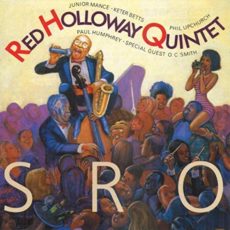
Red Holloway was born James Wesley “Red” Holloway on May 31, 1927 in Helena, Arkansas and started playing banjo and harmonica, switching to tenor saxophone when he was 12 years old. He graduated from DuSable High School] where he had played in the school big band with Johnny Griffin and Eugene Wright. He attended the Conservatory of Music in Chicago, Illinois and then joined the Army when he was 19 and became bandmaster for the U.S. Fifth Army Band.
After completing his military service returned to Chicago and played with Yusef Lateef and Dexter Gordon, among others. In 1948 he joined blues vocalist Roosevelt Sykes, and later played with other rhythm & blues musicians such as Willie Dixon, Junior Parker, and Lloyd Price.
In the 1950s he played in the Chicago area with Billie Holiday, Muddy Waters, Chuck Berry, Ben Webster, Jimmy Rushing, Arthur Prysock, Dakota Staton, Eddie “Cleanhead” Vinson, Wardell Gray, Sonny Rollins, Red Rodney, Lester Young, Joe Williams, Redd Foxx, B.B. King, Bobby Bland, and Aretha Franklin. During this period, he also toured with Sonny Stitt, Memphis Slim and Lionel Hampton. He became a member of the house band for Chance Records in 1952. He subsequently appeared on many recording sessions for the Chicago-based independents Parrot, United and States, and Vee-Jay record labels.
From 1963 to 1966, he was in organist “Brother” Jack McDuff’s band, which also featured a young guitarist, George Benson. In 1974, Holloway recorded The Latest Edition with John Mayall and toured Europe, Japan, Australia and New Zealand. From 1977 to 1982, Holloway worked with Sonny Stitt, recording two albums together, and following Stitt’s death, played and recorded with Clark Terry.
As a leader/co-leader he recorded with Big John Patton, Eric Gale, Shuggie Otis, Horace Parlan, Cedar Walton, Harry “Sweets” Edison, Matthias Bätzel Trio, T.C. Pfeiler, Norman Simmons, Phil Upchurch, O.C. Smith, Plas Johnson, Dr. Lonnie Smith, Melvin Sparks, Sacha Boutros, Henry Johnson, Chris Foreman, Greg Rockingham, Bernhard Pichi Trio
As a sideman he has performed and recorded with Gene Ammons, George Benson, Joe Dukes, Wade Marcus, Joe Williams, Eddie “Cleanhead” Vinson, Carmen McRae, Atle Hammer, Knut Riisnæs, Clark Terry, Freddy Cole, Horace Silver, Junior Mance and Etta James among others.
Saxophonist Red Holloway passed away in Morro Bay, California, aged 84 of a stroke and kidney failure on February 25, 2012, one month after Etta James, with whom he had worked extensively.
Sponsored By


#preserving genius
More Posts: saxophone
Daily Dose Of Jazz…
Harry Beckett was born Harold Winston Beckett on May 30, 1935 in Bridgetown, Saint Michael, Barbados and learned to play music in a Salvation Army band. Moving to the United Kingdom in 1954, he already had an international reputation and in 1961, he played with Charles Mingus in the film All Night Long. The 1960s saw Harry working and recording as a member of bassist and composer Graham Collier. By 1970 he was leading his own groups and recording for Philips, RCA and Ogun Records among other labels.
He was a key figure of important groups in the British free jazz/improvised music scene, including Ian Carr’s Nucleus, the Brotherhood of Breath and The Dedication Orchestra, London Jazz Composers Orchestra, London Improvisers Orchestra, John Surman’s Octet, Django Bates, Ronnie Scott’s Quintet, Kathy Stobart, Charlie Watts, Stan Tracey’s Big Band and Octet, and Elton Dean’s Ninesense.
He has also recorded with Keef Hartley, Jah Wobble, David Sylvian, Barry Guy/The London Jazz Composers’ Orchestra, Oliver Nelson and David Murray. Not limiting himself to jazz , Beckett toured abroad with Johnny Dyani, Chris McGregor, Keith Tippett, John Tchicai, Joachim Kühn, Dudu Pukwana’s Zila, George Gruntz’s Bands, Belgian quintet The Wrong Object, Pierre Dørge’s New Jungle Band and Annie Whitehead’s Robert Wyatt project, Soupsongs, which also featured Phil Manzanera and Julie Tippetts, among other jazz and rock luminaries.
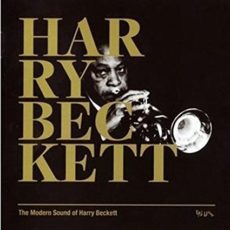
In 1972 he won the Melody Maker Jazz Poll as Top Trumpeter in Britain and was a member of the Orchestre National de Jazz between 1997 and 2000. His dub-oriented album, The Modern Sound of Harry Beckett, was released on On-U Sound in 2008. Trumpeter and flugelhornist and composer Harry Beckett passed away on July 22, 2010 after suffering a stroke.

#preserving genius
More Posts: flugelhorn,trumpet
Daily Dose Of Jazz…
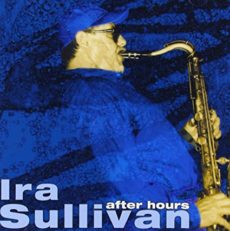
Ira Sullivan was born May 1, 1931 in Washington, D.C. and was taught trumpet by his father, saxophone by his mother and played both in the 1950s Chicago, Illinois with Charlie Parker, Lester Young, Wardell Gray and Roy Eldridge, garnering a reputation as a fearsome bebop soloist. After playing briefly with Art Blakey in 1956, he mastered alto and baritone saxophone before moving south to Florida and out of the spotlight in the early Sixties.
Sullivan was reluctant to travel which limited his opportunities to play with musicians of the first rank, but he continued to play in the Miami area, often in schools and churches. Hanging out with local younger players Jaco Pastorius and Pat Metheny, led to teaching and to broadening of his own musical roots to include the lessons of John Coltrane’s music and elements of jazz rock.
Adding flute and soprano saxophone to his armoury, Ira moved to New York City and in 1980 formed a quintet with legendary bop trumpeter Red Rodney where they worked on new material and fostered young talent to produce some fresh and stimulating music. He and his longtime friend and collaborator jazz pianist and vibraphonist Stu Katz, co-led a multi-night performance with at Joe Segal’s Jazz Showcase in Chicago.
Ira has performed and/or recorded with Red Rodney, Erin McDougald, Rob Block, Art Blakey, Frank Catalano, Kelly Sill, Charles Heath, Eddie Harris, Roland Kirk, Marc Berner, Lin Halliday, J. R. Monterose, Rita Reys and Billy Taylor and numerous others.
Trumpeter, flugelhornist, flautist, saxophonist, and composer Ira Sullivan has recorded as a leader and taught at the Young Musicians Camp each summer at the University of Miami passed away on September 21, 2020, of metastatic pancreatic cancer in his Miami, Florida home at age 89
Sponsored By
Voices From The Community
#preserving genius
More Posts: bandleader,flugelhorn,flute,history,instrumental,jazz,music,saxophone,trumpet
Daily Dose Of Jazz…
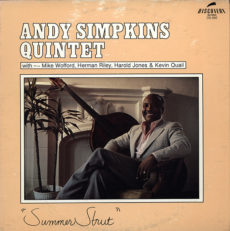
Andrew Simpkins was born on April 29, 1932 in Richmond, Indiana and first became known as a member of the group The Three Sounds, with which he performed from 1956 to 1968. After departing he joined George Shearing until 1974, and from 1979 to 1989 toured with Sarah Vaughan.
In the Seventies he settled in Los Angeles, California and became respected as a top-quality bassist and widely known as a solid and reliable studio musician.He performed with singers Carmen McRae and Anita O’Day, instrumentalists Gerald Wiggins, Monty Alexander, Buddy DeFranco, Don Menza, and Stéphane Grappelli, and many others.
He recorded three albums as a leader and also played acoustic bass on the 1997 Cover Album recording with Pat Boone titled In a Metal Mood: No More Mr. Nice Guy. Throughout his career not only did he record prolifically with The Three Sounds, he recorded with Kenny Burrell, Victor Feldman, Lalo Schifrin and Joe Williams.
Bassist Andy Simpkins passed away of stomach cancer on June 2, 1999 in Los Angeles.
Sponsored By

#preserving genius
More Posts: bass
Daily Dose Of Jazz…
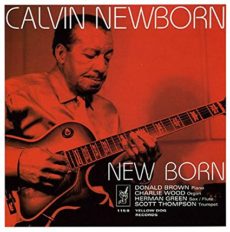
Edwin Calvin Newborn (was born on born April 27, 1933 in Whiteville, Tennessee and is the brother of pianist Phineas Newborn Jr. with whom he recorded between 1953 and 1958. They formed an R&B band, with their father Phineas Newborn Sr. on drums and Tuff Green on bass, trumpeter Willie Mitchell and tenor saxophonist Ben Branch. The group was the house band at the Plantation Inn Club in West Memphis, Arkansas, from 1947 until 1951 and recorded as B. B. King’s band on his first recordings in 1949, and also the Sun Records sessions in 1950.
Calvin gave guitars lessons to Howlin’ Wolf and was friends with Elvis Presley, who frequented his gig at the Plantation Inn Club two nights a week. Presley also used to eat at the Newborns’ house and browse their music store for gospel records. The group left West Memphis in 1951 to tour with Jackie Brenston as the Delta Cats in support of the record Rocket 88. It was considered by many to be the first rock and roll record ever recorded, and was the first Billboard number one record for Chess Records.
Following his R&B period he transitioned into jazz and played with Earl Hines starting in 1959. The early Sixties saw him touring with Lionel Hampton, Jimmy Forrest, Wild Bill Davis, Al Grey, Freddie Roach, Booker Little, George Coleman. Frank Strozier, and Louis Smith. Newborn also worked with Ray Charles, Count Basie, Hank Crawford, Sun Ra, Lou Donaldson, Bobby Hutcherson and David “Fathead” Newman among others. His 1980 album Centerpiece hit No. 35 on the U.S. Billboard jazz albums chart, but much of his earlier material was not reissued on CD until 2005.
Since the 1970s he remained mostly in Memphis, Tennessee, where he played regularly in local clubs well into the 1990s. Guitarist Calvin Newborn currently resides in Jacksonville, FL and continued to perform throughout Northeast Florida until his transition on December 1, 2018, aged 85.
Sponsored By

#preserving genius
More Posts: guitar