

Daily Dose Of Jazz…
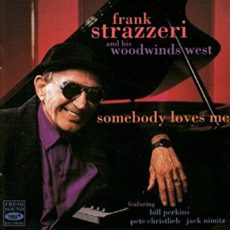
Frank Strazzeri was born April 24, 1930 in Rochester, New York and began his musical journey on tenor saxophone and clarinet at age 12, switching to piano soon after. He attended the Eastman School of Music, then, in 1952, took a job as a house pianist in a Rochester nightclub. While there he accompanied visiting musicians such as Roy Eldridge and Billie Holiday.
Relocating to New Orleans, Louisiana in 1954, he performed with Sharkey Bonano and Al Hirt in a Dixieland jazz setting, though his main focus since has been bebop. He played with Charlie Ventura in 1957-58 and Woody Herman in 1959 before moving to Los Angeles, California in 1960. There he worked extensively as a studio musician on the West Coast jazz scene, and toured with Joe Williams, Maynard Ferguson, Les Brown and Elvis Presle, playing with the latter for the 1973 Aloha from Hawaii concert.
Pianist Frank Strazzeri copiously recorded as a leader and played with Terry Gibbs, Herb Ellis, the Lighthouse All-Stars, Art Pepper, Bud Shank, Cal Tjader, Louie Bellson, Curtis Amy, Red Mitchell, Bill Perkins, Harold Land and Chet Baker. in addition to recording copiously as a leader. He passed away at the age of 84 on May 9, 2014.
Sponsored By
Voices From The Community

#preserving genius
More Posts: piano
Daily Dose Of Jazz…
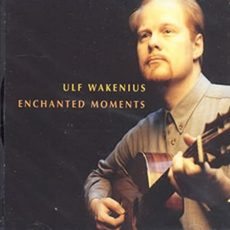
Ulf Karl Erik Wakenius was born April 16, 1958 in Halmstad, Sweden and raised in Gothenburg. In the 1980s he played with Peter Almqvist in Guitars Unlimited during the intermission for 600 million viewers of the Swedish International Finale of the Eurovision Song Contest in 1985. He went to Rio de Janeiro, Brazil that same year and began recording the first of three records with Sivuca, Aquarela Do Brazil, followed by Rendez-Vous in Rio in 1986 and Let’s Vamos in 1987.
During the Eighties Ulf collaborated with Niels-Henning Ørsted Pedersen also started this decade, and during the mid to late Nineties they recorded Those Who Were and This Is All I Ask. He led the U.W. Group, releasing Venture with Jack DeJohnette on drums, Bill Evans and Bob Berg on saxophones, trumpeter Randy Brecker, pianist Niels Lan Doky, Chris Minh Doky and Lars Danielsson on bass. In 1994 he recorded New York Meeting with Niels Lan Doky, Ira Coleman and Billy Hart.
He would go on to work with Lars Jansson, Lars Danielsson, Raymond Karlsson, Gösta Rundqvist, Yasuhito Mori, Jukkis Uotila, Carsten Dahl, Morten Lund, Lars Danielsson, Haakon Graf, John Scofield, Dennis Chambers, Gary Grainger, Oscar Peterson, Michel Legrand, Ray Brown, Pat Metheny Jon Larsen, Stian Mevik, Jimmy Rosenberg Lisa Nilsson, Cæcilie Norby, Viktoria Tolstoy, Esbjörn Svensson and Youn Sun Nah among others.
Guitarist Ulf Wakenius,a member of of Oscar Peterson’s last quartet from 1997 and a member of the Ray Brown trio, continues to lead his own band and record.
Sponsored By
www.whatissuitetabu.com
#preserving genius
More Posts: guitar
Daily Dose Of Jazz…
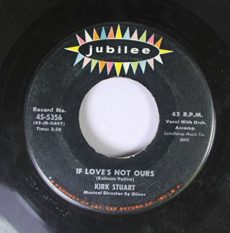
Kirk Stuart was born Charles Kincheloe Stuart on April 13, 1934 in Charleston, West Virginia. He studied at a conservatory before accompanying singers such as Billie Holiday in 1956, Della Reese from 1957–59 and for another two years with Sarah Vaughan beginning in 1961. He also arranged and conducted for these singers.
Stuart led his own unit in Los Angeles, California later in the 1960s, and recorded with Al Grey and once more with Reese along with a few 45 rpm records as a leader on the Josie and Jubilee labels during the decade. In later years he led ensembles in Las Vegas, and accompanied Joe Williams at the Smithsonian Institution in 1982.
Pianist, vocalist and educator Kirk Stuart, who taught at Howard University, passed away during spleen surgery on December 17, 1982.
Sponsored By
#preserving genius
Daily Dose Of Jazz…
Alexander Gafa was born on April 9, 1941 in New York City and worked as a student in the city from 1964 to 1969, playing guitar with Kai Winding and Sam Donahue . During the late Sixties he was a part of the New York Playboy Club playing with Winding, Earl May and Al Foster.
From 1969 to 1970, he was musical director and accompanist for Carmen McRae and performed as a member of the Sammy Davis Jr. orchestra in 1970 and 1971. During this decade he also did some live dates with Sarah Vaughan, one of which aired on PBS.
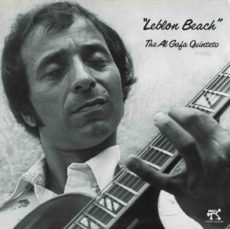
In 1971 Al played with Dizzy Gillespie and joined his group and toured with him for a period. Under his own name, he recorded the album Leblon Beach in 1976 for Pablo Records. He has recorded as well with Susannah McCorkle, Paul Simon, The Monkees, Alex Leonard, Duke Pearson, Johnny Hartman, Joe Albany and Sonny Stitt.
Before the fall of the World Trade Centers, he and bassist Dr. Lyn Christie would play in a duo configuration in the restaurant on the top floor. He is also part of Tom Lord’s 34 recording sessions from 1934 to 2011 of acoustic and electric guitar, and banjo. Guitarist Al Gafa currently resides in Brooklyn, New York where he performs occasionally.
Sponsored By
www.whatissuitetabu.com
#preserving genius
More Posts: guitar
Daily Dose Of Jazz…
Don Butterfield was born on April 1, 1923 in Centralia, Washington and though he wanted to play trumpet in high school, the band director assigned him to tuba instead. After serving in the U.S. Military from 1942-46 he went on to study the instrument at the Juilliard School.
Butterfield started his professional career in the late 1940s playing for the CBS and NBC radio networks. He played in orchestras, including the American Symphony and on albums by Jackie Gleason until he became a full time member at the Radio City Music Hall.
By the 1950s, Don had switched to jazz, backing such artists as Dizzy Gillespie, Frank Sinatra, Charles Mingus, Rahsaan Roland Kirk, Jimmy Smith, and Moondog. He fronted his own sextet for a 1955 album on Atlantic Records and played the 1958 Newport Jazz Festival.
The mid 1960s saw him taking a temporary, nearly unpaid, position conducting an amateur group of musicians known as the Gloria Concert Band, located in upstate New Jersey. In the Seventies he worked as a session musician playing on recordings for a variety of artists, and on television and film soundtracks, including The Godfather Part II.
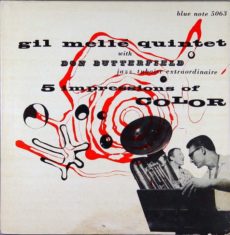
As a sideman he recorded with Cannonball Adderley, Nat Adderley, David Amram, Bob Brookmeyer, Kenny Burrell, Donald Byrd, Teddy Charles, Jimmy Cleveland, Bill Evans, Art Farmer, Maynard Ferguson, Dizzy Gillespie, Jimmy Heath, Roland Kirk, John Lewis, Arif Mardin, Gil Mellé, Charles Mingus, Modern Jazz Quartet, James Moody, Wes Montgomery, Lee Morgan, Oliver Nelson, Oscar Peterson, Sonny Rollins, Lalo Schifrin, Jimmy Smith, Billy Taylor, Clark Terry, The Thad Jones / Mel Lewis Orchestra and Stanley Turrentine
Suffering a stroke in 2005 left him unable to no longer play the tuba and on November 27, 2006 tubist Don Butterfield passed away in Clifton, New Jersey from a stroke-related illness.
Sponsored By
Bronze Lens
#preserving genius
More Posts: tuba