

Daily Dose Of Jazz…
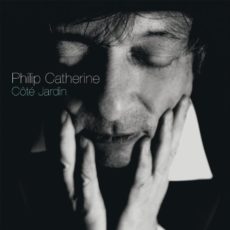
Philip Catherine was born on October 27, 1942 in London, England to English/Belgian parents and a grandfather who was first violinist in the London Symphony Orchestra. Having an ear for music early on, he picked up the guitar after hearing George Brassens and began listening to jazz.
He soon got the opportunity to play with some of those musicians when performing in Belgium, where he was residing at the time. In the 1960s he was a member of the Jean-Luc Ponty Quintet and during this period he was at the forefront on the European jazz scene performing and recording with Lou Bennett, Billy Brooks, Edgar Bateman, John Lee, Gerry Brown, Larry Coryell, Alphonse Mouzon, Charlie Mariano, Kenny Drew and Tom Harrell, among others.
Recording his debut solo album Stream in 1971 for Warner Bros. Records, the following year Philip collaborated with John Scofield, Ran Blake, George Benson and other musicians in Boston, Massachusetts. By early 1976 he replaced Jan Akkerman in the Dutch rock group Focus, recording on one album Focus con Proby, featuring American singer P. J. Proby.
The 1980s Catherine played extensively with the Chet Baker Trio and is featured on several of Baker’s albums. He went on to play with Charles Mingus, who dubbed him “Young Django”, as well as collaborations with Dexter Gordon, Richard Galliano, Niels-Henning Ørsted Pedersen, Stéphane Grappelli, Toots Thielemans, Robert Wyatt, Klaus Doldinger, Buddy Guy, Karin Krog, Carla Bley, Mike Mantler and Joachim Kühn as well as others too numerous to list.
He won the first Belgian Golden Django in 1995 and is considered the grandfather of Belgian jazz for his approach, sound, emotional lyricism and expression that is both important and influential. Guitarist Philip Catherine continues to perform on the now very active Belgian jazz scene as well as record and tour worldwide.

Uplift Someone’s World
More Posts: guitar
Daily Dose Of Jazz…
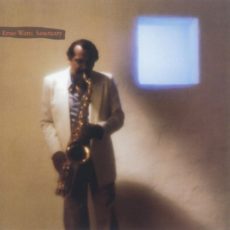
Ernest James Watts was born October 23, 1945 in Norfolk, Virginia. He began playing saxophone at thirteen. After a brief period at West Chester University, he attended Berklee College of Music on a Downbeat scholarship. He toured with Buddy Rich in the mid-1960s, occupying one of the alto saxophone chairs, with Lou Marini sitting the other.
He traveled to Africa on a US State Department tour with Oliver Nelson’s group and played tenor saxophone with The Tonight Show Band under Doc Severinsen for 20 years. During the Seventies he was a featured soloist on many of Marvin Gaye’s Motown albums, as well as on countless other pop and R&B sessions during 25 years as a first-call musician in the studios of Los Angeles, California.
In the mid-1980s Watts decided to rededicate himself to jazz, recording and touring with German guitarist and composer Torsten de Winkel, drummer Steve Smith and keyboardist Tom Coster. He joined bassist Charlie Haden’s Quartet West, played the saxophone on the Grease soundtrack, clarinet on The Color Purple soundtrack and performed on the opening theme song of the popular 80s sitcom Night Court.
Ernie founded Flying Dolphin Records and in early 2008, his Analog Man won the award in the 7th Annual Independent Music Awards for Best Jazz Album, worked with vocalist Kurt Elling, won a Grammy in 2010 for Best Jazz Vocal Album. He tours Europe twice a year with his own Ernie Watts Quartet, as well as Asia and summer jazz festivals the world over.
He has toured with the Rolling Stones, played the mystery horn on Frank Zappa’s album The Grand Wazoo, and has performed and recorded with Richard Groove Holmes, Alphonse Mouzon, Billy Alessi, Bobby Alessi, Gene Ammons, Paul Anka, Eric Martin, Willie Bobo, Brass Fever, Kenny Burrell, Lee Ritenour, David Axelrod, Donald Byrd, Stanley Clarke, Billy Cobham, Gino Vannelli, Randy Crawford, Kurt Elling, Torsten de Winkel, Hellmut Hattler, Dizzy Gillespie, Bobby Hutcherson, Milt Jackson, J. J. Johnson, Carole King, Charles Kynard, John Mayall, Carmen McRae, Blue Mitchell, Helen Reddy, New Stories, Moacir Santos, Lalo Schifrin, Bud Shank, Gábor Szabó, Gerald Wilson, Ndugu Chancler, Alphonso Johnson, Patrice Rushen, Joe Louis Walker, Barry Goldberg, Paul Jones, Chubby Tavares, T. Bone Walker, Big Joe Turner and Otis Span among others.
Tenor, alto and soprano saxophonist and flautist Ernie Watts has won two Grammy Awards as an instrumentalist and continues to perform, record and tour.
Inspire A Young Mind

Daily Dose Of Jazz…
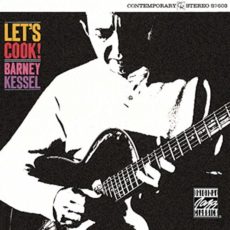
Barney Kessel was born on October 17, 1923 in Muskogee, Oklahoma and began his career as a teenager touring with local dance bands. When he was 16, he started playing with the Oklahoma A & M band, Hal Price & the Varsitonians. It was here that his band mates lovingly nicknamed him “Fruitcake” because he would practice up to 16 hours a day.
Moving on to bands such as that led by Chico Marx, he quickly established himself as a key post-Charlie Christian jazz guitarist. In 1944 he participated in the film Jammin’ the Blues that featured Lester Young, and by 1947 he was recording with Charlie Parker’s New Stars on the Relaxin’ at Camarillo session for Dial Records.
Known for his innovative work in the guitar trio setting, in the 1950s, he made a series of albums called The Poll Winners with Ray Brown on bass and drummer Shelly Manne. He was also the guitarist on the 1955 Julie London album Julie Is Her Name, which includes the million-selling standard Cry Me a River and features a guitar part from Kessel which illustrates his melodic chordal approach in a minimal jazz group. During the 1950s he released three Kessel Plays Standards volumes containing some of his most polished work.
Barney was a member of the Oscar Peterson Trio with Brown for a year, leaving in 1953 and turning the chair over to Herb Ellis. He went on to play with Sonny Rollins in the late 1950s and recorded the Sonny Rollins and the Contemporary Leaders album. A first call guitarist at Columbia Pictures during the 1960s, he became one of the most in-demand session guitarists in America, and is considered a key member of the group of first-call session musicians known as The Wrecking Crew. In this capacity he played outside the jazz genre on hundreds of pop recordings, including albums and singles by Phil Spector, The Beach Boys, The Monkees and many others.
He appeared in an acting part playing a jazz guitarist named “Barney” in one episode of the Perry Mason TV show. He wrote and arranged the source music for the jazz combo, including a jazz version of Here Comes the Bride that was featured in the story. He played Mr. Spock’s theme on bass, which first appeared in the Star Trek episode Amok Time.
During the 1970s, Kessel put on his educator hat and presented his seminar The Effective Guitarist in various locations around the world. During this decade he performed extensively with Herb Ellis and Charlie Byrd as The Great Guitars.
Guitarist Barney Kessel was rated the No. 1 guitarist in Esquire, DownBeat, and Playboy magazine polls between 1947 and 1960. In 1961 The Gibson Guitar Corporation introduced The Barney Kessel model guitar onto the market and continued to make them until 1973. Having been in poor health after suffering a stroke in 1992, he passed away of a brain tumor at his home in San Diego, California on May 6, 2004 at the age of 80.
Give The Gift Of Knowledge
More Posts: guitar
Daily Dose Of Jazz…
Billy Higgins was born on October 11, 1936 in Los Angeles, California. A jazz drummer who mainly played free jazz, he played on Ornette Coleman’s first records, beginning in 1958 and then freelanced extensively with hard bop and post-bop players. He was one of the house drummers for Blue Note Records and played on dozens of Blue Note albums of the 1960s. On a whole, he played on over 700 recordings, including recordings of rock and funk, and appeared as a jazz drummer in the 2001 movie Southlander.
Tipping his hat into the educator ring, in 1989 Higgins cofounded a cultural center, The World Stage, in Los Angeles to encourage and promote younger jazz musicians. The center provides workshops in performance and writing, as well as concerts and recordings. He also taught in the jazz studies program at the University of California, Los Angeles. Drummer Billy Higgins passed away of kidney and liver failure on May 3, 2001 at age 64 in Inglewood, California.
He left a legacy of music, having recorded eight albums as a leader and his sideman duties had him performing and recording with a who’s who list of musicians including but not limited to Gene Ammons, Robert Stewart, Chris Anderson, Gary Bartz, Paul Bley, Sandy Bull, Jaki Byard, Donald Byrd, Joe Castro, Don Cherry, Sonny Clark, George Coleman, John Coltrane, Bill Cosby, Stanley Cowell, Ray Drummond, Teddy Edwards, Booker Ervin, Art Farmer, Curtis Fuller, Stan Getz, Dexter Gordon, Grant Green, Charlie Haden, Slide Hampton, Herbie Hancock, Barry Harris, Eddie Harris, Jimmy Heath, Joe Henderson, Andrew Hill, Richard “Groove” Holmes, Paul Horn, Freddie Hubbard, Bobby Hutcherson, J. J. Johnson, Hank Jones, Dave Holland, Sam Jones, Clifford Jordan, Fred Katz, Steve Lacy, Charles Lloyd, Pat Martino, Jackie McLean, Charles McPherson, Pat Metheny, Blue Mitchell, , Red Mitchell, Hank Mobley, Thelonious Monk, Lee Morgan, Bheki Mseleku, David Murray, Horace Parlan, Niels-Henning Orsted Pedersen, Art Pepper, Dave Pike, Jimmy Raney, Sonny Red, Freddie Redd, Joshua Redman, Sonny Rollins, Charlie Rouse, Pharoah Sanders, John Scofield, Shirley Scott, Archie Shepp, Sonny Simmons, Sonny Stitt, Idrees Sulieman, Sun Ra, Cecil Taylor, Bobby Timmons, Mal Waldron, Cedar Walton, Don Wilkerson, David Williams and Jack Wilson, among others.
Sponsored By
Voices From The Community
More Posts: drums
Daily Dose Of Jazz…
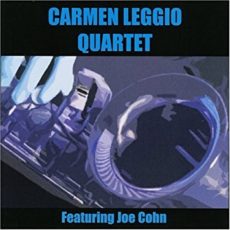
Carmen Leggio was born on September 30, 1927 in Tarrytown, New York. His last name literally translates to “music stand” and he taught himself to play at the age of nine. He began on clarinet, imitating Artie Shaw on the radio. At 14, he switched to tenor sax and began playing in clubs in his hometown of Tarrytown, a suburb just north of New York City.
He quit high school because he knew he was destined to be a musician and after playing the local scene, he moved to New York City in 1950. There he first worked with Terry Gibbs and became a studio musician.
His notable associations from the Fifties through the Seventies were with Marty Napoleon, Sol Yaged, Benny Goodman, the Maynard Ferguson Orchestra, Woody Herman and the Thad Jones/Mel Lewis Orchestra.
He went on to play with Gene Krupa, Buddy Rich, Dizzy Gillespie, and Doc Severinsen. Carmen has appeared on television, in movies, at the Newport Jazz Festival, Birdland and Carnegie Hall. Since 1961 and for the rest of his career Leggio played the same instrument, a Gold Medal SML made in France by Strasser, Marigaux & Lemaire with a Selmer D mouthpiece. He continued to perform Stardust, Nightmare and Begin the Beguine on an old King metal clarinet.
In his final years, he performed in various clubs and restaurants throughout Westchester. Tenor saxophonist Carmen Leggio passed away in Tarrytown on April 17, 2009.
More Posts: saxophone