

Daily Dose Of Jazz…
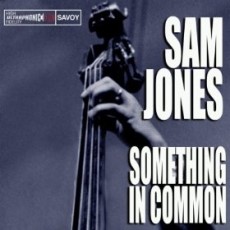
Samuel Jones was born on November 12, 1924 in Jacksonville, Florida. He started his career playing in local bands but by 1953 he was playing with Tiny Bradshaw. Moving to New York City in 1955 he joined up with the groups of Kenny Dorham, Cannonball Adderley, Dizzy Gillespie, and Thelonious Monk. But it would be with the Cannonball’s quintet from 1959 to 1966 that would establish his reputation.
Pairing up with stellar drummer Louis Hayes, the association proved to be a benchmark rhythm section for being “in the pocket”. Jones went on to replace Ray Brown in the Oscar Peterson Trio from 1966 to 1970. After this tenure he teamed up with Cedar Walton and Billy Higgins.
Known for playing the bass and cello with impeccable technique he could also swing and groove with the best of them. Sam fronted his own bands and left a reputable recorded legacy as a leader, recording solo projects during the early sixties and released some wonderful sides for Riverside, where he was able to stretch out on some of his cello oriented pieces.
From 1977 to 1981 Jones remained very active both as leader and sought after session player with two of his landmark recordings “Something New” and Something In Common” being produced during this period. He has played with Bobby Timmons, Tiny Bradshaw, Freddie Hubbard, Bill Evans and Illinois Jacquet as well as many others who revolved around the New York City jazz scene that was fertile ground for his career.
Sam Jones, double bassist, cellist and composer of the jazz standard, “Del Sasser”, passed away on December 15, 1981 at the age of 57.
Daily Dose Of Jazz…
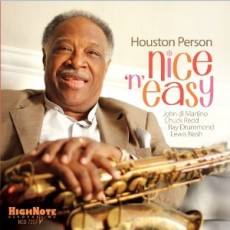
Houston Person, born November 10, 1934, grew up in Florence, South Carolina, first playing the piano before switching to tenor sax. He studied at South Carolina State College, went on to join the Air Force, became a member of a service band stationed in West Germany and played with Don Ellis, Eddie Harris, Cedar Walton and Leo Wright.
After his discharge he continued his studies at Hartt College of Music in Hartford, Connecticut. He first became known for a series of albums for Prestige Records in the 1960s, met Etta Jones while both were with Johnny Hammond’s band and spent many years as her musical partner, recording, performing and touring, and for much of his career this association was what he was best known for. Contrary to popular belief, they were never married.
Houston has performed in the hard bop and swing genres but is best known for his soul-jazz work. He has recorded more than seventy-five albums as a leader for Prestige, Westbound, Mercury, Savoy, and Muse Records. He is currently in residence as a leader and record producer at HighNote and has recorded with Charles Brown, Bill Charlap, Charles Earland, Lena Horne, Etta Jones, Lou Rawls, Horace Silver, Dakota Staton, Billy Butler and Richard “Groove” Holmes among others.
He received the Eubie Blake Jazz Award in 1982 and was inducted into the South Carolina State College Hall of Fame in 1999. He continues to produce, record, perform and tour.
More Posts: saxophone
Daily Dose Of Jazz…
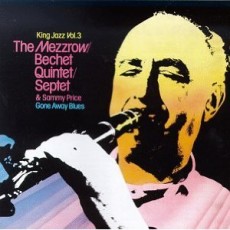
Milton Mesirow, better known as Mezz Mezzrow was born November 9, 1899 in Chicago, Illinois. The clarinetist and saxophonist has never been ranked as one of the best jazz musicians, organizing and taking part in some magnificent recording sessions involving the best black musicians of the 1930s/40s, including Benny Carter, Teddy Wilson, Frankie Newton, Tommy Ladnier and most importantly Sidney Bechet. His 1938 sessions for the French jazz critic Hugues Panassie, which he is well-known for organizing and financing, involved Bechet and Ladnier and helped spark the “New Orleans revival”.
Mezzrow became better known for his drug-dealing of marijuana than his music. His nicknames “Mezz” and “Muggles” that became slang for marijuana were used in song, the former in the Stuff Smith tune “If You’re A Viper” and the later was the title of a 1928 Louis Armstrong recording and for a brief time was his manager.
In the mid-1940s Mezzrow started his own record label, King Jazz Records, featuring himself in groups that usually included Sidney Bechet and, often, trumpeter Oran “Hot Lips” Page. Mezzrow also can be found and heard playing on six recordings by Fats Waller and his appearance at the 1948 Nice Jazz Festival was a surprise hit.
Following that appearance he made his home in Paris, France and organized many bands that included French musicians like Claude Luter, as well as visiting American artists like Peanuts Holland, Jimmy Archey, Kansas Fields, Lionel Hampton and Buck Clayton, with whom in 1953 he made what is probably his best ever recording: a version of the Louis Armstrong classic “West End Blues”.
Mezz Mezzrow, clarinetist, saxophonist, author and colorful character died on August 5, 1972 in Paris, France.
Daily Dose Of Jazz…
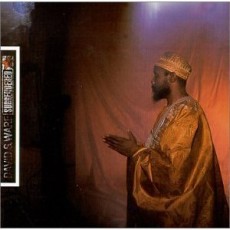
David S. Ware was born on November 7, 1949 in Plainfield, New Jersey and began playing at age ten due to his father’s admiration for the saxophone and his large record collection. While in high school he played in the bands and ventured into New York as a teenager to listen to jazz. He had informal practice sessions with Sonny Rollins as a youth in the ’60s; then as part of the fertile NYC Loft Jazz era of the ’70s.
During this decade, he joined the Cecil Taylor Unit and Andrew Cyrille’s Maono. He also worked together with drummers Beaver Harris and Milford Graves. In the early ’80s he toured Europe with both Andrew Cyrille and his own trio. In mid-decade, Ware purposefully engaged himself in a period of extensive woodshedding – in order to further develop both his personal sound and his visionary group concept.
The ’90s saw the full-on actualization of this group, and the recognition of David S. Ware as a true saxophone colossus. A series of groundbreaking albums by the David S. Ware Quartet were released on the Silkheart, DIW, Homestead, AUM Fidelity, and Columbia Jazz labels. Perhaps the most highly acclaimed group of the last decade, David’s efforts were rewarded by being one of the very few jazz musicians whose work was appreciated by an audience outside the narrow confines of the jazz world. In an unprecedented coup, the ‘Cryptology’ album garnered the lead review slot in Rolling Stone Magazine.
Over the course of his career, tenor saxophonist David Ware has recorded for Columbia, Black Saint, DIW, Silkheart, Homestead, AUM Fidelity and Thirsty Ear record labels. He has performed with a host of musicians and was responsible for bringing the young pianist Matthew Shipp to the attention of the jazz environment. David S. Ware, who has played the most prestigious clubs and festivals around the globe passed away on October 18, 2012 ar age 62 in New Brunswick, New Jersey.
More Posts: bandleader,composer,saxophone

Daily Dose Of Jazz…
Arturo Sandoval was born in Artemisa, Cuba on November 6, 1949 and began to play music at age 12 in the village band. After playing many instruments, he fell in love with the trumpet. In 1964, he began three years of serious classical trumpet studies at the Cuban National School of Arts. By the age of 16 he had earned a place in Cuba’s all-star national band and was totally immersed in jazz influenced by Charlie Parker, Clifford Brown and with Dizzy Gillespie as his idol and later mentor and colleague.
In 1971 he was drafted into the military. Luckily, Sandoval was still able to play with the Orquesta Cubana de Musica Moderna. In Cuba, Sandoval co-founded the band Irakere with Chucho Valdes and Paquito D’Rivera. They quickly became a worldwide sensation. Their appearance at the 1978 Newport Jazz Festival introduced them to American audiences and garnered them a recording contract with Columbia Records.
Arturo defected to the United States while touring in Spain with Dizzy in 1990, becoming a naturalized citizen in 1999 and has enjoyed a successful career. He has played with Woody Herman, Herbie Hancock, Woody Shaw, Stan Getz, Celine Dion, Tito Puente, Patti LaBelle, Frank Sinatra, Paul Anka, Gordon Goodwin and numerous others.
His life was the subject of the 2000 TV film For Love or Country: The Arturo Sandoval Story, starring Andy Garcia. He currently continues to perform, tour and record around the globe.
More Posts: flugelhorn,piano,trumpet