

Daily Dose Of Jazz…
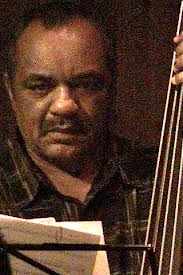
Tony Dumas was born in Los Angeles, California on October 1, 1955. By the age of 14, he started playing bass first crafting his sound in his high school orchestra. After graduation he went on to study music at Pasadena City College.
Dumas’ first started playing professionally with organist Johnny Hammond Smith followed by a stint with trumpeter Freddie Hubbard. To say he was sought after would be an understatement as his list of credentials as a sideman is impressive to say the least.
Tony has been privileged to have toured, played and recorded with such luminaries as Herbie Hancock, Carmen McCrae, Sarah Vaughan, Joe Williams, Cedar Walton, Billy Higgins, Rufus Reid, Chick Corea, Eddie Gladden, George Cables and Art Pepper as well as The Manhattan Transfer, Joe Farrell, Etta James, Mariah Carey, Bill Cosby and the Playboy Jazz Festival Band, Patrice Rushen, Bob Berg, and the list goes on and on.
Bassist Tony Dumas continues to add to the legacy of jazz through his performing and recording.
More Posts: bass
Daily Dose Of Jazz…
Dave Kikoski was born on September 29, 1961 in New Brunswick, New Jersey and learned to play the piano from his father who started him out at age six. In his early teens he played with his father, jazz and rock bands, and won “The New Jersey Allstate Jazz Competition”. Graduating from high school he headed to Boston’s Berklee School of Music, had a stream of trio gig while matriculating, met Pat Metheny who sat in on a gig and later recorded with him along with Roy Haynes.
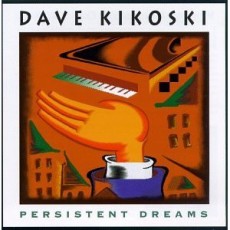
Mid 80s found Dave in New York performing and recording several different dates through the end of the decade with Roy Haynes, Randy Brecker, Bob Berg and Billy Hart. In 1989 he recorded “Presage”, his first date as a leader with Eddie Gomez and Al Foster. His sophomore project “Persistent Dreams” featured a larger ensemble with Randy Brecker and Billy Hart. Since the nineties he has been kept busy as a sideman, session player and leader working with the likes of John Patitucci, Jeff “Tain” Watts, Red Rodney, Craig Handy, Ralph Moore, Didier Lockwood, Joe Locke, the Mingus Big Band, Victor Lewis, Roy Hargrove, Dave Holland and others.
Pianist Dave Kikoski has recorded sixteen albums as a leader and four as a sideman and co-collaborator, toured worldwide, played prestigious festivals and continues to perform, record, compose and expand his own voice.

More Posts: piano
Daily Dose Of Jazz…
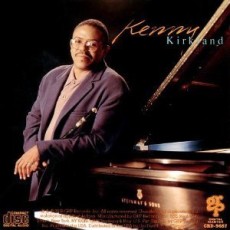
Kenneth David “Kenny” Kirkland was born September 28, 1955 in Newport, New York and when only six sat down at a piano keyboard. Following years of Catholic school Kenny enrolled in the Manhattan School of Music and studied classical piano performance, theory and composition. He first worked professionally touring through Europe with Polish fusion violinist Michal Urbaniak in 1977 and recording with him on “Urbaniak” and “Daybreak”. His next high-profile gig was with Miroslav Vitous with subsequent recording dates on “First Meeting” and “Miroslav Vitous Group”.
In the early 80s, Kirkland toured Japan with trumpeter Terumasa Hino, met Wynton Marsalis and their long association began with him playing on Marsalis’ self-titled debut album and sharing duties with Herbie Hancock. He became the sole pianist on Marsalis’ subsequent releases “Think Of One”, “Hothouse Flowers” and “Black Codes (From The Underground)”. Following this stint he joined Branford’s band After his association with Wynton Marsalis, Kirkland joined Branford Marsalis’ band and is featured on the albums “Royal Garden Blues”, “Renaissance”, “Random Abstract”, “Crazy People Music”, “I Heard You Twice The First Time”, “Buckshot Lefonque”.
Kenny worked for a short period as The Tonight Show pianist during Branford’s tenure but returned to the East coast and session work. Contrary to jazz orthodoxy Kirkland stretched to include keyboards and synthesizers coupled with straying from traditional jazz to work with Sting, on the documentary “Bring On The Night”, and in 1991 released his debut “Kenny Kirkland” for GRP and “Thunder and Rainbows/J.F.K.” on Sunnyside followed.
Leading up to June 1998, Kirkland worked diligently with long-time associate Jeff “Tain” Watts on the drummer’s debut recording “Citizen Tain” but his health was failing due to abuse and neglectful physical exercise. Jazz pianist Kenny Kirkland, most often associated with Sting, Branford Marsalis, Wynton Marsalis, and Kenny Garrett, passed away quietly in his Queens apartment of congestive heart failure on November 12, 1998.
In his more than twenty-year career, Kirkland performed or recorded with such artists as Don Alias, Carla Bley, Terence Blanchard, Michael Brecker, Stanley Clarke, Kevin Eubanks, Charles Fambrough, Chico Freeman, Dizzy Gillespie, Elvin Jones, Arturo Sandoval and the list of jazz greats continues along with Ben E. King, Angela Bofill, Youssou N’Dour, Stephen Stills and David Crosby.
More Posts: piano
Daily Dose Of Jazz…
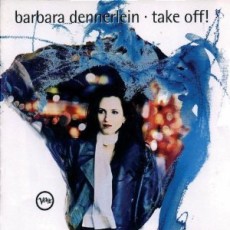
Barbara Dennerlein was born on September 25, 1964 in Munich, Germany. The hard bop/post bop Hammond B3 organist began playing electric organ at age 11. After starting organ lessons, she learned to play the two-manual organ with a bass pedal board. After one and a half years of lessons she continued to study without formal instruction and by 15, she playing in a jazz club for the first time. When leading her own bands, she was often the youngest musician in the group, learning to cooperate with more experienced musicians. Her local reputation as the “Organ Tornado from Munich” spread after her first television appearance in 1982.
With her career jumpstarted Barbara recorded her first two albums and by her third “Bebab”, she started her own record label, receiving the German Jazz Critics Award. She signed with Enja Records for three recordings, moved to Verve’s international label for three more sessions working with Ray Anderson, Randy Brecker, Dennis Chambers, Roy Hargrove, Mitch Watkins, and Jeff “Tain” Watts.
Her performances include solo performances as well as quintets and she has worked on a variety of projects with the pipe organ, church organ and symphonic orchestras. She has recorded twenty-three albums to date and her compositions range from traditional blues, romantic melancholic ballads and up-tempo drives with elements of swing, bebop, funk and Latin rhythms. Barbara Dennerlein continues to compose, record, perform and tour.
More Posts: organ
Daily Dose Of Jazz…
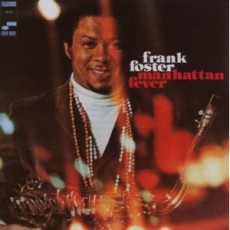
Frank Benjamin Foster III was born September 23, 1928 in Cincinnati, Ohio and began his musical career when he took up the clarinet at 11. Two years later he was playing the alto saxophone, quickly advanced and played with local bands by 14. He began composing and arranging at 15, leading his own 12-piece band while still in high school. He received his continued musical education at Wilberforce University but left with Snooky Young, moved to Detroit, playing the local jazz scene with Wardell Gray.
From 51-53 he served in Korea followed by joining Count Basie’s Big Band, contributed both arrangements and original compositions to Count Basie’s band including the standard, “Shiny Stockings” and other popular songs such as “Down for the Count,” “Blues Backstage,” “Back to the Apple,” “Discommotion,” and “Blues in Hoss Flat” as well as arrangements for the entire “Easin’ It” album.
From 1970 to 1972 he played with Elvin Jones, and in 1972 and 1975 with the Thad Jones-Mel Lewis big band. Frank went on to form and lead several groups, most notably Living Color and The Loud Minority while also co-leading a quintet with Frank Wess in 1983, and toured Europe with Jimmy Smith’s quintet in 1985.
By June 1986 Foster succeeded Thad Jones as leader of the Count Basie Orchestra and during his tenure Dr. Foster received two Grammy Awards for his big band arrangement of the Diane Schuur composition “Deedles’ Blues” and for his arrangement of the renowned guitarist/vocalist George Benson’s composition “Basie’s Bag”.
Over his career he was never far from education spending time teaching at the New England Conservatory of Music, New York City Public School System in Harlem, and State University of New York, Buffalo. Suffering a stroke in 2001, Frank Foster discontinued his playing but continued to lead The Loud Minority on limited engagements but soon passed the helm to trumpeter Cecil Bridgewater.
The tenor and soprano saxophonist and flautist amassed throughout his career twenty-six albums as a leader, thirty-four as a sideman and arranged five albums for Sarah Vaughan, Diane Schuur, Frank Sinatra, George Benson and Count Basie. Saxophonist Frank Foster continued to compose and arrange until his passage on July 26, 2011 at the age of 82.