

Daily Dose Of Jazz…
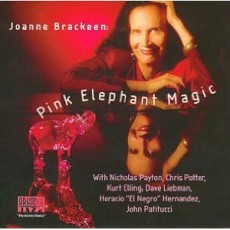
Joanne Brackeen was born Joanne Grogan on July 26, 1938 in Ventura, California but has used her married name throughout her career. The pianist and music educator attended the Los Angeles Conservatory of Music, but devoted her talents to jazz by imitating Frankie Carle albums. She was greatly influenced by Charlie Parker and bebop.
Her career began in the late 1950s while working with names like Dexter Gordon, Teddy Edwards, Harold Land, Don Cherry, Charlie Haden and Charles Lloyd. In 1969 Brackeen began to “take off” as she became the first woman to join Art Blakey’s Jazz Messengers.
In the 70s Joanne he played with Joe Henderson (1972-75) and Stan Getz (1975-1977) before leading her own trio and quartet. Brackeen established herself as a cutting edge pianist and composer through her appearances around the world, and her solo performances also cemented her reputation as one of the most innovative and dynamic of pianists. Her trios featured such noted players as Clint Houston, Eddie Gomez, John Patitucci, Jack DeJohnette, Cecil McBee and Billy Hart.
She has served on the grant panel for the National Endowment for the Arts, toured the Middle East with the US State Department as sponsor, had solo performances at Carnegie Hall and is a professor at the Berklee College of Music. With 25 albums to her credit, pianist Joanne Brackeen continues to perform and record.
More Posts: piano
Daily Dose Of Jazz…
Brian Blade was born July 25, 1970 in Shreveport, Louisiana. The first music he experienced was gospel and songs of praise at the Zion Baptist Church pastored by his father, Brady L. Blade. Elementary school music appreciation classes were an important part of his development and at age nine, he began playing the violin. Inspired by his older brother, Brady, who had been the church drummer, he shifted his focus to the drums throughout middle and high school.
During high school Brian began listening to the music of John Coltrane, Charlie Parker, Miles Davis, Art Blakey, Thelonious Monk, Elvin Jones and Joni Mitchell. Upon graduation he attended Loyola University from 1988 through 1993, studying and playing with most of the master musicians living in New Orleans, such as Ellis Marsalis, George French and Alvin Red Taylor.
As a bandleader, he has released three albums under Brian Blade & the Fellowship Band and In conjunction with his leader duties Blade has been a member of Wayne Shorter’s most recent quartet and continues to record and perform with the likes of Joni Mitchell, Bill Frisell, Ellis Marsalis, Norah Jones, Emmylou Harris, Daniel Lanois, Bob Dylan, Dorothy Scott, Billy Childs, Chris Potter and David Binney, just to name a few. He has recorded for Verve, Columbia, Blue Note, Warner and Nonesuch record labels, and continues to amass a prestigious catalogue as a sideman and leader.
More Posts: drums
Daily Dose Of Jazz…
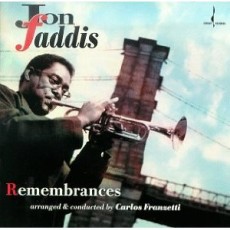
Jon Faddis was born July 24, 1953 in Oakland, California and studied music and trumpet as a child. At 18, he joined Lionel Hampton’s big band followed with tenure in the Thad Jones/Mel Lewis Orchestra as lead trumpet. After playing with Charles Mingus, he became a noted studio musician in New York, appearing on many pop recordings in the late 1970s and early 1980s.
The mid-Eighties saw Jon leaving the studios to pursue his solo career, which resulted in albums like Legacy, Into The Faddisphere and Hornucopia. Becoming the director and main trumpet soloist of the Dizzy Gillespie 70th Birthday Big Band and Dizzy’s United Nation Orchestra, in 1992 he began leading the Carnegie Hall Jazz Band at Carnegie Hall, conducting over 40 concerts in ten years.
Faddis has led the Dizzy Gillespie Alumni All-Stars and the Dizzy Gillespie Alumni All-Stars Big Band, was appointed artistic director of the Chicago Jazz Ensemble, heads the Jon Faddis Jazz Orchestra of New York. As an educator he teaches at The Conservatory of Music at Purchase College-SUNY and is a guest lecturer at Columbia College Chicago.
A jazz trumpeter, conductor, composer, and educator renowned for both his highly virtuosic command of the instrument and for his expertise in the field of music education, trumpeter Jon Faddis also leads master classes, clinics and workshops around the world often bringing promising students along to his gigs to sit in, and has produced a number of CDs for up-and-coming musicians.
More Posts: trumpet

Daily Dose Of Jazz…
Peter Ind was born July 20, 1928 in Middlesex, England who didn’t begin playing double-bass professionally until the late Forties as part of the house band on the Queen Mary. Relocating to New York in 1951 he played with Lennie Tristano, Lee Konitz, Buddy Rich, Booker Ervin, Mal Waldron and Slim Gaillard.
Branching into production Peter became a pioneer in stereo recording and the overdubbing of jazz in the Fifties. He produced sessions in his loft for Zoot Sims, Gerry Mulligan and Booker Little and founded his own “Wave” label in 1961, releasing as a leader “Looking Out” featuring Joe Puma and Dick Scott.
By 1963 Ind had moved to Big Sur, California where he remained until 1966. During this period he concentrated on performing unaccompanied, and recorded several albums of solo material. In 1965 he played with Konitz and Warne Marsh and continued to play with Marsh and Konitz into the 1970s after his return to England in 1967. Private recordings under the Wave imprint began to be issued.
In 1984 he opened a nightclub in London called the Bass Clef and after several successful years, the club had to close for tax reasons. Peter Ind continues to record and issue CDs, perform internationally and has written two books – “Jazz Visions” that explores the legacy of Lennie Tristano and “The Environment and Cosmic Metabolism” centering on energy concerns.
More Posts: bass
Daily Dose Of Jazz…
Carmell Jones was born in Kansas City, Kansas on July 19, 1936 and was reared by parents how were both teachers. He became interested in music and jazz, by his own admission, at the age of two. Piano lessons began at age five, gave way to the “that’s for sissy’s attitude” and trumpet started at seven.
He spent two years in the army followed by two years at the University of Kansas as a music education and trumpet major. Leaving the Midwest for the Pacific coast, he became a California studio musician in 1960 recording with such artists as Sammy Davis Jr., Bob Hope, and Nelson Riddle. During this chapter in his success story, he was being compared to Clifford Brown and Fats Navarro. Carmell developed a close association with Bud Shank as a member of his quintet. He recorded with many other notables and most importantly he recorded his first album under his own name and contract with Pacific Jazz – “The Remarkable Carmell Jones”.
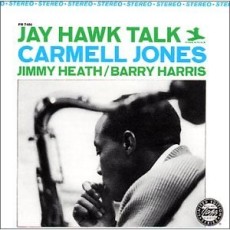
In ‘64 moving to New York he joined the Horace Silver Quintet recording three albums with Silver including “Song For My Father”. Down Beat Magazine awarded Jones the designation of “New Star Trumpeter” and signing with Prestige, he recorded what he considers his most successful personal album, “Jay Hawk Talk”, with pianist Barry Harris, tenor Jimmy Heath, drummer Roger Humphreys and bassist Teddy Smith. This album received the critics 5 Star Best Album Award.
The next year Carmell left the U.S. for Germany and spent the next fifteen years working with Milo Pavlovic, Herb Geller, Leo Wright and Eugene Cicero, the SFB Big Band and Radio Free Berlin recording 8 hours a day, composing and arranging for radio, TV and film. Upon his return to the States he devoted much of his time building new musicians from the ground up teaching music in his hometown elementary schools.
Carmell Jones, trumpeter, composer, arranger, music publisher, educator and recording artist with over sixty albums to his credit passed away in Kansas City, Kansas on November 7, 1996.