

Daily Dose Of Jazz…
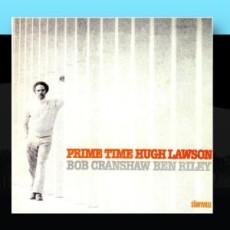
Hugh Lawson was born on March 12, 1935 in Detroit, Michigan. Inspired by Bud Powell, Hampton Hawes and Bill Evans he gained recognition for his more than ten year association with Yusef Lateef during the late ‘50s. During the Sixties he would record with Harry “Sweets” Edison, Roy Brooks and again with Lateef on several sessions.
During the Lawson performed with “The Piano Choir”, a group of several pianists including Stanley Cowell, and Harold Mabern. He went on to tour with Charles Mingus, record with Charlie Rouse, George Adams and as a leader, recording Prime Time, Colour, Jazzcraft Studio recording 1977-78, Beat-EP and Constellations.
Pianist Hugh Lawson was diagnosed with colon cancer and succumbed one day before his 62nd birthday on March 11, 1997 in White Plains, New York.

More Posts: piano
Daily Dose Of Jazz…
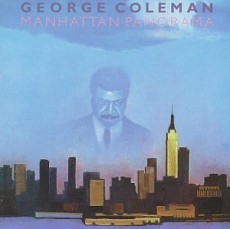
George Edward Coleman, born March 8, 1935 in Memphis, Tennessee, taught himself to play alto saxophone during his teen years inspired by Charlie Parker. Growing up his classmates were Harold Mabern, Booker Little, Frank Strozier, Hank Crawford and Charles Lloyd.
He began his career working with Ray Charles and by 1953 joined B. B. King where he switched to tenor. Moving to Chicago with Booker Little in 1956 he started working with Gene Ammons and Johnny Griffin before joining Max Roach in ’58. Coleman recorded with Jimmy Smith, Lee Morgan, Curtis Fuller, Eddie McFadden, Kenny Burrell and Donald Bailey before moving to New York with Max Roach.
Subsequent gigs with Ron Carter, Slide Hampton, Jimmy Cobb and Wild Bill Davis led him to become a part of the Miles Davis Quintet, recording among others Seven Steps to Heaven, My Funny Valentine and Four and More. This was followed up with his joining Herbie Hancock on his seminal work Maiden Voyage.
A foray into Hollywood placed Coleman on the sets of Freejack with Estevez, Jagger and Hopkins and on the Preacher’s Wife set with Denzel Washington and Whitney Houston.
The hard bop tenor, bandleader, composer and educator George Coleman has an impressive list of performances and recordings too numerous to name but suffice it to say he has worked with everyone from Mingus to Jamal to Hampton from the 60’s to the present day. He continues to lead his own groups, performing and recording regularly both as a leader and sideman.
More Posts: saxophone
Daily Dose Of Jazz…
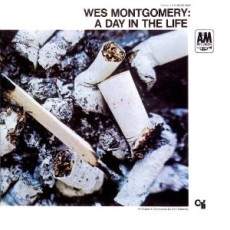
John Leslie “Wes” Montgomery was born on March 6, 1923 in Indianapolis, Indiana. Although he started learning guitar relatively late at the age of 19 and not skilled at reading music, Wes had an incredible ear, learning by listening to the recordings of his idol Charlie Christian. He began his self-taught education in 1943 using his thumb instead of a pick and by the end of the decade he was touring with Lionel Hampton.
Montgomery’s recording can be divided into three periods. His Riverside recordings from 1959-1963 were spontaneous small group sessions; the orchestral dates with arranger Don Sebesky and producer Cecil Taylor at Verve were from ’64 to ’66; and the Creed Taylor years of simple pop melodies underscored with strings and woodwinds. The later sessions produced three best-selling albums that introduced AM radio listeners to jazz and his performances were as freewheeling as his earlier Riverside records.
Considered one of the seminal figures of jazz guitar in the company of innovators like Charlie Christian and Django Reinhardt; Wes alongside Tal Farlow, Johnny Smith, Jim Raney and Barney Kessell put guitar on the map as a bebop/post-bop instrument. He is credited with influencing future guitar lions Pat Martino, George Benson, Emily Remler, Kenny Burrell, Jimi Hendrix, Stevie Ray Vaughan and Pat Metheny.
During his career he would team up with his brother Monk who played string and electric bass and Buddy, who played vibes and piano, releasing a number of albums as the Montgomery Brothers. His career garnered him two Grammy nominations, a Grammy award, Down Beat’s New Star award, and Down Beat Critic’s Poll award for best jazz guitarist from ‘60 to ‘63 and from ‘66 to ‘67. At the height of his career and his success, Wes Montgomery succumbed to a heart attack on June 15, 1968 in his hometown of Indianapolis.

More Posts: guitar
Daily Dose Of Jazz…
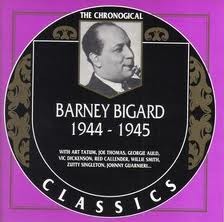
On March 3, 1906 Barney Bigard was born Albany Leon Bigard in New Orleans, Louisiana. As a child he studied music and clarinet with Lorenzo Tio. In the early twenties his move to Chicago had him working and recording with Joe “King” Oliver, Johnny Dodds, Jelly Roll Morton and numerous others.
Bigard’s initial fame came as a tenor saxophonist in the twenties and was #2 behind Coleman Hawkins before moving to the clarinet. In 1927 his swinging style joined the ranks of the Duke Ellington Orchestra, a relationship that lasted till 1942, both as a featured soloist and section tenor. Credited with composing or co-composing several tunes, Barney’s most notable is the Ellington standard “Mood Indigo”.
Tiring of the road with Ellington, Bigard moved to Los Angeles getting into sound tracking, with an on-screen performance with Louis Armstrong in the 1946 film “New Orleans”. By the late 40’s he teamed with Kid Ory followed by once again touring the world with Louis Armstrong’s All Stars band from 1947 to 1955. In the late 50’s he played with Cozy Cole and became semi-retired by 1962, occasionally playing and recording with Art Hodes, Earl Hines and sometimes as a leader.
Considered one of the most distinctive clarinetists in jazz, composer and tenor saxophonist Barney Bigard passed away on June 27, 1980 in Culver City, California.

Daily Dose Of Jazz…
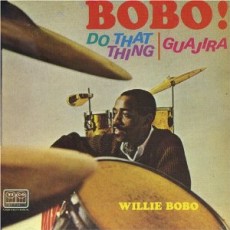
He was born William Correa on February 28, 1934 in East Harlem, New York City but to the jazz and Latin music worlds he was simply known as Willie Bobo, a moniker given him by Mary Lou Williams after they recorded in the early 50’s. Growing up in Spanish Harlem in New York City, he began playing bongos at age 14 and started performing a year later with Perez Prado. Over the next few years he studied with Mongo Santamaria while serving as his translator and at 19 joined Tito Puente for four years.
Willie became one of the great Latin percussionists of his time, a relentless swinger on the congas and timbales, a flamboyant showman onstage, and an engaging if modestly endowed singer. He also made serious inroads into the pop, R&B and straight jazz worlds, and he always said that his favorite song was Antonio Carlos Jobim’s “Dindi.”
He worked with Cal Tjader, Herbie Mann and Santamaria with whom he recorded the evergreen Latin standard “Afro-Blue” but it was in 1963 that he made his first recording as a leader with Clark Terry and Joe Farrell. He went on to record with Miles Davis, Cannonball Adderley, Herbie Hancock, Wes Montgomery, Chico Hamilton and Sonny Stitt. In 1969, he moved to Los Angeles where he led jazz and Latin jazz combos, appeared on Bill Cosby’s first comedy series in 1969.
He recorded on his own for Sussex, Blue Note, Verve and Columbia. One of his last appearances, only three months before his death, was at the 1983 Playboy Jazz Festival where he reunited with Santamaria for the first time in 15 years. Jazz percussionist and timbale master Willie Bobo, known for his Afro-Cuban and Latin jazz succumbed to cancer on September 15, 1983 at age 49.
More Posts: drums,percussion,timbales