

Daily Dose Of Jazz…
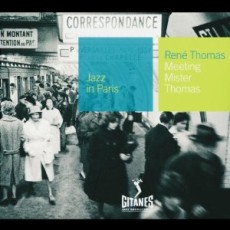
René Thomas was born on February 25, 1927 in Liege, Belgium and is considered one of the greatest jazz guitarists to emerge in the 1950s. Influenced by Django Reinhardt Thomas was mostly self-taught and became one of the most sought after guitarists for his cool tone. After WWII he played with the “Bop Shots”, Belgium’s first be-bop outfit with Jacques Pelzer and Bobby Jaspar.
In the early 1950s, Thomas moved to Paris where he connected with the modern jazz scene and in 1954, he recorded his first album under his own name. His reputation as a virtuoso guitarist and inventive musician spread rapidly in the jazz world.
In 1956, moving to Canada, Thomas played regularly for the Montreal jazz society and met Sonny Rollins. So impressed with his talent, Rollins invited him for a concert in Philadelphia and for the 1958 recording, Sonny Rollins and the Big Brass. While in the U.S. René played with the best jazz musicians of that era: Stan Getz, Miles Davis, Toshiko Akiyoshi, and Jackie McLean and in 1960 he recorded Guitar Groove.
Returning to Europe in 1962, he toured and recorded with Chet Baker, Kenny Clarke, Eddy Louiss, Lucky Thompson and Sonny Criss. While touring with Lou Bennett throughout Spain, guitarist Rene Thomas died of a sudden heart attack at the age of 47 on January 3, 1975.

More Posts: guitar
Daily Dose Of Jazz…
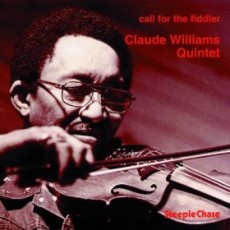
Claude “Fiddler” Williams, born on February 22, 1908 in Muskogee, Oklahoma, by the age of 10 had learned to play guitar, mandolin, banjo and cello and was inspired to learn the violin after hearing Joe Venuti play. He played around Oklahoma with bassist Oscar Pettiford and by 1927 had his first professional gig with Terence Holder’s territory band that soon became known as the Clouds of Joy led by Andy Kirk after Holder’s ouster.
Claude enjoyed a great deal of success due to the performing and composing talents of Mary Lou Williams. Their short-lived relationship ended due to health issues but during the thirties he worked with Alphonse Trent, George E. Lee, Chick Stevens, Nat King Cole and his brother Eddie.
In 1936 Claude became the first guitarist to record with Count Basie and throughout the 30’s and 40’s worked Chicago, Cleveland and Flint with the Four Shades of Rhythm. Throughout the 50’s he worked with Jay McShann, Eddie “Cleanhead” Vinson and Hank Jones.
Settling in Kansas City in 1953 he spent most of the next 20 years leading his own groups. By the 70’s a gig with McShann led to his first recordings in three decades and his second career was born. Over the next two decades he toured with McShann, worked as a feature soloist at jazz festivals, Parisian musical Black & Blue, a New York date with Roland Hanna and Grady Tate, played Carnegie Hall and Lincoln Center, and President Bill Clinton’s first inauguration. In 1997 Williams was the first inductee of the Oklahoma Jazz Hall Of Fame.
Claude “Fiddler” Williams, the venerable elder statesman of jazz, who outlasted virtually all his contemporaries and achieved his greatest successes at an advanced age and was the last surviving jazz musician to be recorded before 1930, passed away at the age of 96 of pneumonia in Kansas City on April 26, 2004.
More Posts: violin

Daily Dose Of Jazz…
Lew Soloff was born February 20, 1944 in New York City and is a jazz trumpeter, composer and actor. Studying trumpet at the Eastman School of Music, he continued his studies at Julliard. After graduation he freelanced around New York City with Maynard Ferguson, Joe Henderson, Machito, Tito Puente and Clark Terry. From 1968 to 1973 he worked with Blood, Sweat and Tears.
By 1973 he began an association an association with Gil Evans, played with George Gruntz’s Concert Jazz Band, Carla Bley, and is a longtime member of the Manhattan Jazz Quintet. He has also teamed up with the colorful trombonist Ray Anderson on several often-humorous recordings.
In the 1980’s he was part of a jazz ensemble called Members Only, recording for Muse Records. A brilliant high note trumpeter, Lew has long been sought after to play in big bands and session work. He is a distinctive soloist and an expert with the plunger mute. He has over four-dozen albums to his credit as a leader and sideman and currently performs, tours and records.

More Posts: trumpet
Daily Dose Of Jazz…
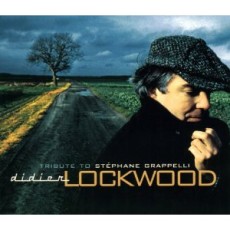
Didier Lockwood was born on February 11, 1956 in Calais, France and began studying classical violin and composition at the Calais Conservatory at six years old. But thanks to his brother Francis, Didier’s world was opened to other forms of music and he quit his studies in 1972. Entranced by the improvisation of Jean-Luc Ponty’s playing he took up the amplified violin. He credits being influenced by Polish violinist Zbigniew Siefert and fellow Frenchman Stephane Grappelli with whom he toured. By 1975 he joined progressive rock group Magma followed by fusion group Uzeb.
During the 70’s he played in Paris with Aldo Romano and Daniel Humair among others, led a fusion group called Surya and recorded with Tony Williams. The 80’s saw Didier performing at the Montreux Jazz Festival teamed with guitarist Allan Holdsworth, bassist/vocalist Jack Bruce, drummer Billy Cobham and keyboardist David Sancious, playing in the U.S. and recording with violin colleagues John Blake and Michal Urbaniak.
Lockwood’s career has been diverse ranging from fusion to swing to advanced hard bop but he first gained fame for exploring new musical landscapes and performing various sound imitations such as seagulls and trains. Although slated as the heir apparent to the line of great French violinists behind Grappelli and Ponty, by the nineties he maintained a very low profile. He established a string instrument improvisation school in 2001 called Centre des Musiques Didier Lockwood, has been touring with jazz guitarist Martin Taylor since 2006 and written several film scores.

More Posts: violin
Daily Dose Of Jazz…
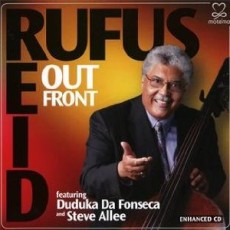
Rufus Reid was born on February 10, 1944 in Atlanta, Georgia but was raised in Sacramento, California where he played the trumpet through junior high and high school. Shortly after graduation he entered the Air Force and it was there that he became seriously interested in the bass.
Following his honorable discharge from the military, Reid moved to Seattle to begin studies with James Harnett of the symphony. Then continued at Northwestern University graduating with a music degree as a performance major on double bass.
His professional career began in Chicago playing with Sonny Stitt, James Moody, Milt Jackson, Curtis Fuller and Dizzy Gillespie, recording with Kenny Dorham, Dexter Gordon, Lee Konitz and Howard McGhee, and touring internationally with the Hutcherson-Land quintet, Freddie Hubbard, Nancy Wilson, Eddie Harris and Dexter Gordon in the ‘70s. Moving to New York in 1976 he began playing and recording with Thad Jones & Mel Lewis who are just the few colleagues among the hundreds of world’s greatest musicians.
A prolific bassist, Reid has spanned generations of jazz appearing on countless hard bop, bebop, swing and pop sessions with his restrained yet emphatic tone, time, harmonic sensibility and has made him one of the most sought after bassists in the industry. He has co-led a group with Akira Tana called TanaReid since the late eighties.
Rufus Reid began teaching at William Patterson College in 1979 and the bassist, educator and composer continues to record and perform around the world.

More Posts: bass