

Daily Dose Of Jazz…
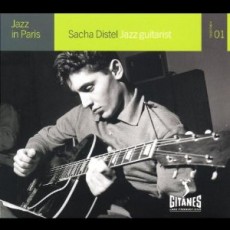
Sacha Distel: The Jazz Guitarist Who Became France’s Crooner to the World
Sacha Distel was born on January 29, 1933, in Paris, France, and started out like many young musicians, plinking away at the piano. But the guitar called to him with a voice he couldn’t ignore, and once he made the switch, there was no turning back.
A Life-Changing Night in 1948
When Sacha was just fifteen, his uncle Ray Ventura, founder of a jazz orchestra that had settled in Paris after the war—invited him to witness something extraordinary: Dizzy Gillespie performing with Ventura’s ensemble. For a teenage guitarist still finding his voice, hearing Gillespie’s revolutionary bebop trumpet in person was like being struck by lightning. That single concert ignited a passion that would define the next decade of Distel’s life.
Becoming a Jazz Leader
The experience with Gillespie split Ventura’s musical circle into two rival camps: Guy Wormser’s New Orleans traditionalists and a group of cool jazz and bebop enthusiasts led by the young Distel. Together with saxophonist Hubert Damisch, Sacha founded a band that quickly established him among Paris’s jazz elite.
Their talent was undeniable. At the prestigious Coliseum’s Night of Jazz, Distel’s ensemble won the Meilleur Petit Orchestre Moderne (Best Modern Small Orchestra) award, while both Damisch and Distel individually took home prizes as outstanding musicians on the same evening. Not bad for a teenager who’d only discovered jazz a few years earlier.
Crossing the Atlantic
Distel’s guitar work caught international attention. He worked alongside Dizzy Gillespie and collaborated with Tony Bennett, who would popularize Distel’s composition La Belle Vie, better known in English as The Good Life, turning it into a timeless standard that’s been recorded hundreds of times since.
By the late 1950s, Distel had appeared on The Ed Sullivan Show, introducing American audiences to his sophisticated musicianship and undeniable charisma. But something was shifting—the handsome young guitarist was also discovering he had a voice that audiences loved.
From Jazz Guitarist to International Star
What followed was a remarkable transformation. Distel evolved from serious jazz musician into one of France’s most beloved crooners and entertainers. He hosted his own variety show on French television, becoming a household name throughout the Francophone world and gaining popularity far beyond France’s borders.
His star power was genuine: he performed for the Queen Mother’s 80th birthday, played the manipulative lawyer Billy Flynn in the London production of Chicago, and famously dated Brigitte Bardot for a year. He later married Olympic skier Francine Breaud, settling into a life that balanced artistic achievement with genuine glamour.
Hits That Crossed Borders
Distel scored major hits with his cover of the Oscar-winning Raindrops Keep Fallin’ on My Head, the playful Scoubidou, which became something of a European phenomenon, and of course his own composition “The Good Life”, a song that perfectly captured the sophisticated, optimistic spirit of its composer.
A Bittersweet Ending
After a long illness, vocalist and guitarist Sacha Distel passed away on July 22, 2004, at age 71, in Rayol-Canadel, France, a small commune on the Mediterranean coast, far from the Parisian jazz clubs where he’d started and the international stages where he’d triumphed.
Two Careers, One Artist
Sacha Distel’s story is fascinating because it represents something rare: a serious jazz musician who successfully transitioned into mainstream entertainment without completely abandoning his roots. The guitarist who studied bebop never entirely disappeared, even when the crooner took center stage.
His composition The Good Life might be his most enduring legacy, a song that captures both his jazz sophistication and his gift for melody that could reach beyond the jazz cognoscenti to touch anyone who’d ever dreamed of la belle vie.
From a teenage guitar student mesmerized by Dizzy Gillespie to an international entertainer who made queens and common audiences alike smile, Sacha Distel lived the good life he sang about and shared it generously with the world.
Daily Dose Of Jazz…
Bob Moses: The Drummer Who Helped Invent Jazz Fusion
Rakalam Bob Moses was born on January 28, 1948, in New York City, arriving just as bebop was transforming into something even more adventurous. He studied drums throughout his childhood, absorbing the rhythmic complexity of modern jazz, and by the time he was a teenager in 1964, he was already playing professionally with the wildly creative multi-instrumentalist Rahsaan Roland Kirk—a baptism by fire that would shape his fearless approach to rhythm.
Pioneering Fusion Before It Had a Name
In 1966, Moses and guitarist Larry Coryell did something revolutionary: they formed the jazz-fusion group Free Spirits, blending jazz improvisation with rock energy and electric instruments at a time when most jazz purists considered such combinations heretical. This was two years before Miles Davis’ In a Silent Way, two years before Tony Williams Lifetime—Free Spirits were genuine pioneers, exploring territory that barely had a map.
The following year, 1967, Moses began a fruitful collaboration with vibraphonist Gary Burton, with whom he would record throughout the 1970s. Burton’s innovative approach to the vibraphone and his openness to musical experimentation made him the perfect partner for Moses’ exploratory drumming.
Finding His Voice as a Leader
Moses released his first album as a leader, Bittersuite, in 1975—a deeply personal statement that showcased his compositional abilities alongside his drumming. This was followed by Devotion in 1979, further establishing him as not just a sideman but a creative force with his own vision.
During this fertile period, he was also a member of Compost, an adventurous ensemble featuring saxophonist Harold Vick, percussionist Jumma Santos, bassist Jack Gregg, and the great drummer Jack DeJohnette. The group explored Afro-Cuban rhythms, modal jazz, and free improvisation—a melting pot that reflected Moses’ wide-ranging musical interests.
A Collaborator’s Collaborator
Moses became the drummer of choice for some of the most forward-thinking musicians of the era. He worked extensively with saxophonist Dave Liebman’s Open Sky ensemble, guitarist Pat Metheny (during his early, more experimental period), pianist Hal Galper, keyboardist Gil Goldstein, bassist Steve Swallow, Swiss bandleader George Gruntz, and the brilliant guitarist Emily Remler—each collaboration revealing different facets of his musical personality.
What united all these partnerships was Moses’ ability to provide both solid grounding and adventurous color, to swing hard when needed but also to explore texture, space, and unconventional rhythmic structures.
Prolific Leadership
From the 1980s into the new millennium, Moses continued recording prolifically as a leader for Gramavision, Amulet, Navarre, Sunny Side, and Jazzwerkstat record labels. Many of these releases received significant critical acclaim, recognized for their compositional depth, rhythmic sophistication, and willingness to take chances.
Unlike some drummers who lead albums that are merely showcases for technique, Moses’ recordings are genuine compositions—thoughtfully constructed pieces that happen to feature exceptional drumming rather than drum solos searching for a musical context.
Still Creating, Still Teaching
Today, Moses continues performing alongside bassist John Lockwood, bassist Don Pate, and keyboardist John Medeski with the noted spiritual jazz guitarist Tisziji Muñoz—explorations that connect to jazz’s mystical, transcendent possibilities.
He also teaches at the prestigious New England Conservatory, where he passes on decades of hard-won knowledge to the next generation of drummers and improvisers. For Moses, teaching isn’t just about technique—it’s about opening young musicians’ ears to possibilities they haven’t yet imagined.
A Legacy of Fearless Exploration
From teenage prodigy playing with Roland Kirk to jazz-fusion pioneer with Free Spirits, from sensitive accompanist with Gary Burton to visionary bandleader with dozens of albums under his own name, Bob Moses has spent over six decades refusing to be categorized, refusing to play it safe, and refusing to believe that drums are merely a timekeeper.
He’s proven that the drum kit can be a melodic instrument, a textural palette, a conversational partner, and a compositional tool—all while never losing sight of the fundamental groove that makes jazz music move and breathe.
That’s not just a career—that’s a lifetime of pushing boundaries and expanding what’s possible behind the kit.
More Posts: drums
Daily Dose Of Jazz…
Jimmie Smith: The Drummer Who Played with Everyone Who Mattered
James Howard Smith was born on January 27, 1938, in Newark, New Jersey, and from the beginning, he was serious about the drums. From 1951 to 1954, while still a teenager, he studied at the Al Germansky School for Drummers—a specialized institution that emphasized both technique and musicality. His dedication paid off with acceptance to the legendary Juilliard School in 1959, where he refined his classical training and expanded his musical vocabulary.
But Smith wasn’t destined for the orchestral world, jazz was calling, and New York City was waiting.
The New York Years: A Who’s Who Education
Smith began his professional career in New York around 1959, and what followed was an apprenticeship that reads like a masterclass in post-bop jazz. Throughout the 1960s, he worked with saxophonist Jimmy Forrest, organist Larry Young, the groundbreaking vocal trio Lambert, Hendricks & Ross, saxophonist Pony Poindexter, blues shouter Jimmy Witherspoon, pianist Gildo Mahones, organists Jimmy McGriff and Groove Holmes—each gig teaching him something new about swing, time, and the art of musical conversation.
His longest and perhaps most formative association came with the incomparable pianist Erroll Garner, with whom he played until 1975. Working with Garner—whose rhythmically complex, orchestral approach to the piano demanded both flexibility and rock-solid time—was like earning a PhD in musical sensitivity.
Heading West
In 1975, Smith relocated to California, where his career took on new dimensions. The West Coast jazz scene of the 1970s through the 1990s was vibrant and diverse, and Smith found himself performing and recording with an almost absurd roster of talent: saxophonist Sonny Criss, vocalist Bill Henderson, singer Ernestine Anderson, pianist Phineas Newborn, guitarists Barney Kessel and Herb Ellis, and saxophonist Al Cohn—just to name a few.
Each collaboration revealed Smith’s remarkable adaptability. He could swing hard with horn players, provide delicate brush work behind vocalists, and drive a guitar trio with just the right combination of propulsion and restraint.
In 1993, he toured Japan with organist Jimmy Smith, no relation, and guitarist Kenny Burrell, a dream trio that brought classic soul-jazz to enthusiastic audiences abroad.
One Legendary Night in Montreux
One of drummer Jimmie Smith’s most celebrated performances took place at the 1977 Montreux International Jazz Festival, where he shared the stage with an all-star lineup that still seems impossible: saxophonist Benny Carter, trumpeter Miles Davis, vibraphonist Milt Jackson, trumpeter Dizzy Gillespie, and pianist Count Basie.
Imagine being the drummer holding down the rhythm section for that constellation of legends—multiple generations of jazz royalty, each with their own distinct style and expectations. Smith rose to the occasion, proving he belonged in that rarefied company.
As a Leader
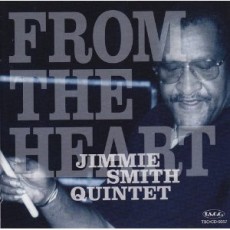
While Smith spent most of his career as the ultimate supporting player, he did step forward as a leader on select occasions. He recorded From the Heart for the Tokyo Sound City label and the superb Rockin’ in Rhythm with bassist Ray Brown and pianist Hank Jones for Concord Records—a trio session that showcased his musical intelligence and his ability to create space for his equally accomplished bandmates.
The Drummer’s Drummer
Jimmie Smith represents a particular kind of jazz musician that’s increasingly rare: the complete professional who could walk into any musical situation, read the room or the chart, and deliver exactly what was needed. No ego trips, no showboating—just deep listening, impeccable time, and the kind of musical generosity that makes everyone else sound better.
From Newark to Juilliard, from Greenwich Village clubs to Montreux’s grand stages, from New York to California and across the Pacific to Japan, Jimmie Smith spent his career doing what he loved most: sitting behind the drums and making great music with great musicians.
And really, what better legacy could a jazz musician ask for than to be known as someone every bandleader wanted on the gig, someone who made the music swing, and someone who understood that sometimes the greatest artistry lies not in the spotlight, but in making the spotlight shine brighter on everyone else?
That’s Jimmie Smith—a drummer’s drummer, a musician’s musician, and one of the unsung heroes who helped keep the jazz tradition alive and swinging for over four decades.
More Posts: drums
Daily Dose Of Jazz…
Tiny Winters: The Bassist Who Fooled Fans Into Thinking He Was Ella Fitzgerald
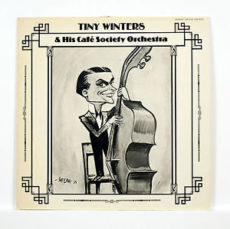
Frederick Gittens was born on January 24, 1909, in London, England, but the jazz world would come to know him by a name that became legendary in British jazz circles: Tiny Winters.
From Violin to the Bass That Swings
He learned violin as a child—a common enough beginning—but something about the double bass called to him. He made the switch and developed a pizzicato style directly inspired by the great New Orleans bassist Pops Foster, whose propulsive walking lines and rhythmic drive had helped define early jazz. Winters was absorbing American jazz from across the Atlantic and making it his own.
Rising Through Britain’s Jazz Scene
By the 1920s, he was already working with the Roy Fox Band, one of Britain’s premier dance orchestras. The 1930s brought collaboration with pianist and arranger Lew Stone, whose sophisticated arrangements were pushing British jazz toward new heights.
But here’s where Winters’ story gets delightfully unusual: he possessed an unusually high vocal range that he put to remarkable use covering Ella Fitzgerald hits. His falsetto was so convincing that he regularly received fan mail addressed to “Miss Tiny Winters.” Imagine the surprise of fans who showed up expecting a female vocalist and discovered a bassist with a four-octave range!
Becoming a Bandleader and Session Ace
Winters went on to play with the elegant Ray Noble, recorded with the great American tenor saxophonist Coleman Hawkins when he visited London, and began leading his own groups by 1936. With his reputation firmly established, he became a regular fixture at the fashionable Hatchett Club while freelancing as a sought-after session player in theatrical orchestras for major productions like Annie Get Your Gun and West Side Story.
Comedy, Television, and New Ventures
Later in his career, Winters played with cornetist Digby Fairweather in the Kettner’s Five, recorded with veteran saxophonist Benny Waters, and became both the bassist and featured comedian with trombonist George Chisholm in The Black and White Minstrel Show—a television variety program that showcased his versatility as an entertainer, not just a musician.
The Final Chapters
During the late 1980s, Winters led the Café Society Orchestra and his own Palm Court Trio, proving that age hadn’t diminished his passion for leading ensembles. He also found time to write his autobiography, cheekily titled It Took a Lot of Pluck—a perfect pun for a bassist whose fingers had plucked millions of notes over seven decades.
When he retired in the 1990s, he did so with honor: Winters was awarded the Freedom of the City of London, a historic recognition that acknowledged not just his musical contributions but his status as a beloved cultural figure.
A Life Well Lived
Bassist, vocalist, comedian, and bandleader Tiny Winters passed away on February 7, 1996, leaving behind a legacy that reminds us jazz wasn’t just an American export—it was reimagined, reinterpreted, and reinvigorated by musicians around the world who made it their own.
From fooling fans with his Ella Fitzgerald impersonations to holding down the bass in London’s finest orchestras for seventy years, Tiny Winters proved that sometimes the most interesting careers are the ones that refuse to fit into neat categories.
More Posts: bass
Daily Dose Of Jazz…
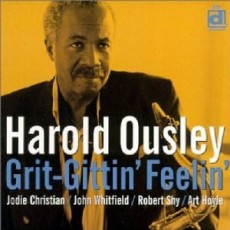
Harold Ousley: The Tenor Voice That Bridged Blues and BebopHarold Lomax Ousley was born January 23, 1929, in Chicago, Illinois—the cradle of electric blues and a proving ground for countless jazz saxophonists. Heavily influenced by the big-toned Gene Ammons, Ousley picked up tenor saxophone and flute in the late 1940s and immediately set about carving out his own path through the rapidly evolving jazz landscape.
Backing the Legends
The 1950s found Ousley in stellar company, recording behind two of the greatest vocalists in American music: Billie Holiday and Dinah Washington. Imagine being the saxophonist supporting Holiday’s weathered, emotionally devastating voice, or matching Washington’s powerful, blues-drenched delivery. That’s the kind of education money can’t buy—you either rise to the occasion or get left behind. Ousley rose.
Throughout that decade, he also worked as a sideman with his idol Gene Ammons, absorbing the older master’s approach to tone, phrasing, and the art of making a ballad sing. The 1960s brought collaborations with organist Jack McDuff and a young guitarist named George Benson who was just beginning to make noise on the jazz scene.
Stepping Into the Spotlight
Ousley released his first record as a leader in 1961: Tenor Sax on the Bethlehem label—a straightforward title for a straightforward player who let his horn do the talking. Over the following decades, he would lead five more sessions for Muse, Cobblestone, Digi-Rom, Tele-Jazz, and Delmark labels, each one showcasing different facets of his musical personality.
His 16-bar blues boogaloo “Return of the Prodigal Son” demonstrated his rhythmic flair and compositional chops, but it became better known as a highlight on George Benson’s popular Cookbook album—sometimes your song becomes famous through someone else’s interpretation, and that’s okay.
Weathering the Changes
During the 1970s, Ousley found himself playing with jazz royalty—Lionel Hampton’s swinging vibes-led ensemble and Count Basie’s legendary orchestra. But the musical landscape was shifting beneath everyone’s feet. Fusion was exploding, electric instruments were taking over, and the acoustic hard bop sound Ousley excelled at was suddenly out of fashion. When mainstream jazz resurged in the 1980s, it often favored younger players.
Rather than become bitter, Ousley adapted. He moved into cable television production, creating programming that featured jazz performances and interviews—using a different medium to keep the music and its stories alive. He didn’t record again until the late 1990s, but he never stopped being part of the jazz community.
A Musical Identity
Though Ousley’s playing resided heavily in blues—that Chicago foundation never left him—he quickly cited Charlie Parker as his first model for the hard bop lines that gave his solos their forward momentum and harmonic sophistication. But perhaps the most overlooked aspect of his artistry was the gentler side: the sweet, caressing sound he brought to ballads, where his tone became butter-smooth and his phrasing unhurried, letting every note breathe.
A Life in Service to the Music
Tenor saxophonist Harold Ousley passed away on August 13, 2015, in Brooklyn, New York, having spent nearly seven decades contributing to jazz as a sideman, leader, collaborator, and documentarian.
He may not have achieved the fame of some of his contemporaries, but Harold Ousley represents something equally valuable: the solid professional who showed up, played beautifully, supported the music and the musicians around him, and kept the tradition alive even when the spotlight moved elsewhere.
That’s not just a career—that’s dedication.
More Posts: saxophone