

Daily Dose Of Jazz…
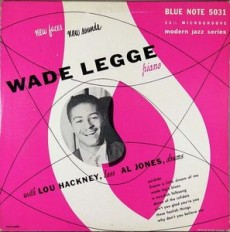
Wade Legge was born on February 4, 1934 in Huntington, West Virginia. He played more bass than piano in his early years, and it was with the bass that Milt Jackson first noticed him, recommending Wade to Dizzy Gillespie. After hiring him, Gillespie moved him to piano and he remained a member of Gillespie’s ensemble until 1954. During his Dizzy years, Legge recorded a date in France as a trio session leader.
Following his tenure with Gillespie, Wade moved to New York City and freelanced there, playing in Johnny Richards’s orchestra, and sessions with Charles Mingus, Sonny Rollins, Milt Jackson, Joe Roland, Bill Hardman, Pepper Adams, Jimmy Knepper and Jimmy Cleveland.
Legge was one of three pianists recording as a member of the variously staffed Gryce/Byrd Jazz Lab Quintets in 1957 and appeared on more than 50 recordings before retiring to Buffalo in 1959. Jazz bassist and pianist Wade Legge died on August 15, 1963 in Buffalo, New York at the age of 29.
Daily Dose Of Jazz…
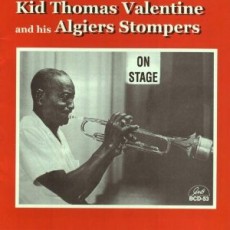
Kid Thomas was born Thomas Valentine on February 3, 1896 in Reserve, Louisiana and moved to New Orleans in his youth. Gaining a reputation as a hot trumpet man in the early 1920s, he started his own band in 1926, basing himself in the New Orleans suburb of Algiers.
Unaffected by the influence of Louis Armstrong and later developments of jazz, Kid Thomas had perhaps the city’s longest lasting old-style traditional jazz dance band, continuing to play in his distinctive hot, bluesy sometimes percussive style. Although Valentine played popular tunes of the day even into the rock and roll era, he played everything in a style of a New Orleans dance hall of the early 1920s.
Kid Thomas Valentine started attracting a wider following with his first recordings in the 1950s and played regularly at Preservation Hall from the 1960s through the 1980s. He toured extensively for the Hall, including a Russian tour, as a guest at European clubs and festivals, and working with various local bands as well as his own. During the 1960s Kid Thomas recorded extensively for the Jazz Crusade and GBH labels both with his own band and with Big Bill Bissonnette’s Easy Riders Jazz Band. He made over 20 tours with the Easy Riders in the U.S. Northeast.
By the mid 1980s, as Thomas’s strength started to wane, Preservation Hall management brought in Wendell Brunious, who took over much of his trumpet duties, though Kid continued to lead the band. On June 18, 1987, trumpeter Kid Thomas Valentine passed away.
More Posts: trumpet
Daily Dose Of Jazz…
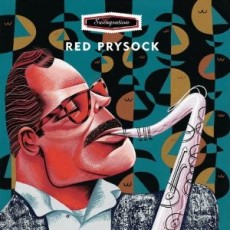
Red Prysock was born Wilburt Prysock on February 2, 1926 in Greensboro, North Carolina. One of the early Coleman Hawkins influenced saxophonists he played in both jazz and rhythm and blues worlds.
He first gained attention playing with Tiny Bradshaw’s band, playing the lead sax solo on his own composition “Soft”, which was a 1952 hit. He also played with Roy Milton and Cootie Williams. While with Tiny Grimes and his Rocking Highlanders, Prysock staged a memorable sax battle with Benny Golson on “Battle of the Mass”.
In 1954, he signed with Mercury Records as a bandleader and moving to R&B had his biggest instrumental hit, “Hand Clappin” in 1955. That same year, he joined the band that played at Alan Freed’s stage shows. He also played on several hit records by his brother and vocalist Arthur Prysock in the 1960s.
Red Prysock released five albums for Mercury and another two for Forum Circle and Gateway record labels. He passed away of a heart attack on July 19,1993 in Chicago, Illinois at the age of 67.
More Posts: saxophone
Daily Dose Of Jazz…
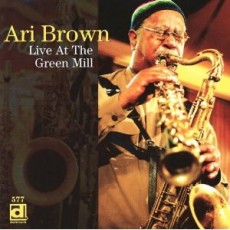
Ari Brown was born on February 1, 1944. Growing up in Chicago he learned to play the piano and saxophone. He attended Wilson College where he met Jack DeJohnette, Henry Threadgill, Roscoe Mitchell and Joseph Jarman.
Brown played piano in R&B and soul bands in the 1960s, then switched to saxophone in 1965. By 1971 he was a member of the AACM (Association for the Advancement of Creative Musicians) and was also playing with The Awakening in the early 1970s. In 1974 Ari lost several teeth in a car crash, and temporarily switched to piano again until he recovered.
By the late 1970s he was playing sax once more with McCoy Tyner, Don Patterson and Sonny Stitt. In the 1980s, Brown worked with Lester Bowie, Von Freeman, Bobby Watson and Anthony Braxton. He would later become a member of Kahil El’Zabar’s trio.
As a leader he recorded three albums for Delmark and as a sideman has recorded thirteen sessions with The Awakening, the Ritual Trio, Orbert Davis, the Juba Collective and the Chicago Jazz Philharmonic. Saxophonist and pianist Ari Brown continues to perform and record.
Daily Dose Of Jazz…
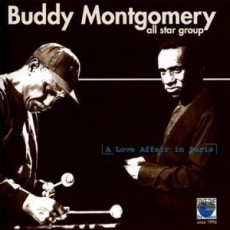
Buddy Montgomery: The Youngest Brother Who Kept the Music Alive
Charles “Buddy” Montgomery was born on January 30, 1930, in Indianapolis, Indiana—the youngest of the Montgomery brothers, a family that would become one of jazz’s most remarkable musical dynasties. While his older brothers Monk and Wes would achieve fame on bass and guitar respectively, Buddy carved his own path, mastering both piano and vibraphone with equal facility.
Early Steps in a Legendary Family
Buddy began his professional career in 1948 at just eighteen years old. By the following year, he was playing with blues shouter Big Joe Turner, then working alongside the innovative trombonist Slide Hampton—learning the ropes from established masters while developing his own voice.
After fulfilling his military service in the Army—where he led his own quartet, never letting Uncle Sam keep him away from music for long—Buddy returned to civilian life ready to make his mark.
The Mastersounds Era
In the late 1950s, Buddy joined forces with his brother Monk to form the Mastersounds, a vibrant West Coast jazz group that produced ten recordings and helped define the accessible, groove-oriented sound that made jazz appealing to wider audiences without sacrificing musicality. The Mastersounds were part of that great wave of organ-and-vibes combos that kept the clubs packed and the jukeboxes humming.
Simultaneously, Buddy led the Montgomery-Johnson Quintet with saxophonist Ray Johnson from 1957 to 1959, helming his first recording session as a leader—proof that even within the family business, he had his own ideas about what jazz could be.
A Brief Brush with Miles
Buddy played briefly with Miles Davis—imagine being good enough to catch Miles’ attention, even momentarily. But when the Mastersounds disbanded, family called once again. Buddy and Monk joined their brother Wes for a series of “Montgomery Brothers” recordings, with Buddy contributing sophisticated arrangements that showcased all three siblings’ talents.
Tragedy on the Road
The brothers toured together in 1968, three Montgomery brothers bringing their distinctive Indianapolis sound to audiences across the country. But in the middle of that tour, tragedy struck: Wes died suddenly of a heart attack at just 45 years old, robbing jazz of one of its most influential guitarists and the Montgomery family of its brightest star. The loss was devastating, both personally and professionally.
Starting Over, Giving Back
In 1969, still processing his grief, Buddy moved to Milwaukee, Wisconsin, where he dedicated himself to teaching music—passing on what three generations of Montgomerys had learned about swing, harmony, and making music that moved people. He spent years nurturing young talent, ensuring that the knowledge didn’t die with his brother.
Oakland and a Second Act
In the 1980s, Buddy relocated to Oakland, California, where he experienced something of a renaissance. He released solo material that showcased his mature artistry and played with the Riverside Reunion Band alongside heavyweights like saxophonists Charlie Rouse and David “Fathead” Newman, and vibraphonist Bobby Hutcherson, peers who understood and appreciated what Buddy brought to the bandstand.
A Full Musical Life
Buddy Montgomery—vibraphonist, pianist, composer, arranger, bandleader, producer, and teachercontinued working in all these capacities right up until his death on May 14, 2009. He produced fourteen recordings as a leader over his career, each one a testament to his versatility and his refusal to be limited by anyone’s expectations.
More Than “The Other Montgomery Brother”
It would have been easy for Buddy to be overshadowed by Wes’ legendary status or defined solely as “one of the Montgomery brothers.” Instead, he built a career that honored the family legacy while establishing his own distinct identity. His vibraphone playing had a clarity and swing that was unmistakably his own. His piano work combined the influence of Indianapolis stride players with bebop sophistication. His arrangements showed a deep understanding of how to make a small group sound rich and full.
And perhaps most importantly, his decades of teaching ensured that the Montgomery musical tradition, that Indianapolis approach to swing, melody, and making accessible music still challenges close listening. His legacy would continue through his students who never met Monk or Wes but learned from Buddy what it meant to be a complete musician.
The Youngest, But Not the Least
Buddy Montgomery lived to 79, longer than either of his famous brothers—and used that time wisely, creating, teaching, and keeping the music alive. He proved that being the youngest Montgomery brother wasn’t a limitation but an opportunity to build something that lasted.
From teenage piano prodigy in Indianapolis to elder statesman of Oakland’s jazz scene, Buddy Montgomery showed that longevity in jazz isn’t just about surviving, it’s about continuing to grow, give, and create until the very end.
More Posts: pano,vibraphone