

Daily Dose Of Jazz…
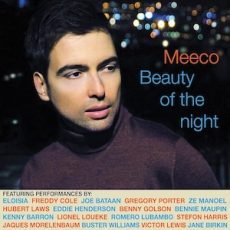
Meeco was born on May 2, 1976 in Berlin, Germany. As a young child he was heavily influenced by his father who played classical piano and his poet/artist mother, thereby making it completely natural to follow their footsteps. Beginning piano lessons at six years old, and after several years of studying classical music, he sought other musical outlets. After a friend introduced vintage Ella Fitzgerald, Horace Silver and McCoy Tyner records, he became enamored with Black American music.
Mentored by his close friend, the late New York pianist/singer Bob Lenox, he realized that the only important thing in music was creating the right feeling. He would go on to work with German producer Marco Meister, founding member of the group Terranova, Meeco gained invaluable studio experience producing his own music.
Over the course of his career Meeco has recorded with Benny Golson, Gregory Porter, Ron Carter, John Scofield, Hubert Laws, Kenny Barron, Buster Williams, Kirk Whalum, Richard Bona, Casey Benjamin, Mary Stallings, Freddy Cole, Kevin Mahogany, Bennie Maupin, James Moody, Eddie Henderson, Shedrick Mitchell, David “Fathead” Newman, Eric Reed, Vincent Herring, Victor Lewis, Stefon Harris, Lionel Loueke, Cedar Walton, Charlie Mariano, David Friedman, just to name a few.
Not limiting himself to jazz, Meeco has also produced hip hop and soul legends Talib Kweli, Masta Ace, Smif n Wessun, Lil Fame of M.O.P., Yahzarah, Jean Baylor, DJ Stylewarz, along with Latin and pop genres Joe Bataan, Jane Birkin, Jaques Morelenbaum and Romero Lubambo.
Pianist, composer, producer, deejay and photographer Meeco, who has released seven albums to date, remains based between Berlin and Paris, France as he continues to expand his musical horizons.

More Posts: bandleader,composer,deejay,history,instrumental,jazz,music,piano,producer
Daily Dose Of Jazz…
Kevin Hays was born in New York City on May 1, 1968 and was the youngest of four children. Raised in Greenwich, Connecticut, he began studying the piano at the age of six after hearing his amateur father play. He was initially interested in rock music and other things that he heard on the radio, and became more interested in jazz in his early teens. Initially self-taught, he later took lessons with Lou Stein, and attended several Interlochen Music Camps.
Hays played locally from 1982. He began playing in New York City in 1985 while still in high school, then had a period in Nick Brignola’s band. He attended the Manhattan School of Music for a semester in 1986 before dropping out to concentrate on performing. His debut recording as a leader came in 1990 with the album El Matador on the Japanese label Jazz City.
He played regularly with a number of Bob Belden’s ensembles from the late 1980s, and in the 1990s he toured Japan and recorded with the Harper Brothers and worked with Steve Wilson, Benny Golson, Joshua Redman, Seamus Blake, and Eddie Henderson.
Between 1991 to 1993 he recorded three albums for SteepleChase Records. After SteepleChase, Kevin signed an album deal with Blue Note Records who initially released three of his albums as a leader. In 1995 he toured with saxophonist Sonny Rollins.
His trio with bassist Doug Weiss and drummer Bill Stewart have played together for 15 years. Hays also recorded under Stewart’s leadership, performed and recorded duets with pianist Brad Mehldau, released a duo album with Lionel Loueke and he has released a solo album. His New Day Trio, with Rob Jost on bass and Greg Joseph on drums, also finds Kevin singing on their first release, New Day.
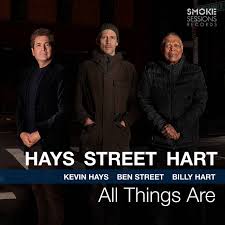
Pianist Kevin Hays, who has more than twenty albums to his credit as leader or co-leader, continues to perform and record.
More Posts: bandleader,history,instrumental,jazz,music,piano
Daily Dose Of Jazz…
Morris Acevedo was born April 8, 1966 in Texas and started playing guitar in 6th grade. During his high school years he mostly played progressive Rock and Jazz Fusion in high school. After graduating he became a music major at North Texas State University and studied Jazz Performance and Music Education but a move to Boston, Massachusetts set his course to transfer to Berklee College of Music, earning a degree in Jazz Composition and Arranging. After earning his bachelor degree, he played full time in professional bands in Boston, and studied improvisation in New York City with Lee Konitz, Richie Bierach and Jerry Bergonzi before relocating to California in the San Francisco Bay Area.
In addition to his regular jazz and fusion group performances, he became smitten with teaching guitar and improvisation he taught for years in the Bay area. He currently holds the position of music director at Cardinal Newman High School. He has also held positions as the Jazz Guitar and Improvisation at the University of California at Berkeley’s Young Musician’s Program and guitar at his Berklee alma mater during summers.
He has performd with Joshua Redman, Jim Black, Ken Vandermark, the Either Orchestra, the Charlie Kolhase Quintet, organ Trio Be-3, Matt Wilson, Richie Cole’s Alto Madness Orchestra, Dam East, Scott Amendola, among others.
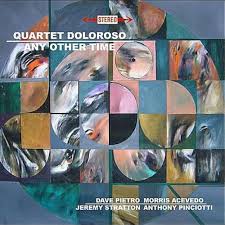
Guitarist and composer of new jazz and electronic ambient music Morris Acevedo, who has twice received a Certificate of Appreciation for Outstanding Service to Jazz, continues to perform, compose and educate.
More Posts: bandleader,composer,educator,guitar,history,instrumental,jazz,music
Daily Dose Of Jazz…
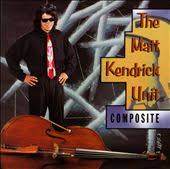
Matt Kendrick, was born in Winston-Salem, North Carolina on April 1, 1957 and attended the University of North Carolina School of the Arts. He moved to New York City in 1977 and for four years performed in numerous avant-garde venues. After studying with jazz educator Jerry Coker at the University of Tennessee, and playing in the Knoxville Symphony, he returned home in 1981.
As a composer, he has released to critical acclaim five compact discs, featuring more than forty of his own compositions. He has scored music for three films, leads the Matt Kendrick Unit,and has performed with Marian McPartland, Tierney Sutton, Archie Shepp and Jaki Byard.
He serves on the board of Music Carolina, is the music director for Carolina Music Ways, and is co-artistic director for Music Carolina, a non-profit arts presenting organization. As an educator Kendrick was on the faculty at Wake Forest University for 25 years.
With four decades under his belt, bassist Matt Kendrick continues to compose, perform, and teach.
More Posts: bandleader,bass,composer,history,instrumental,jazz,music
Daily Dose Of Jazz…
Alfred Winters was born March 24, 1931 and raised in New York City, New York. He completed his Bachelors and Masters degrees from Hofstra University and began working professionly since 1957.
He studied with the Metropolitan Opera Orchestra principal trombonist Roger Smith. He went on to play with Bobby Hackett, Gene Krupa, Phil Napolean, Wild Bill Davison, Benny Goodman. Recorded with numerous artists including Gene Krupa and Bobby Hackett.
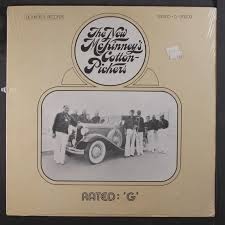
Relocating in 1966 to the Detroit, Michigan area he performed and recorded with the Austin-Moro Big Band and the New Mckinney’s Cottonpickers as well as local artists like Tom Saunders.
He led his own band beginning in 1988 and performed at numerous jazz festivals including Newport Jazz Festival, Montreaux Jazz Festival and the Sacramento Jazz Jubilee.

More Posts: bandleader,history,instrumental,jazz,music,trombone