

Daily Dose Of Jazz…
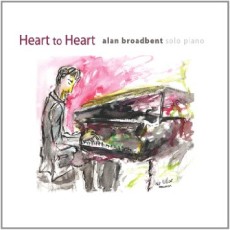
Alan Leonard Broadbent was born on April 23, 1947 in Auckland, New Zealand. He studied piano and music theory in his own country, but in 1966 came to the United States to study at Berklee College of Music.
Broadbent’s first professional gig was in a jazz trio with bassist Kevin Haines and drummer Tony Hopkins at Club 81 in Auckland in the mid-1960s. His first two albums as a leader in 1985, Song of Home and Further Down the Road, were recorded on the Tartar label with bassist Andy Brown and Frank Gibson, Jr. on drums. These two albums showcased his signature of reinterpretation of standards.
His first U.S. release in 1986, Everything I Love, recorded more standards on the Discovery label replaces Brown with bassist Putter Smith replaces Brown on bass; Frank Gibson, Jr. continues with the trio. By the early Nineties Alan was asked to be a part of Natalie Cole’s Unforgettable album, and toured as her pianist and conductor. At this time he wrote an orchestral arrangement for her second video with her father, When I Fall in Love, winning him his first Grammy for Best Orchestral Arrangement Accompanying a Vocal.
During the 1990s Broadbent he joined Charlie Haden’s Quartet West and it was during this period he won his second Grammy, an orchestral accompaniment written for Shirley Horn of Leonard Bernstein’s Lonely Town. As a soloist and with his jazz trio, Broadbent has been nominated for Grammys twice for best instrumental performance, in the company of such artists as Herbie Hancock, Sonny Rollins and Keith Jarrett.
Alan is Diana Krall’s conductor for her occasional orchestra concerts and conducted on her Live in Paris DVD. He has arranged for Glenn Frey, wrote six string arrangements for Paul McCartney with the London Symphony, worked with Warne Marsh, Woody Herman, Chet Baker, Irene Kral, Sheila Jordan, Bud Shank and numerous others and has toured the UK, Poland and France. In 2008 he was appointed a Member of the New Zealand Order of Merit for services to jazz.
Pianist, arranger and composer Alan Broadbent has two-dozen albums out as a leader in trio, duet nd solo performance and another seventeen as a sideman to date. He continues to perform, record and tour.

Give A Gift Of Jazz – Share

More Posts: piano
Daily Dose Of Jazz…
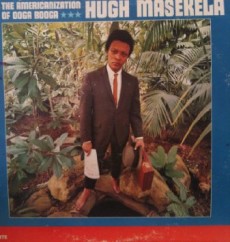
Hugh Ramopolo Masekela was born on April 4, 1939 in Kwa-Guqa Township of Witbank, South Africa. He began singing and playing piano as a child. At the age of 14, after seeing Kirk Douglas in the film Young Man With A Horn he took up playing the trumpet. He was given his first trumpet was given to him by anti-apartheid Archbishop Trevor Huddleston at St. Peter’s Secondary School.
Quickly mastering the instrument under the tutelage of Uncle Sauda of Johannesburg’s Native Municipal Brass Band, Masekela along with some of his schoolmates formed the Huddleston Jazz Band, South Africa’s first youth orchestra. By 1956, after leading other ensembles, he joined Alfred Hebrert’s African Jazz Revue.
In 1958 he wound up in the orchestra of South Africa’s first musical blockbuster King Kong, followed by touring the country for a sold-out year with Miriam Makeba and the Manhattan Brothers’ Nathan Mdledle in the lead. By the end of 1959 Hugh along with Dollar Brand, Kippie Moeketsi, Makhaya Ntshoko and Johnny Gertze formed the Jazz Epistles. They became the first African jazz group to record an album and perform to record-breaking audiences in Johannesburg and Cape Town.
Following the 1960 Sharpeville Massacre of 69 peacefully protesting Africans he left the country with the help of Huddleston, Yehudi Menuhin and John Dankworth for London’s Guildhall School of Music. Befriended by Harry Belafonte on a visit to the U.S. he gained admission to Manhattan School of Music studying classical trumpet.
By the late Sixties he had hits with Up, Up & Away and Grazing In The Grass, appeared at the Monterey Pop Festival, and was featured in the film Monterey Pop. In 1974, Masekela and friend Stewart Levine organized the Zaire 74 music festival around the Rumble In The Jungle boxing match.
He has played primarily in jazz ensembles, with guest appearances on recordings by The Byrds and Paul Simon. Since 1954 Hugh’s music protested about apartheid, slavery, government and the hardships individuals were living but also vividly portrayed the struggles and sorrows, as well as the joys and passions of his country. In 1987, he had a hit single with Bring Him Back Home, which became an anthem for the movement to free Nelson Mandela.
Trumpeter Hugh Masekela also plays the flugelhorn, cornet, and trombone and is a composer and singer. He has some four dozen albums to date in his catalogue, has won two Grammy Awards with seven nominations, received two honorary doctorates, and serves as a director on the board of The Lunchbox Fund, a non-profit organization that provides a daily meal to students of township schools in Soweto. He continues to perform, record and tour.
Take A Dose On The Road
More Posts: cornet,flugelhorn,trombone,trumpet
Daily Dose Of Jazz…
Sherman Irby was born and raised in Tuscaloosa, Alabama on March 24, 1968. He found his calling to music at age 12 and in high school he played saxophone and recorded with gospel immortal James Cleveland. Graduating from Clark Atlanta University with a B. A. in Music Education, in 1991, he joined Johnny O’Neal’s Atlanta-based quintet.
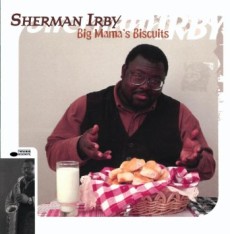
1994 saw Irby moving to New York City and immediately became a part of the jazz scene at Smalls jazz club. Catching the attention of Blue Note Records. He subsequently recorded his first two albums, Full Circle in 1996 and Big Mama’s Biscuits in 1998 on the label. He toured the U.S. and the Caribbean with the Boys Choir of Harlem in 1995, and was a member of the Jazz at Lincoln Center Orchestra from 1995 to 1997. During that tenure, he also recorded and toured with Marcus Roberts, Roy Hargrove and was part of Betty Carter’s Jazz Ahead Program.
After a four-year stint with Roy Hargrove, he focused on his own group, in addition to being a member of Elvin Jones’ ensemble and Papo Vazquez’s Pirates Troubadours. Since 2003, Irby has been the regional director for the Jazz Masters Workshop, mentoring young children, and a board member for the CubaNOLA Collective. Saxophonist and composer Sherman Irby formed Black Warrior Records and has released Black Warrior, Faith, Organ Starter and Live at the Otto Club under the new label. Post-bop alto saxophonist Sherman Irby has re-joined Jazz At Lincoln Center Orchestra with Wynton Marsalis and currently continues to perform with his quartet and his group Organomics.
Put A Dose In Your Pocket
More Posts: bandleader,composer,history,instrumental,jazz,music,saxophone
Daily Dose Of Jazz…
Harvey William Mason was born on February 22, 1947 in Atlantic City, New Jersey. He began taking formal drum lessons at the age of seven, playing in various school bands and ultimately buying his first drum kit at 16. He went on to attend Berklee College of Music then on to and graduate from the New England Conservatory of Music.
While in Boston, Harvey worked at Triple A Studios recording everything from jingles to religious albums, molding him into a versatile first-call session musician. Early gigs included four months with Erroll Garner in 1970 and a year with George Shearing from 1970-1971. Soon after leaving Shearing he moved to Los Angeles, California and quickly became established in the studios and working in films and television.
In addition to his work through the years with Minnie Riperton, The Sylvers, Earth, Wind & Fire and Carlos Santana, Mason has often been part of the jazz world. He played with Herbie Hancock’s Headhunters, co-composing the hit Chameleon in 1973, Gerry Mulligan, Freddie Hubbard, Donald Byrd, Grover Washington, Jr., George Benson, Gary Bartz, Bobbi Humphrey, Ralph MacDonald, Chick Corea, Lee Ritenour, Victor Feldman and Bob James, Gene Harris, Eddie Henderson, Bobby Hitcherson and Joe Henderson, among numerous others.
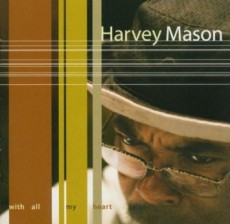
By 1998, Harvey was paying tribute to Art Blakey’s Jazz Messengers in some local Los Angeles club gigs. By the turn of the millennium he was continuing with his steady session work, releasing two albums with Trios and With All My Heart and has since revisited his ’70s Headhunters roots. He is a mainstay in the fusion genre as a member of the group Fourplay along with Chuck Loeb, Nathan East and Bob James, whose success led their debut album to hit and stay at the top of the charts for 34 weeks.
He has worked with Michael Colombier, Michel Legrand, Miles Davis, Dave Grusin, Thom Newman, John Williams, Lalo Schifrin, Isaac Hayes, Johnny Pate and Alan Silvestri on such films as Purple Rain, Dingo, Three Days of the Condor, The Fabulous Baker Boys, On Golden Pond, The Player, The Lion King, Mission Impossible 1,2 & 3, Ratatouille and Dream Girls. In addition he composed the music for the films The Color Purple, Only The Strong and Deadly Takeover.
Multi-Grammy nominated and winning drummer and composer Harvey Mason continues to stretch his musical diversity across four decades and many jazz genres.
Take A Dose On The Road
More Posts: drums
Daily DoseOf Jazz…
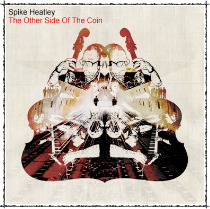
Spike Heatley was born February 17, 1933 in North London, England. Studying the bass as a child by the time he was twenty-five he was playing with the Vic Ash Sextet along with Ian Hamer, Johnny Scott and Alan Bascombe. He went on to join The Jazz Couriers just before they disbanded, then played briefly with the Tubby Hayes Quartet with Terry Shannon and Phil Seaman.
Heatley then joined pianist Eddie Thompson’s house trio for the opening year at the original Ronnie Scott’s on Gerrard Street. During this period he also played with John Dankworth staying with him until 1962, then joining the Tony Coe Quintet, and touring with trumpeter Kenny Baker. In 1963 he was with the Bill Le Sage and Ronnie Ross Quartet, with Allan Ganley.
It was around this time that Spike stretched out and began session work in the same rhythm section as Jimmy page and John McLaughlin. He was an early member of Alexis Korner’s Blues Incorporated and between 1970 and 1974 he was part of successful jazz-rock fusion group CCS, and played on recording sessions for Rod Stewart.
In the 1970s he was in the house band for the children’s TV show Play Away. During the 1980s and early 90s, he was with the American all star group the Great Guitars featuring Herb Ellis, Charlie Byrd and Barney Kessel which also sometimes featured British player, Martin Taylor.
He went on to play in Kessel’s trio with Malcolm Mortimore and then with Canadian pianist Oliver Jones. These days, bassist Spike Heatley spends most of his time in France.
Inspire A Young Mind
More Posts: bass