

Daily Dose Of Jazz…
Chris Pyne was born Norman Christopher Pyne on February 14, 1939 in Bridlington, England and played piano as a child before switching to trombone.
Beginning in 1963 he played with Fat John Cox, Alexis Korner’s Blues Incorporated, John Stevens’s Spontaneous Music and the London Jazz Orchestra before settling in with Humphrey Littleton from ’66 until 1970.
During the Sixties he recorded with John Dankworth, Ronnie Scott and Stan Tracey. Staying very busy in the 70s Chris played with Mike Gibbs off and on from 1967-1979, toured with Frank Sinatra’s backing bands from 1970 and 1983, and was also performing with the John Taylor Sextet between 1971 and 1981.
Pyne also performed or recorded with Kenny Wheeler, John Surman, Philly Joe Jones, Maynard Ferguson, Tony Coe, Bobby Lamb, Ray Premru, Ronnie Ross, Barbara Thompson, John Stevens, Norman Winstone and Alan Cohen.
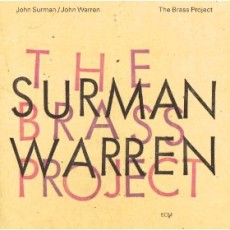
He toured with Gordon Beck in the Eighties, joined Surman’s Brass Project from ’84-’92 and later in his musical life became a member of the Charlie Watts Big Band. Trombonist Chris Pyne passed away on April 12, 1995 in London, England without ever recording as a leader.

Give The Gift Of Knowledge
More Posts: trombone
Daily Dose Of jazz…
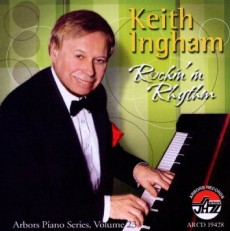
Keith Ingham was born February 5, 1942 in London, England. His first professional gigs occurred in 1964 playing with Sandy Brown, Bruce Turner, and Wally Fawkes throughout the decade.
Ingham played with Bob Wilber and Bud Freeman in 1974 and moved to New York City in 1978. During the 1980s he played with Benny Goodman, the World’s Greatest Jazz Band and Susannah McCorkle. He also worked with Maxine Sullivan, Marty Grsz, Harry Allen and Eddie Condon.
During the 1930s he record a series of albums for Jump Records, and in the 90s recorded a baker’s dozen sessions for Sackville, Stomp Off and Spotlight record labels. He continues to perform and record.
Jazz Is Global – Share
More Posts: piano
Daily Dose Of Jazz…
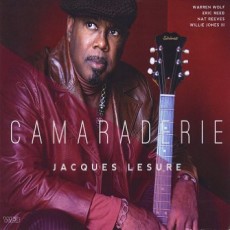
Jacques Lesure was born on December 19, 1962 in Detroit, Michigan. He began playing guitar when he was ten years old, attended Renaissance High School and Interlochen Arts Academy every summer. Started playing in church, he played with the Clark Sisters for many years. He went on to attend Wayne State University.
Signed to WJ# Records, owned by Willie Jones III, he is label mates with Eric Reed and Warren Wolf. He has performed with Kenny Burrell, Oscar Brown Jr., Jimmy Smith, Stanley Turrentine, Freddy Cole, Wynton Marsalis, George Benson, Jack McDuff, Les McCann, Carmen Lundy, Oliver Lake, Paula West and the list goes on and on.
In a career that has spanned 30 years to date, he has collaborated in the creation of and performed in stage plays, movie scores and special projects for television. Active in the Los Angeles, California community where he resides, as an educator he mentors many up and coming musicians. He is the Musical Director for the Living Legends Foundation, President of the African-American Jazz Caucus, is an Artist Teacher for the Monk Institute, Music LA and The Dolo Coker Jazz Foundation, and a national adjudicator, judging student competitions nationwide. Guitarist Jacques Lesure continues to perform and tour with his group and as a sideman.
Give The Gift Of Knowledge
More Posts: guitar
Daily Dose Of Jazz…
Reginald Volney Johnson was born December 13, 1940 in Owensboro, Kentucky. After playing trombone with school orchestras and army bands, he switched to double bass and started working with musicians such as Bill Barron and recording with Archie Shepp in the mid–1960s, before joining Art Blakey’s band for a month-long residency at the Five Spot Café in 1965.
In 1966 Johnson traveled with the Blakey band to The Lighthouse in Hermosa Beach, California and recorded Buttercorn Lady alongside Frank Mitchell, Chuck Mangione and Keith Jarrett.
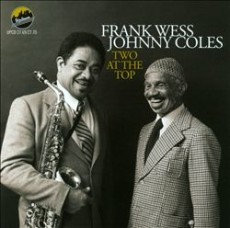
Reggie’s playing and/or recording in America reads like a who’s who list not limited to Bill Dixon, Sun Ra, Burton Greene, Lonnie Liston Smith, Stanley Cowell, Bobby Hutcherson,, Harold Land, Blue Mitchell, Walter Bishop Jr., Sonny Rollins, Sonny Stitt, Sarah Vaughan, Carmen McRae, Art Pepper, Clark Terry, The Crusaders, Charles Mingus, Eddie “Lockjaw” Davis, Johnny Coles, and Frank Wess.
Equally so is his mid–1980s he move to Europe working with Johnny Griffin, Horace Parlan, Monty Alexander, Kenny Barron, Tom Harrell, Phil Woods, Cedar Walton, Alvin Queen, Jesse Davis, Freddie Redd and Alvin Queen.
As a leader double-bassist Reggie Johnson released one album titled First Edition in 1985 on the JR Record label and he continues to be the consummate sideman performing all over the world.
Discography[edit]
Take A Dose On The Road
More Posts: bass
Daily Dose Of Jazz…
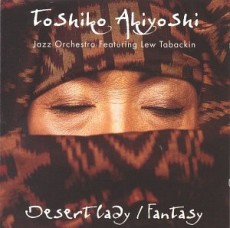
Toshiko Akiyoshi was born 12 December 1929 in Liaoyang, Manchuria in the Republic of China to Japanese emigrants. Losing their home after WWII her family returned to Japan where a local record collector introduced her to jazz through Teddy Wilson playing Sweet Lorraine. Immediately loving the sound she began to study jazz
In 1952, during a tour of Japan, pianist Oscar Peterson discovered Akiyoshi playing in a club on the Ginza. So impressed he convinced record producer Norman Granz to record her and in 1953 she dropped her debut album with the Peterson rhythm section, bassist Ray Brown and drummer J.C. Heard. The album was released as Toshiko’s Piano in the U.S. and as Amazing Toshiko Akiyoshi in Japan.
Toshiko went on to study at Berklee School of Music under a full scholarship and in 1956 she became the first Japanese student to attend. She married saxophonist Charlie Mariano in ’59, had a daughter, divorced in ’67, married Lew Tabackin in ’69 and moved to Los Angeles, California in ‘72. Tgether they formed the a 16-piece big band comprised of studio musicians. She composed and arranged the music and he was featured soloist on sax and flute, recording their first album Kogun in 1974. With commercial success in Japan the band began receiving critical acclaim.
Moving to New York City in 1982, a new big band was assembled called the Toshiko Akiyoshi Jazz Orchestra featuring Lew Tabackin. Though BMG released her big band projects in Japan, to her dismay she could never get distribution in the States and after several decades she disbanded the band after the final concert of a seven year run at Birdland in New York City.
Over the course of a fifty year career since her debut recording for Granz in 1954, pianist, composer and arranger Toshiko Akiyoshi has recorded continuously – almost exclusively as a leader of small jazz combos and of her big bands – averaging one studio album release per year for well over 50 years. She has been honored as an NEA Jazz Master, been named a winner in Down Beat Magazine Critic and Reader Polls for album, big band, arranger and composer, and has been nominated for several Grammy awards among other accolades. She continues to compose, arrange, record and perform.
Give The Gift Of Knowledge
More Posts: piano