

Daily Dose Of Jazz…
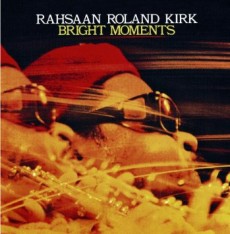
Rahsaan Roland Kirk was born Ronald Theodore Kirk on August 7, 1935 in Coumbus, Ohio and grew up in the neighborhood called Flytown. He felt compelled by a dream to transpose two letters in his first name to make Roland. He became blind at an early age as a result of poor medical treatment. In 1970 he added “Rahsaan” to his name after hearing it in a dream.
Rahsaan preferred to lead his own bands and rarely did he perform as a sideman, although he did record lead flute and solo on Soul Bossa Nova with arranger Quincy Jones in 1964, as well as drummer Roy Haynes and had notable stints with bassist Charles Mingus. His playing was generally rooted in soul jazz or hard bop but his knowledge of jazz gave him the ability to draw from ragtime to swing to free jazz. In additional to classical influences he borrowed elements from composers like Smokey Robinson and Burt Bacharach, Duke Ellington and John Coltrane.
His main instrument was the tenor saxophone and two obscure saxophones: the stritch, a straight alto sax lacking the instrument’s characteristic upturned bell and a manzello, a modified saxello soprano sax, with a larger, upturned bell. Kirk modified these instruments himself to accommodate his simultaneous playing technique. He also played flute, clarinet, harmonica, English horn, recorder and trumpet, as well as incorporating an interesting array of common items such as garden hose, alarm clocks and sirens.
At times Rahsaan would play a number of these horns at once, harmonizing with himself, or sustain a note for lengthy durations by using circular breathing or play the rare, seldom heard nose flute. Many of Kirk’s instruments were exotic or homemade, but even while playing two or three saxophones at once the music was intricate, powerful jazz with a strong feel for the blues. Politically outspoken, he would often talk about issues of the day in between songs at his concerts, such as Black history and the civil rights movement and lacing them with satire and humor. According to comedian Jay Leno, when he toured with him as his opening act, Kirk would introduce him by saying, “I want to introduce a young brother who knows the black experience and knows all about the white devils… Please welcome Jay Leno!”
In 1975, Kirk suffered a major stroke that led to partial paralysis of one side of his body. However, he continued to perform and record, modifying his instruments to enable him to play with one arm. He died from a second stroke on December 5, 1977 after performing in the Frangipani Room of the Indiana University Student Union in Bloomington, Indiana.
His influence went well beyond jazz to include such rock musicians as Jimi Hendrix, Ian Anderson of Jethro Tull, Eric Burdon and War, T.K. Kirk, Hope Clayburn, Jonny Greenwood and Ramon Lopez, all who idolized or paid tribute to, and David Jackson, George Braith and Dick Heckstall-Smith who took to playing multiple saxophones, and Steve Turre, Courtney Pine who utilizing his circular breathing during play. He left to us nearly four-dozen albums as a leader and another eleven with aforementioned Jones, Mingus and Haynes, and Tubby Hayes, Tommy Peltier, Jaki Byard and Les McCann.

Jazz Is Global – Share

Daily Dose Of Jazz…
Rickey Woodard was born August 5, 1950 in Nashville, Tennessee and picked up his first music experiences playing saxophone in the family band. He went on to attend Tennessee State University and following graduation joined the Ray Charles band, spending seven years with him.
Woodard became a member of the Clayton-Hamilton Jazz Orchestra, has recorded with Frank Capp, and is a member of Jeanine and Jimmy Cheatham’s Sweet Baby Blues Band. In 1988 he moved to Los Angeles and started playing sessions for Concord Records that soon led to a recording contract.
By 1993 Rickey embarked on a series of yearly visits to the Peterborough Jazz Club in England. There he was billed with veteran British jazz musicians such as Dick Morrissey, John Burch and Tony Archer. In 1994 he was a part of the recording session Seven Sensational Saxophones – Fujitsu-Concord 26th Jazz Festival with Jesse Davis, Gary Foster, Bill Ramsay, Ken Peplowski, Chris Potter and Frank Wess.
He recorded his debut album The Frank Capp Trio Present Rickey Woodard in 1991 and has released seven more as a leader or co-leader in the company of Joe Chambers, Eric Reed, Cedar Walton, Ernie Watts, Pete Christlieb, Gerry Wiggins, Chuck Berghofer, Tony Dumas, Roy McCurdy, James Williams, Christian McBride and Ray Brown. As a sideman he has another ten projects as a sideman working with Horace Silver, Kenny Rogers, Nnenna Freelon and Diana Krall.
Saxophonist Rickey Woodard continues to lead his own quartet, perform and tour with the Clayton-Hamilton Jazz Orchestra, The Juggernaut and The Cheathams.
Inspire A Young Mind
More Posts: saxophone
Daily Dose OF Jazz
Ken Watters was born July 6, 1964 in Huntsville, Alabama. He attended the University of North Texas and became a part of the Lab Band program. He studied trumpet with internationally renowned teacher Leonard Candelaria prior to studying in New York City with Lew Soloff and Wynton Marsalis.
Ken is a member of several noted performing groups, including Tabou Combo, Natalie Cole Band, the Magic City Jazz Orchestra, Ray Reach and Friends and the W.C. Handy Jazz All-Stars. He recorded his debut release with his Haitian-Caribbean jazz septet RIYEL and has recorded a total of six projects as a leader.
He has recorded and released three CDs titled “Brothers” with his trombonist brother Harry. His latest musical project is an ongoing venture co-led alongside vocalist Ingrid Felts, called the Watters-Felts Project. The jazz-oriented sextet included pianist Keith Taylor, bassist Abe Becker, percussionist Darrell Tibbs and drummer Marcus Pope.
Trumpeter Ken Watters is also an educator currently sitting as an adjunct professor at University of Alabama in Huntsville, where he directs the UAH Jazz Ensemble I. He continues to perform, record and tour.
Give The Gift Of Knowledge
More Posts: trumpet
Daily Dose Of Jazz…
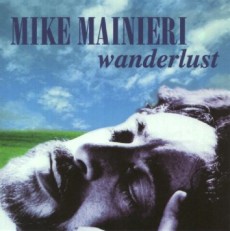
Mike Mainieri was born Michael T. Mainieri, Jr. on July 4, 1938 in Bronx, New York. He is a pioneer in introducing the electronic vibraphone, known as a “synth-vibe”.
Mike has recorded with such jazz musicians as Buddy Rich, Wes Montgomery, Jeremy Steig, Bob James, Lauro Nyro, Dire Straits, Michael Franks, David Sanborn, Neil Larsen, Robben Ford, Manny Albam, Kenny Burrell, Paul Desmond, Art Farmer, Jim Hall, Urbie Green, Joe Henderson, Pat Martino, Michael Brecker and Sonny Stitt.
Mainieri has released seven albums as a leader, 11 with Steps Ahead and another dozen as a sideman as well as videos for a variety of labels. As a producer, he produced three albums for Carly Simon. Jazz-fusion vibraphonist Mike Mainieri continues to perform, record, tour and produce.
Jazz Is Global – Share
More Posts: vibraphone
Daily Dose Of Jazz…
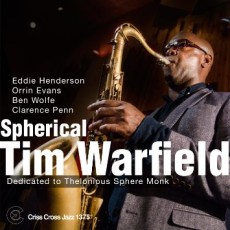
Tim Warfield, Jr. was born in York, Pennsylvania, began studying the alto saxophone at age nine. He switched to tenor saxophone during his first year at William Penn Sr. High School and participated in various musical ensembles. He won many jazz soloist awards including coming in second out of forty competitors at the Montreal Festival of Music in Canada. After high school, Warfield attended Howard University in Washington, D.C. After two years of matriculation he left to lead and co-lead several groups in the Central Pennsylvania, Baltimore and Washington area.
In 1990 he was chosen to be a member of trumpeter Marlon Jordan in his quintet. The following year he was selected to record Tough Young Tenors on the Island/Antilles label, joined George Wein’s Jazz Futures, Also in 1991, Warfield placed third at the Thelonious Monk International Jazz Saxophone Competition. From 1994 to 1999, he was a member of bassist Christian McBride’s group, and then began a six-year collaboration with Nicholas Payton.
Warfield has recorded eight albums on the Criss Cross label as a beginning with his debut release of A Cool Blue, selected as one of the top ten recordings of the year in a 1995New York Times critic’s poll. as was his 1998 recording Gentle Warrior (featuring Cyrus Chestnut, Tarus Mateen, Clarence Penn, Terell Stafford, and Nicholas Payton.
Tenor saxophonist Tim Warfield is currently serving as a board member and Chair of the Music Committee for the Central Pennsylvania Friends of Jazz as well as an artist-in-residence at Messiah College. He continues to record, tour and perform in the hard bop, Neo-Bop,, post bop and straight-ahead jazz genres.
Inspire A Young Mind
More Posts: saxophone