

Daily Dose Of Jazz…
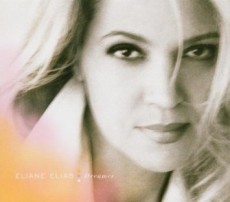
Eliane Elias was born on March 19, 1960 in Sao Paulo, Brazil and her musical talents began to show at an early age. She started studying piano at age seven, and by age twelve was transcribing solos from the great jazz masters. Fifteen, saw her teaching piano and improvisation and her performing career began at age seventeen, working with Brazilian singer/songwriter Toquinho and the poet Vinicius de Moraes.
In 1981, she headed for New York and a year later landed a spot in the acclaimed group Steps Ahead. In 1988 she was voted Best New Talent in the Critics Poll of Jazziz magazine, together with Herbie Hancock she was nominated for a Grammy in the “Best Jazz Solo Performance” category for her 1995 release, Solos and Duets, received the Downbeat Readers Poll’s “Best Jazz Album” for her recording The Three Americas and has been named in five other categories: Beyond Musician, Best Composer, Jazz Pianist, Female Vocalist, and Musician of the Year.
Elias has recorded with RCA Victor, Bluebird, Denon, Manhattan, Blue Note, EMI, Concord/Picante, ECM and Savoy Jazz spanning over twenty albums to date. She has recorded two albums solely dedicated to the works of the composer, Plays Jobim and Sings Jobim. Her 1998 release, Eliane Elias Sings Jobim, winning Best Vocal Album in Japan and was awarded Best Brazilian Album in the Jazziz Critics Poll. She has been featured in a Calle 54 documentary, received several Grammy nominations for Best Latin Jazz Album, and recorded with Denyce Graves on The Lost Days.
On her first album titled “Amanda” released in 1984 she collaborated with Randy Brecker and shortly thereafter she began her solo career. She has also collaborated with bassist Marc Johnson on the album Swept Away. Pianist, singer, arranger and songwriter Eliane Elias, known for her distinctive blend of her Brazilian roots with voice, jazz and classical music, continues to compose, record, perform and tour.

Dose A Day – Blues Away
Daily Dose Of Jazz…
Martin Bejerano was born in Miami, Florida on March 9th of Afro-Cuban heritage and began his professional music career at age fifteen, when he began playing George Gershwin’s “Rhapsody in Blue” concerto with the Mexican-American Bi-National Symphony while still in high school. He went on to graduate from the New World School of the Arts, Florida State University and the University of Miami with a Masters in jazz performance.
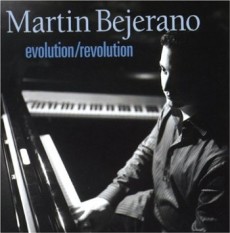
In 2000 Martin moved to New York City and in less than a year joined drummer Roy Haynes’ band and two years later was a part of guitarist Russell Malone’s quartet. He released his debut album as leader, titled Evolution/Revolution in 2007, followed by Potential Energy in 2013. He has done sideman duties as well on six projects.
In 2010 he was awarded a Chamber Music America commission for a new jazz work, has had several compositions published in Ignacio Berroa’s “Groovin’ in Clave” instructional drum book and has attended the Thelonious Monk Institute Jazz Colony.
Martin has also performed with Kenny Garrett, James Moody, Lonnie Plaxico, Jimmy Heath, Ignacio Berroa, Mingus Big Band, Marcus Printup, Marcus Strickland, and even trading choruses with the legendary Chick Corea. In between performing and recording with the Haynes and Malone bands, pianist Martin Bejerano is an Assistant Professor of jazz piano at the University of Miami Frost School of Music.
Put A Dose In Your Pocket
More Posts: piano
Daily Dose Of Jazz…
Orbert Davis was born on March 8, 1960 in Chicago and raised in Momence, Illinois. He began playing trumpet around the age of ten, but was not formally instructed until Charles Danish, an elementary school teacher, found him a trumpet teacher and drove him to lessons. He eventually graduated with a degree in trumpet performance from DePaul University and then received a master’s degree in jazz pedagogy from Northwestern University.
Davis has recorded over 3000 television and radio commercials, released three studio albums, very active in music education, particularly with at-risk students, is co-founder and director of MusicAlive!, an initiative associated with the Chicago Jazz Philharmonic, which he also founded and directs.
Winner of the 1995 Cognac Hennessy National Jazz Search, Orbert was chosen as one of Chicago Tribune’s “1995 Arts People of the Year” and Chicago Magazine named him “Y2k Best Trumpeter in Chicago”.
One of Chicago’s busiest and most sought after musician, the jazz trumpeter has performed and/or recorded many projects for such notable artists as Ramsey Lewis, Charles Earland, Kurt Elling, Bob Mamet and William Russo’s Chicago Jazz Ensemble, Wynton Marsalis, TS Monk, Stevie Wonder, Dr. John, Kurt Elling, Ernie Watts, Ramsey Lewis, Grover Washington Jr. and The Smithsonian Masterworks Jazz Orchestra. Davis performs regularly with various groups under his own name, including his critically acclaimed ensemble “Orbert Davis with Strings Attached”.
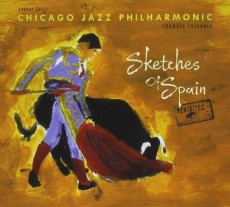
He was featured soloist at the 1996 Chicago Jazz Festival, performing Miles Davis and Gil Evans’ “Sketches of Spain”. In October 1999, along with Jon Faddis and Lester Bowie, Orbert was a featured performer for the Jazz Institute of Chicago’s “Tribute to Louis Armstrong: Legacy for the Millennium” where he performed compositions from Armstrong’s Hot 5 and Hot 7 recordings.
Along with his partner/manager Mark Ingram, Davis owns and operates Orbark Productions, whose credits include projects for Atlantic, Capitol, CBS, Epic, MCA and the Warner Brothers record labels. He has scored and performed on and off camera for such films as A League Of Their Own, The Babe and Road To Perdition. Trumpeter, composer, bandleader and educator Orbert Davis is currently an Associate Professor of music at the University of Illinois at Chicago and conducts and records the Chicago Jazz Philharmonic in between recording as a leader.
Put A Dose In Your Pocket
More Posts: trumpet
Daily Dose Of Jazz…
Frank LoCrasto was born and raised in Texas on March 7, 1983. Studying piano during his childhood, his influences include Erroll Garner, Raymond Scott, Ennio Morricone, Kraftwerk and Brian Eno. After moving to New York in 2001 to attend the New School, he went on to work as a sideman with jazz musicians such as Pat Martino, Greg Osby and Jeremy Pelt.
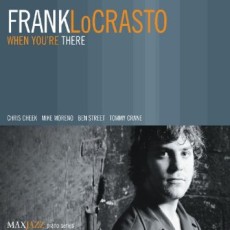
At twenty-three he released his debut album When You’re There on the Maxjazz label and his second release five years later, El Dorado, which he recorded in his Brooklyn basement apartment, is layered with vintage synthesizers and old timey pianos.
An accomplished composer and arranger, he is a member of the Jeremy Pelt Quartet, Frank is also a member of Rumblefoot, Breastfist, Yost, and plays regularly with Kat Edmonson and James Iha. His solos exhibit his ample technique and unfettered expressiveness. At 32, he continues to build his talent as a sideman profusely performing, recording and touring.
Give The Gift Of Knowledge
More Posts: piano
Daily Dose Of Jazz…
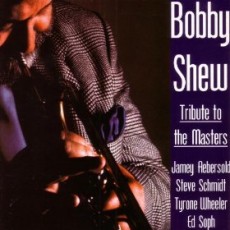
Bobby Shew was born Robert Shew on March 4, 1941 in Albuquerque, New Mexico. He began playing the guitar at the age of eight but by ten switched to the trumpet. By thirteen he was playing at local dances with various groups and at fifteen put together his own group. This gave him the opportunity to play dances, concerts, jazz coffee houses and dinner clubs.
After leaving college in 1960 he was drafted into the U.S. Army and played trumpet with the NORAD band in Colorado Springs and on tour. After leaving the Army he joined the big bands of Tommy Dorsey and Woody Herman, Della Reese and followed by the Buddy Rich Big Band in the mid to late 1960s.
By 1972 Bobby had moved from Las Vegas to Los Angeles where he became a top shelf studio musician. He also played with some of the top big bands of the era through the end of the 1970s: Toshiko Akiyoshi, Lew Tabackin, Louis Bellson, Maynard Ferguson and numerous others. In addition to playing on several notable Big Band recordings starting in the 1960s, he recorded several albums as leader starting with his 1978 debut recording Telepathy.
Shew has held the position of Trumpet chairman of the International Association of Jazz Educators, has authored numerous books on trumpet performance and technique, andis on the Board of Directors of the International Trumpet Guild.
Trumpeter and flugelhorn player Bobby Shew, now living near his hometown of Albuquerque, spends time mentoring jazz musicians in the area and leading the local Albuquerque Jazz Orchestra. As an educator he is a member of the faculty at the Skidmore Summer Jazz Institute, a two-week residential jazz workshop primarily for high school students, located in Saratoga Springs, New York. He continues to perform, record and tour.
Inspire A Young Mind
More Posts: flugelhorn,trumpet