

Daily Dose Of Jazz…
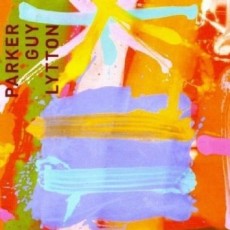
Evan Shaw Parker was born on April 5, 1944 in Bristol, England and his original inspiration was Paul Desmond and the cool jazz saxophone scene with later influences being Warren Marsh and Lee Konitz. Better known for his later work, he rapidly assimilated the American avant-garde of John Coltrane, Pharoah Sander, Albert Ayler and others and forged his own, instantly identifiable style.
Parker’s music of the 1960s and 1970s involves fluttering, swirling lines that have shape rather than tangible melodic content. He began develop methods of rapidly layering harmonics, false notes, circular breathing and rapid tonguing which initially were so intense that he would find blood dripping onto the floor from the saxophone. He also became a member of the important big band, The Brotherhood of Breath.
Evan became interested in electronics and his collaboration electronically processed his playing in real time, creating a musical feedback loop or constantly shifting soundscape. He has recorded a large number of albums both solo or as a group leader, and has recorded or performed with such musicians as Peter Brotzmann, Derek Bailey, Anthony Braxton, Cecil Taylor, George Lewis, Joe McPhee, Mark Dresser and Dave Holland among numerous others.
Parker is one of the few saxophone players for whom unaccompanied solo performance is a major part of his work. Along with Bailey and drummer Tony Oxley founded the Incus record label in 1970. The label continued under Bailey’s sole control, after a falling-out between the two men in the early 1980s and currently Parker curates the Psi record label. He also performs monthly at London’s Vortex Jazz Club.
Though Parker’s central focus is free improvisation, he has also occasionally appeared in more conventional jazz contexts, such as Charlie Watts Big Band, Kenny Werner’s ensembles, and Gavin Bryars’s After the Requiem. He has also performed in pop and rock settings but remains a pivotal figure in the development of European free jazz and free improvisation and has pioneered or substantially expanded an array of extended techniques on the European free jazz scene.

Put A Dose In Your Pocket
More Posts: saxophone
Daily Dose Of Jazz…
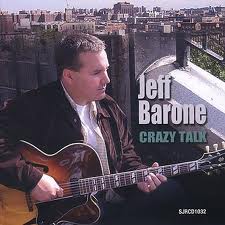
Jeff Barone was born on April 2, 1970 in Syracuse, New York and after hearing a Joe Pass recording received his first guitar at age eight. By age 16 he was playing in local jazz clubs and invited to play with touring bands coming to his hometown. During this period he also performed with the Syracuse Symphony Orchestra as well as vocalist Al Martino.
Jeff went on to matriculate through Ithaca College studying classical guitar and percussion. His next stop was the Manhattan School of Music leaving with a Masters in jazz performance. While in New York he worked small clubs with Evelyn Blakey, was part of the Harlem organ scene, and did a stint with Reuben Wilson.
Teaming with guitarist Jack Wilkins, who was instrumental in getting Barone gigs with the Vanguard and the Mingus Epitaph Orchestras, they co-produced Crazy Talk, his first album, with a mix of standards and originals. His next project would be Open Up. He would go on to work with Tom Harrell, Warren Chiasson, Joe Magnarelli, Eddie Montiero and Bobby Caldwell’s Big Band.
He is the guitarist and assistant conductor for the Big Apple Circus in New York City, has subbed on Broadway shows such as Wicked, Seussical and The Dead, and was recently included in Scott Yanow’s book The Great Jazz Guitarists: The Ultimate Guide. Guitarist Jeff Barone continues to perform, record and tour in between his other duties.
Dose A Day – Blues Away
More Posts: guitar
Daily Dose Of Jazz…
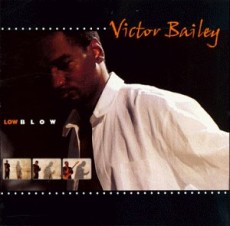
Victor Bailey was born on March 27, 1960 in Philadelphia, New Jersey. He attended Boston’s Berklee College of Music after being disqualified from naval service due to asthma.
Bailey has been extremely active on the jazz scene recording seven albums as a leader. However, he has been more prolific as a sideman recording and touring with the likes of jazz legends and musicians such as Sonny Rollins, Miriam Makeba, Larry Coryell, Lenny White, Kenny Garrett, Roy Haynes, Kenny Kirkland, Sadao Watanabe, Hamiet Bluiet, Kevin Eubanks, Bobby Broom and Steps Ahead among numerous others.
Victor has also worked with Mary J. Blige, LL Cool J, Sting, Madonna, Lady Gaga, Tom Brown, Najee, Olu Dara and Patrice Rushen. He has a Victor Bailey Signature acoustic bass released by Fender, as well as the Victor Bailey Jazz Bass (Artist Series), available in 4, 5-string, fretted and fretless versions. Jazz bassist Victor Bailey, best known for his contributions to Weather Report during their final years from 1982 to 1986, continues to perform, record and tour.
Take A Dose On The Road
More Posts: bass
Daily Dose OF Jazz…
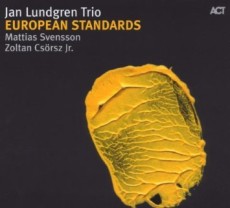
Jan Lundgren was born on March 22, 1966 in Olofstrom, Sweden and raised in Ronneby in the south of the country. He began learning the piano at the age of five and moved to Malmo in 1986 to study at the Academy of Music. He graduated in 1990, later becoming a lecturer at the Academy.
His group, the Jan Lundgren Trio broke through in 1997 with the album Swedish Standards, winning Orkesterjournalen’s Golden Record prize in the same year. In 2007, he became the first Scandinavian jazz pianist to be named an International Steinway Artist.
Since the early ‘90s, Jan has worked with a variety of Sweden’s leading artists both in the studio and/or at concerts such as Povel Ramel, Putte Wickman, Bengan Janson, Jason Diakité, Peter Asplund and Monica Zetterlund to name a few. He has also worked with Johnny Griffin, Mark Murphy, Herb Geller, Joe LaBarbera, Scott Hamilton, Andy Martin, Bill Perkins, Peter Washington, Billy Drummond, Deborah Brown, Lee Konitz, and Stacey Kent among numerous others.
Lundgren has recorded some 40 discs as a leader, under his own name since 1994 on labels including ACT, Fresh Sound, Marshmallow, Sittel, Four Leaf Clover, Volenza, Alfa, Gemini and Bee Jazz. As a sideman, Lundgren has been involved in dozens of other recordings across a broad range of labels.
In 2010, together with Thomas Lantz, Jan founded the annual Ystad Sweden Jazz Festival, for which he is Artistic Director. YSJF, has hosted Quincy Jones, Hugh Masekela, Dee Dee Bridgewater, Hiromi, Pat Martino, Youn Sun Nah, Benny Golson, Enrico Pieranunzi, Tomasz Stanko, Kenny Barron, Elina Duni, Fabrizio Bosso, Kurt Rosenwinkel, Bobo Stenson, Nils Landgren, Benny Green and Eliane Elias, Charles Lloyd, John Scofied, Abdullah Ibrahim, Dianne Schuur, Joshua Redman, Enrico Rava and Roy Hargrove. Pianist Jan Lundgren continues to perform, record and tour.
Put A Dose In Your Pocket
More Posts: piano
Daily Dose Of Jazz…
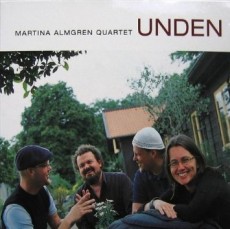
Martina Almgren was born on March 20, 1962 in Sweden and was surrounded by music as a child. She started playing the piano, then soon followed with the flute. In her late teens she was caught entirely by the drums, that became her primary instrument, along with the freedom in jazz and improvised music. It was some years later that she began composing her own music.
A colorful addition on the contemporary Swedish jazz scene, Almgren is passionate about playful improvisation, enticing rhythms and expressive melodies. This is reflective in her drumming as well as her compositions. She heads her own band, Martina Almgren Quartet, and has released four albums since 1999.
Martina together with Owe Almgren lead the Oh Yeah Orchestra comprised of ten of the top jazz musicians on the Swedish scene. In 2009 she was commissioned to compose for Swedish Jazz Celebration for Oh Yeah Orchestra. The album with the music “Freedom of Movement” was released in 2011. She expanded her performing on the European scene in 2007 when she teamed up with Scottish saxophonist Laura Macdonald on their album Open Book in 2008 followed by another in 2012.
She has been a part of Tom Bancroft´s Band of Eden, Nikki Iles Quintet and MOZ Trio that released their debut album “Sparkling Water, Please” released on the new Swedish label Oh Yeah Records in 2013. Drummer and composer Martina Almgren teaches improvisation classes at the Academy of Music and Drama at the University in Gothenburg, performs, records and tours.
Take A Dose On The Road
More Posts: drums