

Daily Dose Of Jazz…
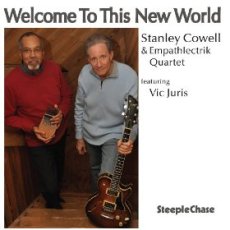
Vic Juris was born Victor E. Jurusz, Jr. on September 26, 1953 in New Jersey and started to play guitar around age 10, inspired by rock and roll legend Chuck Berry. He was self taught and played in many local rock and R&B bands around New Jersey as soon as he could.
Not long after he started playing professionally did he discover jazz and classical music and from then on it was a love affair with jazz. With an impeccable fluid approach to harmony and accompaniment, great writing style, a nice “blend” within the band, phenomenal chops, unique phrasing, advanced rhythmic ideas and concepts for improvisation Juris easily gained the respect of jazz musicians on the circuit and was not at a loss for work.
In the early 70s Vic played with Lyn Christie, made his first recordings with Eric Kloss, then joined Barry Miles working with him well into the Eighties. He recorded with Richie Cole, released his first album as a leader in the late 70s, and played with Don Patterson, Wild Bill Davis, Jimmy Smith, and Mel Torme.
He put together his own quartet in 1981, recorded for Muse and Steeplechase record labels, then became increasingly in demand as a sideman working with Bireli Lagrene, Larry Coryell, Dave Liebman, Jeanie Bryson, Gary Peacock, Judi Silvano, Lee Konitz and the list goes on.
As an educator Juris has held teaching positions at The New School for Jazz and Contemporary Music, Mason Gross School of the Arts, William Patterson and Lehigh Universities. Also a composer, his “Horizon Drive” was sampled in 1994 by Gang Starr on their Mass Appeal song. Guitarist and educator Vic Juris continued to perform, record and teach until his transition on New Year’s Eve, December 31, 2019 in Livingston, New Jersey at the age of 66.

Jazz Is Global – Share
More Posts: guitar,history,instrumental,jazz,music
Daily Dose Of Jazz…
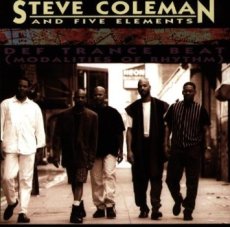
Steve Coleman was born on born September 20, 1956 in Chicago, Illinois and grew up in the musically rich Southside. As a child, he was in little singing groups, imitating the Jackson 5, singing in church and he started playing alto saxophone at the age of 14. About three years later he began to study the music of Charlie Parker, Sonny Rollins and John Coltrane and other masters.
He spent two years at Illinois Wesleyan University, transferred to Roosevelt University to concentrate on Chicago’s musical nightlife, having been introduced to Chicago premier saxophonists Von Freeman, Bunky Green and Sonny Stitt are just a few names from whom he learned.
Moving to New York in 1978 he joined the big bands of Thad Jones/Mel Lewis, Slide Hampton, Sam Rivers, and Cecil Taylor and was soon recording as a sideman with David Murray, Doug Hammond, Dave Holland, Mike Brecker and Abbey Lincoln. During this period he was playing the club circuit and putting a band together that would evolve into the Five Elements. He would go on to cofound the M Base movement with Cassandra Wilson and Greg Osby.
Influenced by Parker and Coltrane, gleaning improvisation from Von Freeman, composition from Sam Rivers and conceptual thinking from Doug Hammond, the alto saxophonist has added to his arsenal West African music, non-western cultures, Black American rhythm and blues and even nature by studying the flight patterns of bees. Steve Coleman continues to perform, record and tour and compose within the construct of contemporary jazz.
Give A Gift Of Jazz – Share
More Posts: saxophone
Daily Dose Of Jazz…
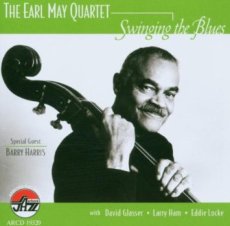
Earl May was born on September 17, 1927 in New York City first gravitated to drums, but at 14 acquired an acoustic bass, later making his professional debut at the Bronx’s 845 Club. While working an insurance job by day, 1949 saw May moonlighting across the New York club circuit, eventually catching the attention of drummer Connie Kay, who invited him to sit in behind Lester Young at Harlem’s now-legendary Minton’s Playhouse. He continued honing his craft in clubs like Minton’s Playhouse with musicians such as Lester Young and Mercer Ellington. A protégé of the legendary Charles Mingus, in 1951 Earl joined the Billy Taylor Trio, appearing regularly in such clubs as the Hickory House, Birdland and the Downbeat Club.
During the Fifties Earl also worked with Charlie Parker, Miles Davis, Quincy Jones, Gene Ammons, Sonny Stitt, Chet Baker, and Lorez Alexandria, Webster Young among others and recorded the classic “Lush Life” with John Coltrane. He left the Billy Taylor Trio in 1959 to form his own group and act as musical director and arranger for Gloria Lynne.
By the mid-sixties May took up the electric bass and led the Earl May Quartet at The New York Playboy Club and the group rapidly became the epitome of great music in the New York club scene.
Over the years Earl has performed or recorded with Dizzy Gillespie, Frank Foster, Cab Calloway, Tommy Flanagan, Barry Harris, Junior Mance, Benny Powell, Carmen Bradford, Frank Foster, Dizzy Gillespie, Linda Hopkins, Doc Cheatham, Charles Brown, Claude Williams, Jon Hendricks, Charles McPherson, Marlena Shaw, Ruth Brown, Winard Harper and Phyllis Hyman to name a few more.
Jazz bassist Earl May, one of the most prodigious and prolific bassists of the postwar era, lent his rich, round sound to every session and performance, was the only bassist to play with his left hand but kept the strings in their normal order and was a member of Local 802 since 1947, passed away on January 5, 2008. He was 80 years old.
Give The Gift Of Knowledge
More Posts: bass
Daily Dose Of Jazz…
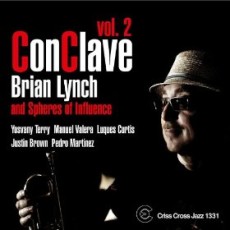
Brian Lynch was born September 12, 1956 in Urbana, Illinois but grew up in Milwaukee, Wisconsin. The young trumpeter apprenticed with pianist Buddy Montgomery and organist Melvin Rhyne while earning a degree from the Wisconsin Conservatory of Music. While living in San Diego 1980-81, he gained further valuable experience in the group of alto master Charles McPherson.
Moving to New York in late 1981 Brian was soon hired by Bill Kirchner, performing and recording with Kirchner’s nonet, then Horace Silver, and the Toshiko Akiyoshi Jazz Orchestra while simultaneously on the Latin scene with salsa bandleader Angel Canales, Hector LaVoe and Eddie Palmieri. By 1988 he was a part of the final edition of Art Blakey’s Jazz Messengers followed by Phil Woods and Benny Golson.
In recent years Lynch has worked with the Buena Vista Social Club, co-led bands and Latin sessions with Conrad Herwig, with Eddie Palmieri won best Latin Jazz Album of the Year Grammy for Simpatico, has immersed himself in the Afro-Cuban culture with “Spheres of Influence” collaborating with the likes of Edsel Gomez, Luis Perdomo, Robby Ameen, Ernesto Simpson, Richie Flores and Pedro Martinez to name a few.
As an educator he is a faculty member at the University of Miami, New York University and the North Netherlands Conservatory, has taught at the Stanford Jazz Workshop, Eastman School of Music, Dartmouth College, University of North Texas and Columbia University among others. Trumpeter Brian Lynch continues to perform, record and tour worldwide.
Jazz Is Global – Share
More Posts: trumpet
Daily Dose Of Jazz…
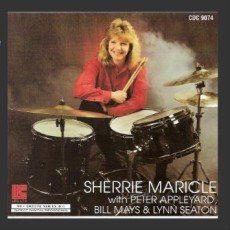
Sherrie Maricle was born Sharon Lee Maricle on September 2, 1963 in Buffalo, New York. She began playing drums professionally performing locally with Slam Stewart while studying music at SUNY-Binghamton. She then attended New York University where she completed a Masters in Jazz Performance and a Doctorate of Philosophy in Jazz Performance and Composition.
Maricle directed Saturday jam sessions at the Village Gate from 1987 until the venue closed in 1993. Beginning in 1987, she also began collaborating and leading small groups with Peter Appleyard. In the late 1980’s, she was appointed director of percussion studies at NYU.
By the 1990’s Sherrie was performing with the New York Pops, Clark Terry, Al Grey and began working with the group DIVA, currently leading the DIVA Jazz Orchestra, the DIVA Jazz Trio, and the quintet Five Play.
As an educator she teaches on the jazz faculty of the New York State Summer Music Festival, as well as running her own private drum and percussion studio. In 2009, she received the Lifetime Achievement Award at the Mary Lou Williams Women in Jazz Festival. Drummer Sherrie Maricle continues to perform, tour and record.
Take A Dose On The Road
More Posts: drums