

Daily Dose Of Jazz…
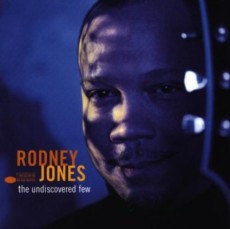
Rodney Jones was born on August 30, 1956. Mastering his instrument during his youth he performed with Jaki Byard and recorded with Chico Hamilton. An underrated cool-toned guitarist best in straight-ahead settings, by the time he was in his early twenties he was working with Dizzy Gillespie.
After moving on from Gillespie, he began working with Lena Horne as her accompanist. Jones put on the leader hat in 1977 with his debut on the the Strata East label, “The Liberation of the Contemporary Jazz Guitar “. This was followed up with his “Articulation” on the Timeless label and then another four sessions took place through 2001 for Muse, R7R and Minor Music labels.
Rodney has been cited as a jazz guitarist who uses modern quartal harmony. He also believes his journey is also one of spiritual awakening that is not separated by theology or music. He investigates the relationship between the art and science of jazz and helps musicians discover their own doorways to development and evolution of their music. He continues to perform, study and tour.

Give A Gift Of Jazz – Share
More Posts: guitar

Daily Dose Of Jazz…
Born August 26, 1943, Dorival Tostes Caymmi, the son of famous Brazilian musicians Dorival Caymmi and Stella Maris. He began playing piano at age eight, studied music theory at the Conservatorio Lorenzo Fernandez and in 1959 made his professional debut accompanying his sister, Nana.
In 1960 Dori became a member of Groupo dos Sete, writing music for plays aired on Brazilian television. He co-directed and played viola in the play Opinião, an important transitional work between the styles of bossa nova and MPB and directed the play Arena Conta Zumbi. For a time he produced Edu Lobo, Eumir Deodato and Nara Leao, co-wrote the prize winning song “Saveiros” with Nelson Matta, a collaboration that lasted many years and produced some of Brazil’s biggest hits.
Caymmi played and toured with Paul Winter, arranged and directed albums by Caetano Veloso, Gal Costa and Gilberto Gil, and was involved with the tropicalia movement of the late 1960s, but did not record in this style himself due to his distaste for Euro-American pop music. He wrote scores for numerous films and television shows in the 1970s and 1980s, moved to Los Angeles, California in 1989 and has since played or recorded with Dionne Warwick, Toots Thielemans, Marilyn Scott, Oscar Castro-Neves, Eliane Elias, Richard Silveira and Edu Lobo; was a collaborator celebrating Tom Jobim at Carnegie Hall and arranged the music for Spike Lee’s film, Clockers.
Dori Caymmi has been nominated for Latin Grammys several times and is a two-time Grammy Award winner for Best Latin Song and Best Latin Samba Recording. The Brazilian singer, guitarist, songwriter, arranger, and producer has an extensive discography dating back to 1964 and he continues to perform and record.
Take A Dose On The Road
More Posts: arranger,composer,guitar,songwriter,vocal
Daily Dose Of Jazz…
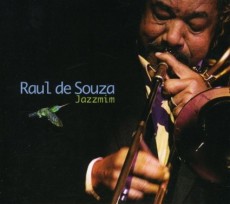
Raul de Souza was born August 23, 1934, in Rio de Janeiro, Brazil. Learning to play to trombone in his youth he went on to perform and record with Sergio Mendes, Flora Purim, Airto Moreira, Milton Nascimento, Sonny Rollins, Cal Tjader, Hermeto Pascoal and the jazz-fusion band Caldera.
Raul’s debut album as a leader came in 1965 with A Vontade Mesmo for RCA Brazil followed up three years later with International Hot on the Equipe label. His American debut release Sweet Lucy, produced by composer and pianist George Duke on the Capitol Records label, also produced his sophomore project, Don’t Ask My Neighbors. Colors, a Milestone recording is now a part of the Original Jazz Classics series from Fantasy Records.
By 1979, de Souza was releasing ‘Til Tomorrow Comes, an Arthur Wright production with many of the top soul session players in Los Angeles. Devoid of any jazz, it was an attempt to jump aboard the disco/funk bandwagon. Since then he has added eight more recordings as a leader to his catalogue and produced a DVD, O Universo Musical de Raul de Souza in 2012.
Trombonist Raul de Souza has appeared at many international jazz festivals and after living and working in the United States for many years, he has returned to live in Brazil where he continues to play and compose.
Give A Gift Of Jazz – Share
More Posts: trombone
Daily Dose Of Jazz…
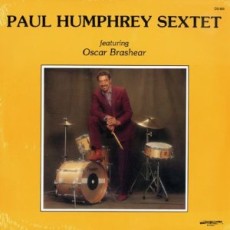
Oscar Brashear was born August 18, 1944, in Chicago, Illinois. After studying at trumpet and music at DuSable High School and Wright Jr. College under John DeRoule, he worked briefly with Woody Herman before going on to join Count Basie from 1968-69, then returning to freelance in Chicago. There her worked with Sonny Stitt, Gene Ammons, Dexter Gordon and James Moody.
A move to Los Angeles in 1971, he worked with Gerald Wilson, Harold Land, Oliver Nelson, Shelly Manne, Quincy Jones, Horace Silver and Duke Pearson.
To date Brashear has contributed to more than five-dozen recording sessions with Teddy Edwards, Jimmy Smith, Sonny Rollins, Benny Golson, Bobby Hutcherson,, B.B. King, Bobby Bland, Freddie Hubbard, Joe Farrell, The Crusaders, McCoy Tyner, Gene Harris, Earth Wind and Fire, Carole King, Ry Cooder and Frank Sinatra among many others. He continues to perform and record as a session player.
Take A Dose On The Road
More Posts: trumpet
Daily Dose Of Jazz…
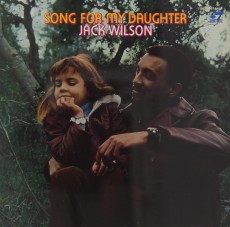
Jack Wilson was born in Chicago, Illinois on August 3, 1936 but grew up in Fort Wayne, Indiana from the age of seven. From 1949-54, he studied piano with Carl Atkinson at the Fort Wayne College of Music where he was introduced to the music of George Shearing.
Wilson later picked up the tenor saxophone and played in the Central High School band. He began performing locally leading small combos. By his fifteenth birthday, he had become the youngest member ever to join the Fort Wayne Musicians Union, Local 58. At 17, James Moody hired him to play a two-week stint as a substitute pianist.
After graduating from Central High, Jack spent a year-and-a-half at Indiana University, where he met Freddie Hubbard and Slide Hampton. Then touring with a rock ‘n roll band, he wound up in Columbus, Ohio and connecting with then unknown Nancy Wilson and Rahsaan Roland Kirk.
After a year in Columbus, he moved to Atlantic City and led the house band at the Cotton Club, adding organ to his musical arsenal. At the Club he met Dinah Washington and worked with her from 1957-58.
A return to Chicago, Wilson was playing with Gene Ammons, Sonny Stitt, Eddie Harris and Al Hibbler and holding down the gig at the Persian Lounge. Drafted into the Army, he went to Fort Stewart, GA. and became the first Black music director for the Third Army Area, playing tenor saxophone in the army band.
In 1961, jack received an honorable medical discharge due to diabetes, returned to Dinah Washington’s band for a year and encouraged by Buddy Collette moved to Los Angeles, California. It was here he worked with Gerald Wilson, Lou Donaldson, Herbie Mann, Johnny Griffin, Sammy Davis Jr., Sarah Vaughan, Lou Rawls, Eartha Kitt, Julie London, as well as Sonny & Cher. He composed and recorded the title track for Earl Anderza’s debut album Outa Sight!
Wilson recorded his debut as a leader for Atlantic Records with The Jack Wilson Quartet featuring Roy Ayers followed by a sophomore project, then three for the label’s subsidiary Vault Records and three albums for Blue Note including the classic Easterly Winds in 1967. From there he focused on work with vocalist Esther Phillips, went back to the studio for Discovery Records, and returned to be a sideman with Lorez Alexandria, Tutti Camarata and Eddie Harris.
His final recording session simply titled In New York, took place on June 4, 1993 and featured legendary drummer Jimmy Cobb. Composer and pianist Jack Wilson died on October 5, 2007 due to complications from his life with diabetes.
Inspire A Young Mind