

Daily Dose Of Jazz…
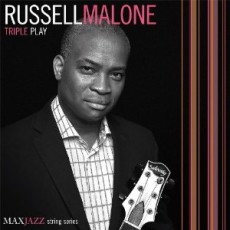
Russell Malone was born November 8, 1963 in Albany, Georgia. He began playing at the age of four with a toy guitar his mother had bought him, influenced by musicians such as B. B. King and The Dixie Hummingbirds. However, his most influential musical experience was seeing George Benson perform on television with Benny Goodman. He learned technique from listening to recordings of Benson, Wes Montgomery and Charlie Christian among others.
Malone played with jazz organist Jimmy Smith, followed by a residency with the Harry Connick Jr. Big Band and in 1995, Malone became part of the Diana Krall Trio, that had three albums nominated for a Grammy. Following his tenure with Krall, he went on to tour regularly leading his own quartet, has played with Dianne Reeves, Romero Lubambo, Ron Carter, Bobby Hutcherson, the late Mulgrew Miller, Dr. Lonnie Smith, Hank Jones, Benny Green, Bill Frisell and Sonny Rollins.
The essentially self-taught swing and bebop jazz guitarist has recorded several sessions for Columbia, Impulse, Venus, Verve and Telarc record labels and since 2004 has recorded on the MaxJazz label with his latest 2010 session being “Triple Play”. Russell Malone has amassed to date 18 albums in his catalogue and continues to perform, record and tour.
More Posts: guitar
Daily Dose Of Jazz…
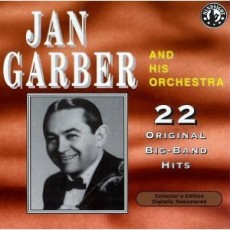
Jan Garber was born Jacob Charles Garber on November 5, 1894 in Indianapolis, Indiana. He had his own band by the time he was 21. He became known as “The Idol of the Airwaves” in his heyday of the 1920s and 1930s, playing jazz in the vein of contemporaries such as Paul Whiteman and Guy Lombardo.
It was during World War II that Garber began playing swing jazz with arranger Gray Rains and vocalist Liz Tilton. However, the recording restrictions in America during the war eventually made his ensemble unfeasible, and he returned to “sweet” music after the war, playing violin with the Philadelphia Symphony Orchestra.
Jan formed the Garber-Davis Orchestra with pianist Milton Davis from 1921–1924. After parting with Davis, he formed his own orchestra, playing both “sweet” and “hot” 1920s dance music. He was hit hard by the Great depression and in the thirties he refashioned his ensemble into a big band and recorded a string of successful records for Victor.
Violinist and bandleader Jan Garber continued to lead ensembles nearly up until the time of his death on October 5, 1977 in Shreveport, Louisiana.
More Posts: bandleader,violin
Daily Dose Of Jazz…
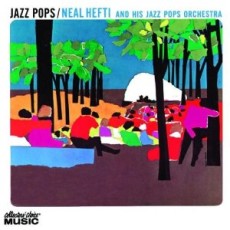
Neal Hefti was born on October 29, 1922 in Hastings, Nebraska, outside Omaha and was a child of the jazz age. His mother, a music teacher, started piano lessons at the age of 3, becoming well versed in theory and harmony by the time he took up the trumpet at 11. He was already writing arrangements, having taught himself by trial and error in high school and was supplying local dance bands with music well before he graduated. After winning several school prizes, he was to start making a living as a jazz trumpeter in the big bands of Charlie Barnet and Charlie Spivak.
After travelling to California with Spivak to make a film, Hefti stayed on the West Coast, joined Woody Herman’s band as a trumpeter in 1944 and his arranging began to take precedence over his playing. Hefti married, moved back to New York and began writing in every genre and for all sizes of ensembles, becoming adept at using small forces to create a big sound. He arranged for Count Basie both in octet and big band configurations making Neal became one of his principal writers. He went on to write numerous compositions for Harry James in the late 40s and 50s designed to feature the leader’s trumpet and the band’s star drummer Buddy Rich.
Hefti fronted his own band in the Fifties, contributed to some of Frank Sinatra’s most popular albums, including “Frank Sinatra and Swinging Brass”, which he also produced. From the early 1960s onwards, he was increasingly involved in the world of films and television, winning a Grammy award for his Batman theme. Hefti was a brilliant composer and arranger who created the scores for many other television shows and films, notably the two Neil Simon movies The Odd Couple and Barefoot in the Park. His score for Harlow included the song “Girl Talk” that has become a jazz standard.
However, in 1978 after his wife’s passing, he ceased to write and record new music. Nevertheless, because Basie continued to commission other writers to replicate his style, his effect on big band arranging and on film scores remained extremely influential. Trumpeter, composer, songwriter and arranger Neal Hefti, who contributed to the genres of swing and big band along with scores for the film and television industries, passed away in Toluca Lake, California on October 11, 2008.
Daily Dose Of Jazz…
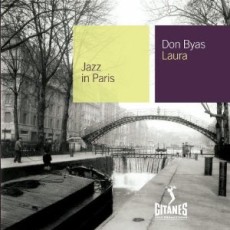
Don Byas was born Carlos Wesley Byas October 21, 1912 in Muskogee, Oklahoma into a musical family, his mother a pianist and father playing clarinet. He started training in classical music, first on the violin, then clarinet and finally the alto saxophone, which he played until the end of the 1920s. He started playing in local orchestras at the age of 17, with the likes of Bennie Moten, Terrence Holder and Walter Page’s Blue Devils.
In 1931 while at Langston College in Oklahoma he founded and led his own college band, “Don Carlos and His Collegiate Ramblers”. Switching to the tenor saxophone when he moved to West Coast, through the Thirties he played with various Los Angeles bands such as Bert Johnson’s Sharps and Flats, Lionel Hampton, Eddie Barefield, Buck Clayton, Lorenzo Flennoy and Charlie Echols bands.
By 1937 Byas moved to New York working with Eddie Mallory and his wife Ethel Waters, went on to work with Don Redman, recorded his first solo in 1939, played with the bands of lucky Millinder, Andy Kirk, Edgar Hayes and his childhood idol Benny Carter. He played and recorded with Billie Holiday, Pete Johnson, Hot Lips Page, Big Joe Turner, Charlie Christian, Thelonious Monk and Kenny Clarke in after hour sessions.
However Byas’ big break came in early 1941 when Count Basie selected him to fill the seat vacated by Lester Young. Through the forties he played the best New York nightspots, had some success with a few hits, collaborated with Dizzy Gillespie, Charlie Parker, George Wallington, Oscar Pettiford and Max Roach. Despite his bebop associations, Byas always remained deeply rooted in the sounds of swing. He started out by emulating Coleman Hawkins, but always cited Art Tatum as his greater influence: “I haven’t got any style, I just blow like Art”.
In 1946 Byas went to Europe and forgot to return to America. A bon vivant in the true sense he was seen on the Riviera, St. Tropez often sporting mask and flippers, sport fishing, shooting pool or dishing up Louisiana style menus for his female admirers all while recording and playing regularly throughout Europe.
Settling in Amsterdam he continued to tour and play with the likes of Art Blakey, Kenny Clarke, Bud Powell, Jazz At The Philharmonic and Ben Webster to name a few. He returned once to the U.S. to appear at the Newport Jazz Festival. Tenor saxophonist Don Byas died on August 24, 1972 from lung cancer in Amsterdam, Netherlands at the age 59.
More Posts: saxophone
Daily Dose Of Jazz…
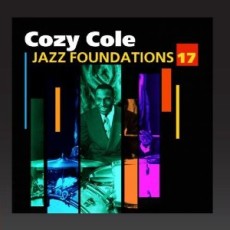
Cozy Cole was born William Randolph Cole on October 17, 1909 in East Orange, New Jersey. His first music job was with Wilbur Sweatman in 1928 and two years later he was playing with Jelly Roll Morton’s Red Hot Peppers. He had his first drum solo on the recording of “Load of Cole”. In 1931 Cozy went on to spend two years with Blanche Calloway, followed by a year with Benny Carter, then a year with Willie Bryant, two with Stuff Smith’s small combo.
For four years from1938-42 he played with Cab Calloway. In 1942, CBS Radio music director Raymond Scott hired Cozy as part of the network radio’s first mixed-race orchestra. After his stint with CBS, he played with Louis Armstrong’s All Stars.
Cole scored a #1 Cashbox magazine hit with the “Topsy Part 2” that also peaked at number three on Billboard’s Hot 100 in 1958and at number one on the R&B chart. It sold over one million copies garnering it a gold disc. The recording contained a lengthy drum solo and was one of the few drum solo recordings that ever made the Billboard Hot 100 chart.
Throughout the 1960s and 1970s Cole continued to perform in a variety of settings. Cole and Gene Krupa often played duets at the Metropole in New York City during the 1950s and 1960s. Cole appeared in music-related films, including a brief cameo in “Don’t Knock The Rock” and has been cited as an influence by many contemporary jazz and rock drummers including Cozy Powell, who took his nickname from Cole.
Cozy Cole passed away from cancer on January 31, 1981 in Columbus, Ohio.
More Posts: drums