

Daily Dose Of Jazz…
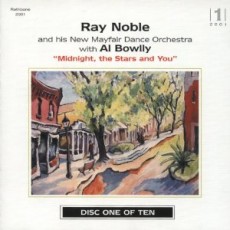
Raymond Stanley Noble was born on December 17, 1903 in Brighton, England and studied music at the Royal Academy. He became the leader of the HMV Records studio band, known as the New Mayfair Dance Orchestra that featured popular vocalist Al Bowlly and many musicians of the top hotel bands.
The Bowlly/Noble recordings achieved popularity in the United States, however, union bans prevented Noble from bringing British musicians to America so he arranged for Glenn Miller to recruit American musicians. Bowlly returned to England but Noble continued to lead bands in America, moving into an acting career portraying a stereotypical upper-class English idiot in films like Top Hat and Slumming On Park Avenue. He also played the “dense” character in love with Gracie Allen, or with his orchestra in an Edgar Bergen vehicle. Noble also provided music for many radio shows of the times like The Charlie McCarthy Show. His last major success as a bandleader came with Buddy Clark in the late 1940s.
Ray Noble arranged hits in the 1930s such as “Easy to Love”, “Mad About the Boy”, “Paris in the Spring”, wrote both lyrics and music for now jazz standards “Love Is The Sweetest Thing”, “Cherokee”, “The Touch of Your Lips”, “I Hadn’t Anyone Till You” and “The Very Thought Of You” and co-wrote “Goodnight, Sweetheart” and “You’re So Desirable”, recorded by Billie Holiday, Teddy Wilson and in 1990 by Robert Palmer.
Ray Noble, bandleader, composer, arranger, pianist, singer and actor passed away on April 3, 1978 at the age of 74.
More Posts: arranger,bandleader,composer
Daily Dose Of Jazz…
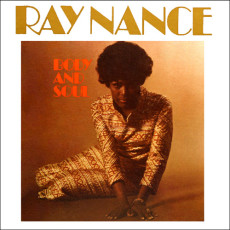
Ray Willis Nance was born on December 10, 1913 in Chicago, Illinois and as a child he studied piano, took violin lessons and was self-taught on trumpet. He led small groups from 1932-1937, then spent periods with the orchestras of Earl Hines and Horace Henderson through to 1940, however, he is best known for his long association with Duke Ellington through most of the 1940s and 1950s, after he was hired to replace Cootie Williams.
Shortly after joining the band, Nance was given the trumpet solo on the first recorded version of “Take The “A” Train” which became the Ellington theme, a major hit and jazz standard. Nance’s “A Train” solo is one of the most copied and admired trumpet solos in jazz history that even Williams upon his return to the some twenty years later would play Nance’s solo almost exactly as the original.
Ray was often featured on violin and was the only violin soloist ever featured in Ellington’s orchestra. He is also one of the well-known vocalists from the Ellington orchestra, having sung arguably the definitive version of “It Don’t Mean A Thing (If It Ain’t Got That Swing). It was Nance’s contribution to take the previously instrumental horn riff into the lead vocal, which constitute the now infamous, “Doo wha, doo wha, doo wha, doo wha, yeah!” The multi-talented trumpeter, violinist, vocalist and dancer earned him the nickname “Floorshow”.
He left the Ellington band in 1963 after having switched to and playing cornet alongside his predecessor Cootie Williams for a year. Over the course of his career he recorded a few albums as a leader and with Earl Hines, Rosemary Clooney and others. Ray Nance passed away on January 28, 1976 in New York City.

Daily Dose Of Jazz…
Teddy Wilson was born Theodore Shaw Wilson in Austin, Texas on November 24, 1912. By his teenage years he was enamored with the music of Bix Beiderbecke and King Oliver and decided to make a living playing jazz. He studied piano and violin at Tuskegee Institute where his father was head of the English Department and his mother was chief librarian. A year later he joined Speed Webb’s band as one of seven arrangers, re-orchestrating in close harmony the songs of Beiderbecke and Hodges. He went on to join Louis Armstrong, understudying Earl Hines in his Grand Terrace Café Orchestra, and Benny Carter’s Chocolate Dandies.
By 1935 Teddy joined Benny Goodman trio with Gene Krupa becoming the first black musician to perform in public with a previously all-white jazz group. With the help of jazz producer John Hammond, Wilson got a contract with Brunswick Records in 1935 and started recording hot swing arrangements of popular songs of the day with the growing jukebox trade in mind. He recorded fifty hit records with various singers including Lena Horne, Helen Ward and Ella Fitzgerald while also participating in sessions with Lester Young, Roy Eldridge, Charlie Shavers, Red Norvo, Buck Clayton and Ben Webster.
Wilson formed his own short-lived big band in 1939 and then led a sextet at Café Society from 1940 to 1944. In the 1950s he taught at the Julliard School, appeared as himself in the motion picture The Benny Goodman Story, and during the next two decades lived quietly in suburban New Jersey. Pianist and arranger Teddy Wilson passed away on July 31, 1986 in New Britain, Connecticut at age 73.

More Posts: piano
Daily Dose Of Jazz…
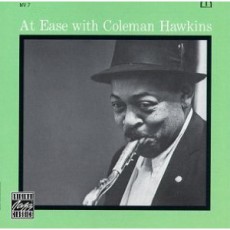
Coleman Randolph Hawkins was born on November 21, 1904 in St. Joseph, Missouri and named after his mother’s maiden name. He started out playing piano and cello prior to playing saxophone at age nine. By the time he turned 14, he was playing around eastern Kansas while attending Topeka High School and simultaneously studying harmony and composition for two years at Washburn College.
In 1921 Hawkins joined Mamie Smith’s Jazz Hounds, toured through 1923 and settled in New York City. Hawkins joined Fletcher Henderson’s Orchestra doubling on clarinet and bass saxophone and becoming a star soloist. He recorded with band mates Louis Armstrong and Henry “Red” Allen, a number of solo recordings with either piano or a pick-up band of Henderson musicians. In late 1934, he played with Jack Hylton’s band in London, toured Europe as a soloist until 1939 and worked with Django Reinhardt and Benny Carter in 1937 Paris.
Returning to the States he worked Kelly’s Stables, recorded two choruses of Body and Soul, his landmark recording of the Swing Era. Recorded as an afterthought at the session, it is notable in that Coleman ignores almost all of the melody, only the first four bars are stated in a recognizable fashion. In its exploration of harmonic structure it is considered by many to be the next evolutionary step in jazz recording from where Louis Armstrong’s “West End Blues” in 1928 left off.
Over the course of his long and prolific career Hawkins had an unsuccessful attempt at a big band, led a combo at Kelly’s Stables, played with Thelonious Monk, Oscar Pettiford, Miles Davis, Oscar Peterson, Herb Ellis, Ray Brown, Ben Webster, Max Roach, Howard McGhee, Sonny Rollins, John Coltrane, Roy Eldridge, J.J. Johnson, Fats Navarro and Duke Ellington among others, recorded a session with Dizzy Gillespie that is considered the first bebop recording and toured with Jazz at the Philharmonic. After 1948 Hawkins divided his time between New York and Europe, making numerous freelance recordings. In the 1960s, he appeared regularly at the Village Vanguard.
Tenor saxophonist Coleman Hawkins directly influenced many future bebop musicians such as Sonny Rollins and John Coltrane. In his later years he stopped recording, began drinking heavily and died of pneumonia on May 19, 1969 in New York.
Daily Dose Of Jazz…
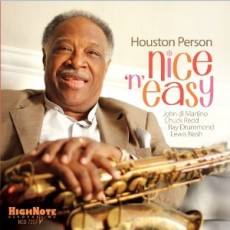
Houston Person, born November 10, 1934, grew up in Florence, South Carolina, first playing the piano before switching to tenor sax. He studied at South Carolina State College, went on to join the Air Force, became a member of a service band stationed in West Germany and played with Don Ellis, Eddie Harris, Cedar Walton and Leo Wright.
After his discharge he continued his studies at Hartt College of Music in Hartford, Connecticut. He first became known for a series of albums for Prestige Records in the 1960s, met Etta Jones while both were with Johnny Hammond’s band and spent many years as her musical partner, recording, performing and touring, and for much of his career this association was what he was best known for. Contrary to popular belief, they were never married.
Houston has performed in the hard bop and swing genres but is best known for his soul-jazz work. He has recorded more than seventy-five albums as a leader for Prestige, Westbound, Mercury, Savoy, and Muse Records. He is currently in residence as a leader and record producer at HighNote and has recorded with Charles Brown, Bill Charlap, Charles Earland, Lena Horne, Etta Jones, Lou Rawls, Horace Silver, Dakota Staton, Billy Butler and Richard “Groove” Holmes among others.
He received the Eubie Blake Jazz Award in 1982 and was inducted into the South Carolina State College Hall of Fame in 1999. He continues to produce, record, perform and tour.
More Posts: saxophone