

Daily Dose Of Jazz…
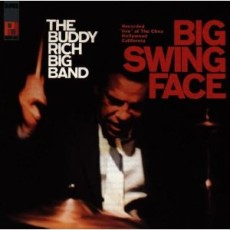
Buddy Rich was born Bernard Rich on September 30, 1917 in New York City to vaudevillians. His father first noticed his musical talent to keep a steady beat with spoons at the age of one. He began playing drums at eighteen months in vaudeville billed as “Traps the Drum Wonder”. At the height of his childhood career he was reportedly the second-highest paid child entertainer in the world, after Jackie Coogan.
By age 11 he became a bandleader without any formal drum instruction, claiming that instruction would only degrade his musical talent; never admitted to practicing, played drums only during performance, and was not known to read music. Buddy’s first major jazz gig was in 1937 with Joe Marsala and guitarist Jack Lemaire was followed with Bunny Berigan, Artie Shaw, Vic Schoen Orchestra, Tommy Dorsey and Frank Sinatra.
In 1942 he enlisted in the Marines and two years later was back with Dorsey. With financial backing from Sinatra in ’46 he formed his own band and continued to lead different groups into the early fifties. In addition he performed with Benny Carter, Harry James, Les Brown, Charlie Ventura, Jazz at the Philharmonic and led several successful big bands in an era that didn’t popularize them, played on sessions with Ella Fitzgerald and Louis Armstrong for their late-career comeback recordings, Oscar Peterson and his famous trio with Ray Brown and Herb Ellis.
Rich always have a drummer there during rehearsals to read and play the parts initially on new arrangements. He’d listen to a chart once, have it memorized, run through it and he’d know exactly how it went, how many measures it ran and what he’d have to do to drive it.
Buddy, once billed as “The World’s Greatest Drummer”, was known for his virtuosic technique, power, groove and speed and remained an active performer until the end of his life. On April 2, 1987 in Los Angeles, California drummer, bandleader and songwriter Buddy Rich succumbed to heart failure following surgery for a malignant brain tumor. He was 69.
More Posts: drums
Daily Dose Of Jazz…
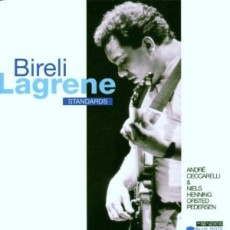
Biréli Lagrène was born September 4, 1966 in Soufflenheim, Bas-Rhin Alsace, France in a traditional manouche-Gypsy family and community. He started playing the guitar at the age of four. He grew up in the loving but tough environment of the “tzigane” or Romani Gypsies. His biggest influences came from family with a gifted violinist father. At age eight, he covered Django Reinhardt’s repertoire, at twelve won a Gypsy music festival in Strasbourg and later recorded his live performance on the double LP, “Route to Django”.
Offered the chance to leave for the U.S., Biréli met the greatest jazz musicians of the international scene such as Stephane Grappelli, Benny Goodman and Benny Carter. In 1984, he met Larry Coryell in New York, then later introduced to bassist Jaco Pastorious and ventured with him into jazz-fusion. Together, they toured Europe, which contributed a great deal to Lagrène’s musical emancipation.
Lagrène, a guitarist and bassist, came to prominence in the 1980s for his Django Reinhardt influenced style. He often performs within the swing; jazz-fusion and post bop mediums. He has also performed live with guitarist Al Di Meola, recorded “Gipsy Project” and “Gipsy Project & Friends” in 2002. He has thirty-seven albums and four film scores to date and continues to record, perform and tour.
Daily Dose Of Jazz…
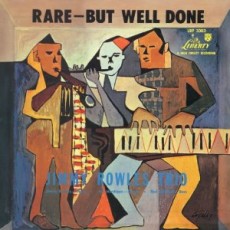
Jimmy Rowles was born James G. Rowles on August 19, 1918 in Spokane, Washington and studied at Gonzaga College. After moving to Los Angeles in 1942, he joined Lester Young’s group and also worked with Benny Goodman, Woody Herman, Les Brown, Tommy Dorsey, Tony Bennett and as a studio musician.
In the 1950s and 1960s, he frequently played behind Billie Holiday and Peggy Lee and in 1973, Rowles settled in New York City, where he performed and/or recorded with Zoot Sims and Stan Getz among others. He joined Ella Fitzgerald for nearly three years in 1981 succeeding Paul Smith as her accompanist first performing with her at the Mocambo nightclub in L.A.’s Hollywood district in late 1956. Jimmy appeared on several recording sessions with her in the 1960s and played on Fitzgerald’s final collaboration with Nelson Riddle, The Best Is Yet To Come in 1982.
In 1983, Jimmy worked with Diana Krall in Los Angeles, developing her playing abilities and encouraged her to add singing to her repertoire. He composed several jazz pieces, the best known being “The Peacocks”; accompanied jazz singer Jeri Brown in 1994 on the only album containing only his own compositions, A Timeless Place.
Pianist Jimmy Rowles, who released a number of albums under his own name and explored various idioms including swing and cool jazz, died from cardiovascular disease in Burbank, Los Angeles County, California, at the age of 78 on May 28, 1996.
More Posts: piano
Daily Dose Of Jazz…
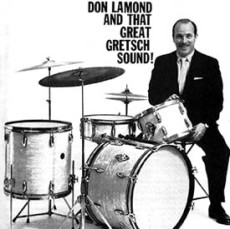
Don Lamond was born on August 18, 1920 in Oklahoma City, Oklahoma and attended the Peabody Conservatory in Philadelphia in the early ‘40s. He played with Sonny Durham and Boyd Raeburn at the outset of his career, and then took over Dave Tough’s spot in Woody Herman’s big band “First Herd” in 1945, remaining until the group disbanded at the end of 1946.
By 1947 he briefly freelanced with musicians including Charlie Parker, and then returned to duty under Herman in his Second Herd, where he remained until its 1949 dissolution. In the 1950s and 1960s Don found work as a session musician, recording in a wide variety of styles.
He performed and recorded with such jazz luminaries as Stan Getz, Zoot Sims, Johnny Smith, Benny Goodman, Ruby Braff, the Sauter-Finegan Orchestra, Sonny Stitt, Johnny Guarnieri, Jack Teagarden, Quincy Jones, George Russell and Bob Crosby among others.
Lamond recorded as a bandleader in 1962 with a tentet that included Doc Severinsen, played with George Wein’s Newport Festival band in the late ‘60s, and worked with Red Norvo, Maxine Sullivan and Bucky Pizzarelli in the Seventies. He put together his own swing group that recorded in 1977 and 1982, and recorded a quartet album with his wife Terry singing in 1981. Don Lamond, drummer, bandleader and sideman died on December 23, 2003 in Orlando, Florida at age 83.

More Posts: drums
Daily Dose Of Jazz…
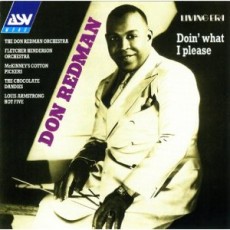
Donald Matthew Redman was born into a musical family on July 29, 1900 in Piedmont, West Virginia. He started playing the trumpet at age 3, joined his first band at 6 and by twelve was proficient on all wind instruments ranging from trumpet to oboe and piano. After studying at Storer’s College in Harper’s Ferry and at the Boston Conservatory, he joined Billy Page’s Broadway Syncopaters in New York.
1922 saw Don joining Fletcher Henderson’s orchestra, mostly playing clarinet and saxophones. He soon began writing the bulk of the orchestra’s arrangements, contributing much to formulate the sound that was to become big band swing. The chief trademark of Redman’s arrangements was that he harmonized melody lines and pseudo-solos within separate sections; for example, clarinet, sax, or brass trios. He played these sections off each other, having one section punctuate the figures of another, or moving the melody around different orchestral sections and soloists. His use of this technique was sophisticated, highly innovative, and formed the basis of much big band jazz writing in the following decades.
By 1927 he joined McKinney’s Cotton Pickers in Detroit as their musical director and leader but by 1931 Redman formed his own band and took up residency at Connie’s Inn in Manhattan. Redman’s band recorded for Brunswick Records, provided music for the Betty Boop series, employed singer Harland Lattimore, known as “The Colored Bing Crosby” and wrote arrangements for musicians and bandleaders like Paul Whiteman, Isham Jones and Bing Crosby. By 1940 Redman had disbanded his orchestra, began freelancing writing arrangements that became hits for Jimmy Dorsey, Count Basie and Harry James. In 1949 he appeared on CBS’s Uptown Jubilee and in the Fifties became musical director for Pearl Bailey.
Don Redman died in New York City at age 64 on November 30, 1964. His family legacy left us two more generations of jazz musicians, as he was the uncle of saxophonist Dewey Redman, and thus great-uncle of saxophonist Joshua Redman and trumpeter Carlos Redman.