


Daily Dose Of Jazz…
Clark Terry was born on December 14, 1920 in St. Louis, Missouri. After high school he started his professional career in the early 40s playing in local clubs, and then served as a bandsman in the U.S. Navy during World War II. He influenced both Quincy Jones and Miles Davis, teaching the later while in St. Louis.
Terry’s years with Basie and Ellington in the late 1940s and 1950s established him as a world-class jazz artist, blending the St. Louis tone with contemporary styles. After leaving Ellington, Clark’s international recognition soared when he became NBC’s first African-American staff musician. He a ten-year member of The Tonight Show band where his unique “mumbling” scat singing became famous when he scored a hit with “Mumbles.”
Terry continued to play with musicians such as J. J. Johnson and Oscar Peterson, and led a popular group with Bob Brookmeyer in the early 1960s. In the 1970s he concentrated on the flugelhorn, performed studio work and teaching at jazz workshops, toured regularly in the 1980s with small groups and performed as the leader of his Big B-A-D Band.
At the behest of Billy Taylor, early in his career he and Milt Hinton bought instruments and gave instruction to young hopefuls and the idea was planted the seed that became Jazz Mobile in Harlem. He toured with the Newport Jazz All Stars and Jazz at the Philharmonic, recorded for the Red Hot + Rhapsody and Red Hot + Indigo albums, composed more than two hundred songs, performed for seven U.S. Presidents, has been both leader and sideman on more than three hundred albums performing with Clifford Brown, Gary Burton, Charlie Byrd, Tadd Dameron, Eddie “Lockjaw” Davis, Lionel Hampton, Paul Gonsalves and Milt Jackson among others, recorded with symphonies and orchestras and established the Clark Terry Archive at William Paterson University.
Swing and bop trumpeter, pioneer of the flugelhorn and educator Clark Terry has received over 250 awards, medals and honors including a NEA Jazz Masters Award, has received a Grammy Lifetime Achievement Award, 16 honorary degrees, a knighthood, keys to several cities, the French Order of Arts and Letters and over the course of a seventy year career is the most recorded trumpet player of all time appearing on more than 900 known recording sessions.
Trumpeter, and flugelhorn player Clark Terry passed away from complications from advanced diabetes on February 21, 2015 at the age f 94 in Pine Bluffs, Arkansas.

More Posts: flugelhorn,trumpet

Daily Dose Of Jazz…
Jack Purvis was born John Purvis on December 11, 1906 in Kokomo, Indiana. After his mother’s death in 1912 his behavior became uncontrollable, and, as a result of many acts of petty larceny that would remain a part of his adult life, he was sent to a reform school. While there, he discovered that he had an uncanny musical ability, and soon became proficient enough to play both the trombone and trumpet professionally. This also enabled him to leave the reformatory and continue his high school education, while he was playing paying gigs on the side.
One of the earliest jobs he had as a musician was with a band led by the Royal Canadian Mounted Police and not long afterward he was working with the Hal Denman dance band. After high school he played with the Original Kentucky Night Hawks, then Bud Rice, Whitey Kaufman’s Original Pennsylvanians, Arnold Johnson’s orchestra, and then traveled to France with the George Carhart band. The balance of the decade he spent recording as a leader and sideman with several bands.
In 1930, Purvis led a couple of racially mixed recording sessions including the likes of J.C. Higginbotham and Adrian Rollini. He would work with the Dorsey Brothers, Fletcher Henderson, Fred Waring, Charlie Barnet and the New Orleans Symphony Orchestra. His move to California had him in radio broadcasting, working at Warner Studios and with the George Stoll Orchestra.
By the mid Thirties he was back in New York playing with Frank Froeba’s Swing Band but this engagement and subsequent recordings were the end of his recording career. He disappeared from the music world, ultimately being sent to jail in Texas for robbery. After his second conviction and release Purvis worked as a chef, aviator, carpenter, radio repairman and even a mercenary in South America.
One account of trumpeter Jack Purvis’ death is that he gassed himself in San Francisco, California on March 30, 1962. However, his death certificate indicates the cause of death to be fatty degeneration of the liver. He was best known as the composer of Dismal Dan and Down Georgia Way, also played trombone, harp and a number of other instruments, and was one of the earliest trumpeters to incorporate the innovations pioneered by Louis Armstrong.

Daily Dose Of Jazz…
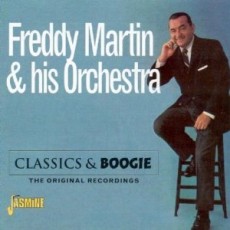
Freddy Martin was born Frederick Alfred Martin on December 9, 1906 in Cleveland, Ohio. Raised largely in an orphanage and with various relatives, he started out playing drums, then switched to C-melody saxophone and later the tenor saxophone that he would come to be identified with. He led his own band in high school, played in several local bands and took that money to enroll in Ohio State University.
After working on a ship’s band, Martin joined the Mason-Dixon band, then joined Arnold Johnson and then Jack Albin, with whom he would make his first recording with the “Hotel Pennsylvania Music” for Columbia’s Harmony, Velvet Tone, and Clarion 50 cent labels in 1930. However it was while filling in for Guy Lombardo one night that kick started his career. It was in 1931 at the Bossert Marine Room in Brooklyn, New York that Freddy pioneered the “Tenor Band” style that swept the sweet-music industry. With his own tenor sax as melodic lead, Martin fronted an all-tenor sax section with just two brasses and a violin trio plus rhythm.
The Martin band recorded first for Columbia, Brunswick and RCA’s Bluebird and Victor, backed singers, played hotels and became a staple on NBC’s Maybelline Penthouse Serenade. His adaptation of a Tchaikovsky tune released as Tonight We Love became his biggest hit.
Freddy Martin was nicknamed “Mr. Silvertone” by saxophonist Johnny Hodges and Chu Berry has named him his favorite saxophonist. He used the banner “Music In The Martin Manner.” Having a good ear for singers at one time or another, Martin employed Helen Ward, Stuart Wade, Merv Griffin, Buddy Clark as well as pianists Sid Appleman and Terry Shand, violinist Eddie Stone and many others.
Martin’s popularity as a bandleader led him to Hollywood in the 1940s where he and his band appeared in a handful of films, in the 1950s and 1960s he continued to perform on the radio, appear on television, be the musical director for Elvis Presley’s first Vegas appearance, and continue his hotel gigs. He would continue to lead his band until the early 80s, although by then, he was semi-retired. Bandleader and tenor saxophonist Freddy Martin passed away on September 30, 1983, in a Newport Beach hospital after a lingering illness. He was 76 years old.

More Posts: bandleader,saxophone
Daily Dose Of Jazz…
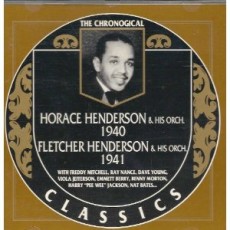
Horace W. Henderson, the younger brother of Fletcher Henderson, was born on November 22, 1904 in Cuthbert, Georgia. He attended Wilberforce University and played in the “Collegians” band that included Benny Carter and Rex Stewart. This band would later be known as the Horace Henderson Orchestra and then as the Dixie Stompers.
Henderson left the band to work with Sammy Stewart, then in 1928 organized a new band called the Collegians and in 1931 Don Redman took over this band. Henderson continued to work as the band’s pianist and arranger before leaving to work for his brother.
He arranged for many of the most important jazz musicians of the era, such as Charlie Barnet, the Casa Loma Orchestra, Tommy Dorsey, Benny Goodman, Earl Hines, Jimmie Lunceford and also for his brother. Although Horace worked continually, led bands, arranged, recorded, and composed into the 1980s without the popularity of his older sibling, he is considered by many the more talented and skillful of the Henderson brothers.
His best-known arrangements are of his own “Hot and Anxious” which later became “In The Mood”, “Christopher Columbus” and “Big John Special”. At different times in his career, Horace was pianist and musical director for both Lena Horne and Billie Holiday.
Jazz pianist, organist, arranger and bandleader Horace Henderson passed away on August 29, 1988 at the age of 83.

More Posts: piano
Daily Dose Of Jazz…
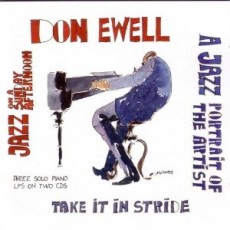
Don Ewell was born November 14, 1916 in Baltimore, Maryland. Playing stride piano, from 1956 to 1962, Ewell was a leading member of the Jack Teagarden band. Following Teagarden’s death Ewell did several European tours before moving back to New Orleans, playing clubs and hotels.
Ewell played with such musicians as Sidney Bechet, Kid Ory, George Lewis, George Brunis, Muggsy Spanier, Barbara Dane and Bunk Johnson among others.
He recorded a couple of albums as a leader for the Pumkin and Good Time Jazz labels and as a sideman with Willie “The Lion” Smith, Barbara Dane and Doc Evans. Pianist Don Ewell suffered two strokes before passing away on August 9, 1983.
More Posts: piano