

Daily Dose Of Jazz…
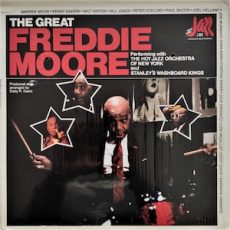
Freddie Moore was born on August 20, 1900, in Washington, North Carolina. Here’s some more information about Freddie Moore: He began playing drums in 1912 at the age of 12 and started his career in traveling shows, picking up much experience in variety shows and on vaudeville. He was with Charlie Creath in 1927 in St. Louis, Missouri and recorded with King Oliver from 1929-30, touring with him from 1931-32. He played in New York City with Wilbur Sweatman from 1928-31.
He went on to lead his own band with Peter Brown and Don Frye in Detroit, Michigan from 1933 to 1937. He feelanced for the next 20 years with Sidney Bechet, King Oliver, Art Hodes, Eubie Blake, John Kirby, Bob Wilber and Conrad Janis along with many others. The drummer was with Wilbur DeParis’ New New Orleans Jazz Band from 1952-54 and played in Europe with Mezz Mezzrow from 1954-55. He had associations with Sammy Price, Tony Parenti and even Roy Eldridge in 1971.
In the 1980s and the early 1990s he stayed active, playing with various bands in the New York area and often doubled on washboard. He was a colorful performer, often mugging and adding showbiz effects to the music. Moore, who appeared on a Rahsaan Roland Kirk record playing Sweet Georgia Brown, led his only record date for the New York Jazz label in 1981.
Drummer and singer Freddie Moore, whose long career finally came to an end after seven decades of playing with so many notable musicians, died on November 3, 1992 in New York.
Daily Dose Of Jazz…
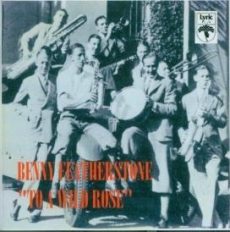
Benny Featherstone was born on July 30, 1912 in Brown’s Creek, Tasmania, Australia. His family moved to Melbourne, Australia around the time he was six where he attended Melbourne Grammar and played trombone with the school orchestra and its Footwarmers band between 1926 and 1927. He went on to play drums with Joe Watson and His Green Mill/Wentworth Hotel Orchestra for three years when he was 17. During those years he recorded with the Beachcombers.
Between 1931 and 1933 he worked with bands led by Maurice Guttridge, Les Raphael, Em Pettifer, Geoff Smith and the 3DB Radio Studio Band. Mid 1933 he went to Englandwhere he heard and met Louis Armstrong and Duke Ellington and had a short residency at the Silver Slipper Club. Returning home he joined Art Chapman’s New Embassy Band and led a group at Rex Cabaret. He joined Art Chapman’s New Embassy Band and led a group at Rex Cabaret.
In Sydney, Australia he led the Benny Featherstone Famous Band for a year residency at the Manhattan Club/Cabaret.that only lasted eight weeks when the club went bankrupt. He led the Commodore Cabaret Band, was a member of Art Chapman’s Orchestra at Wattle Palais, then reformed his band in 1935. Two years later he worked with popular dance, swing and show bands. He contributed to the legendary Fawker Park Kiosk Jam Sessions on weekends.
He led his own swing quartet, sextet, Six Stars of Swing, and the Dixielanders. Joining the merchant navy late in 1943 he played in American Servicemen’s clubs in Queensland and in Oakland, California. He disappeared from music in 1945 became a shipping clerk from 1958 to 1975 but played the occasional jam session.
Trumpeter Benny Featherstone became reclusive in his later years and died in Melbourne on April 6, 1977.

Daily Dose Of Jazz…
Clarence Holiday was born Clarence Halliday on July 23, 1898 in Baltimore, Maryland and attended a boys’ school with the banjo player Elmer Snowden. Both of them played banjo with various local jazz bands, including the Eubie Blake band. At the age of 16, he became the unmarried father of Billie Holiday, who was born to 19-year-old Sarah Fagan, but rarely visited them. He moved to Philadelphia, Pennsylvania when he was 21 years old.
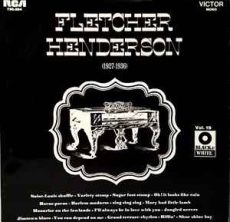
Holiday played rhythm guitar and banjo as a member of the Fletcher Henderson Orchestra from 1928 to 1933. He went on to record the following year with Benny Carter, then Bob Howard in 1935 and worked with Charlie Turner, Louis Metcalf, and the Don Redman Big Band between 193 and 1937.
Exposed to mustard gas while serving in World War I, he later fell ill with a lung disorder while on tour in Texas. Refused treatment at a local hospital when he finally managed to see a doctor, Clarence was only allowed in the Jim Crow ward of the Veterans Hospital. By then pneumonia had set in and without antibiotics, the illness was fatal.
Guitarist and banjoist Clarence Holiday died in Dallas, Texas on March 1, 1937.
Daily Dose Of Jazz…
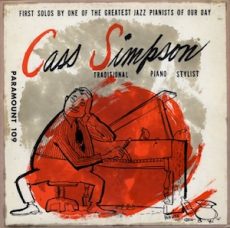
Wendell “Cassino” Simpson was born on July 22, 1909. He may have studied piano under Zinky Cohn. His first recording was in 1923 with Bernie Young, then recorded with the Moulin Rouge Orchestra in 1925. Following this he joined Arthur Sims’s orchestra, recording with them in 1926. With Sims dying soon after Bernie Young took over as bandleader and Simpson remained in the ensemble until 1930.
He simultaneously recorded with Jabbo Smith’s Rhythm Aces on his 1929 Brunswick Records releases. From 1931 to 1933 he played with Erskine Tate, though he never recorded with him. Cass recorded as a leader under various names, with Jabbo Smith and Milt Hinton as sidemen. In 1933 he cut a few sides with Half Pint Jaxon, a female impersonator.
Soon after his recordings with Jaxon, Simpson apparently became mentally disturbed, and was institutionalized in 1935 in Elgin, Illinois. While there, he continued to play piano and vibraphone in a hospital dance band, and played bass drum in the hospital’s marching band.
He recorded solo piano numbers on the grounds of the hospital in the middle of the 1940s. Pianist Cass Simpson, who was best known for his associations on the Chicago, Illinois jazz scene and was never released from the hospital, died on March 27, 1952.
More Posts: bandleader,history,instrumental,jazz,music,piano
Daily Dose Of Jazz…
Adrian Francis Rollini was born June 28, 1903 in New York City, New York of French and Swiss extraction. Growing up in Larchmont, New York, he showed musical ability early on and began to take piano lessons at the age of two. Considered a child prodigy, he played a fifteen-minute recital at the Waldorf Astoria Hotel at the age of four. By age 14 he was leading his group composed of neighborhood boys, in which he doubled on piano and xylophone.
Leaving high school in his third year he cut piano rolls for the Aeolian company on their Mel-O-Dee label and the Republic brand in Philadelphia, Pennsyolvania. At 16 he joined Arthur Hand’s California Ramblers and being equally skilled at piano, drums, xylophone, and bass saxophone, gained him Hand’s respect. Hand transferred the band to Rollini when he retired from the music field.
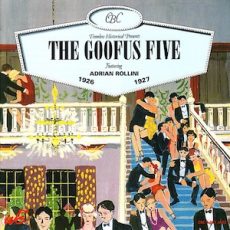
During the 1920s not only was he a member of the California Ramblers with Red Nichols, Jimmy and Tommy Dorsey, he also held membership in The Little Ramblers, The Goofus Five, and The Golden Gate Orchestra. During this time, he managed to lay down hundreds of sessions with Annette Hanshaw, Cliff Edwards, Joe Venuti, Miff Mole, Red Nichols, Bix Beiderbecke, Roger Wolfe Kahn, and Frank Trumbauer.
The 1930s saw him forming the Adrian Rollini Orchestra which recorded on Perfect, Vocalion, Melotone, Banner, and Romeo labels, where he played both bass saxophone and vibraphone. During the early swing era, starting in 1935, he managed Adrian’s Tap Room, owned the Whitby Grill, and opened White Way Musical Products, a store for the sale and repair of musical instruments.
Gradually shifting from the bass saxophone to the vibraphone after popularity of the hot jazz era of the 1920s waned. He went on to play hotels, arranging and writing songs behind the scenes. After an exhaustive career, he made his last recording with his trio in the early 1950s. He relocated to Florida, opened the Eden Roc Hotel in 1955, ran the Driftwood Inn at Tavernier Key and his Driftwood offered deep-sea fishing charters.
Bass saxophonist, pianist, and vibraphonist Adrian Rollini, died under unsolved circumstances on May 15, 1956 at the age of 52 in Homestead, Florida.

More Posts: bandleader,history,instrumental,jazz,music,piano,saxophone,vibraphone