

Daily Dose Of Jazz…
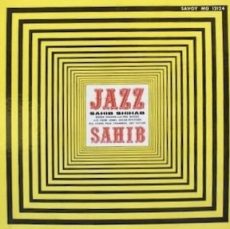
Sahib Shihab was born Edmund Gregory on June 23, 1925 in Savannah, Georgia. Schooled in New York from age 3, he first played alto saxophone professionally for Luther Henderson at 13. He studied at the Boston Conservatory, and played in and around New York with Art Blakey, Gigi Gryce, Benny Golson, Thelonious Monk, Oscar Pettiford, Dizzy Gillespie. He toured with the bands of Fletcher Henderson, Buddy Johnson, Roy Eldridge, Andy Kirk, Duke Ellington, Count Basie and the original 17 Messengers of Blakey.
During the late 1940s, Shihab played with Thelonious Monk, and on July 23, 1951 he recorded with Monk that was later issued on the album Genius of Modern Music: Volume 2. During the decade he recorded with Art Blakey, Kenny Dorham and Benny Golson. The invitation to play with Dizzy Gillespie’s big band saw his switch to baritone saxophone.
Between 1952 to 1955 he toured with Illinois Jacquet in Europe, as well as with Coleman Hawkins and Sarah Vaughn and toured with Dakota Stanton from 1956 to 1958. He was one of the musicians who showed up for the Art Kane photograph A Great Day In Harlem. Closing out the Fifteies he toured Europe with Quincy Jones, and subsequently settled in Scandinavia in 1960, married and raising a family. Shihab, disillusioned with racial politics in the United States, decided around this time to move to Europe.
As an educator he worked for Copenhagen Polytechnic and wrote scores for television, cinema and theatre. He composed and arranged for Swedish and Danish radio orchestras. He went on to perform with bassist Niels-Henning Ørsted Pedersen and together with pianist Kenny Drew, he ran a publishing firm and record company. Through the Sixties he joined the Kenny Clarke/Francy Boland Big Band and remained a member of the band during its 12 years existence.
Returning to the United States in 1973 he toured with Quincy Jones and The Brothers Johnson. He returned to Copenhagen, Denmark three years later, where he produced albums for Metronome Records, along with Kenny Drew. The album is titled Brief Encounter, and features the voices of Debby Cameron and Richard Boone. At decade’s end he started a record company with Kenny Drew called Matrix and spent his remaining years between New York and Copenhagen, performed in partnership with Art Farmer and led his own jazz combo called Dues.
Hard bop baritone, alto, and soprano saxophonist and flautist, composer, arranger, producer and educator Sahib Shihab, who beginning of 1986 was a visiting artist at Rutgers University, died from cancer on October 24, 1989, in Nashville, Tennessee at age 64.

More Posts: arranger,bandleader,composer,educator,flute,history,instrumental,jazz,music,producer,saxophone
Daily Dose Of Jazz…
Joseph Christopher Columbus Morris was born on June 17, 1902 in Greeenville, North Carolina. He led his own band from the 1930s into the late 1940s, holding a residency at the Savoy Ballroom for a period. During the mid 1940s he began drumming behind Louis Jordan, remaining with him until 1952. In the mid-to-late 1950s, Columbo backed Wild Bill Davis’s organ combo, and he recorded with Duke Ellington in 1967.
He worked again as a leader in the 1970s, in addition to doing tours of Europe with Davis. While in France he played with Floyd Smith, Al Grey, Eddie “Cleanhead” Vinson, Buddy Tate, and Milt Buckner. He got his first professional gig playing with Fletcher Henderson in 1921. Between the 1920s and the 1960s, Columbo played at most of the city’s nightclubs, and led the Club Harlem Orchestra for 34 years until 1978, when the club shut its doors.
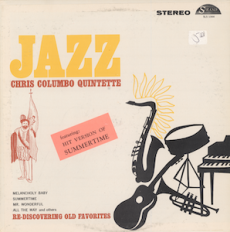
Columbo worked, recorded, and toured with prominent jazz artists including Dizzy Gillespie, Louis Armstrong and Ella Fitzgerald. He did an album on the Strand label called Jazz: Re-Discovering Old Favorites by the Chris Columbo Quintette featuring organist Johnny “Hammond” Smith. He appeared in the 1945 film It Happened In Harlem, based on the Harlem nightclub Smalls Paradise and the 1947 film Look Out Sister.
Prior to suffering a stroke in 1993 which partially paralyzed, Columbo was the oldest working musician in Atlantic City. Chris’ band went on to perform at practically every Atlantic City casino hotel. At the time of his stroke, he was playing regularly at the Showboat.
Drummer Chris Columbo, who was a father figure to Sonny Payne, who was also known as Crazy Chris Columbo and sometimes credited as Joe Morris on record, died on August 20, 2002 in New Jersey. He was 100 years old.
More Posts: bandleader,drums,history,instrumental,jazz,music
Daily Dose Of Jazz…
Alfred Viola was born on June 16, 1919 in Brooklyn, New York and grew up in an Italian family. He learned to play the guitar and mandolin as a teenager. Enlisting in the Army during World War II and played in an Army jazz band from 1942 to 1945.
He started a trio with pianist Page Cavanaugh and bassist Lloyd Pratt. The band appeared in several films, including Romance on the High Seas with Doris Day, and played a few dates in 1946 and 1947 with Frank Sinatra. Viola continued to work with Sinatra regularly, accompanying him on several hundred studio recordings and concert dates between 1956 and 1980.
Viola was a session musician in Los Angeles, California performing in films and television. His mandolin playing can be heard on the soundtrack of The Godfather. Other credits include West Side Story and Who’s Afraid of Virginia Woolf? He continued playing jazz as well, with Bobby Troup, Ray Anthony, Harry James, Buddy Collette, Stan Kenton, Gerald Wilson and Terry Gibbs.
He worked as a session musician on over 500 albums, including releases by Natalie Cole, Neil Diamond, Marvin Gaye, Julie London, Steve Lawrence, Linda Ronstadt, Jimmy Witherspoon, Helen Humes, June Christy, Ella Fitzgerald, Anita O’Day, Nelson Riddle, and Joe Williams.
Viola and Cavanaugh reunited in the 1980s with Phil Mallory and continued to play regularly in Los Angeles until the late 1990s.
Guitarist Al Viola, recorded ten albums as a leader, died of cancer on February 21, 2007 at the age of 87 in Los Angeles.
More Posts: bandleader,guitar,history,instrumental,music
Daily Dose Of Jazz…
Philip L. Bodner was born in Waterbury, Connecticut on June 13, 1917 and worked as a studio musician in the 1940s and 1950s in New York City. He recorded with Benny Goodman and with Miles Davis and Gil Evans in 1958. The 1960s saw him playing with Oliver Nelson and J.J. Johnson.
During the Sixties he organized The Brass Ring, a group modeled after Herb Alpert and the Tijuana Brass. The group released nine albums between 1966 and 1972 and associations in the 1970s included Oscar Peterson, Yusef Lateef, Peanuts Hucko, Wild Bill Davison, and Ralph Sutton.
Bodner played the signature piccolo part on Van McCoy’s disco hit song The Hustle. During that period he also played with Ralph Sutton and Johnny Varro, worked with Mingus Epitaph, and arranged Louie Bellson’s tribute to Duke Ellington’s Black, Brown and Beige.
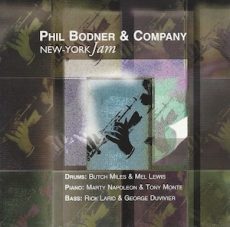
He worked in a swing style with Marty Napoleon, Mel Lewis, and George Duvivier in the 1980s and played with Maxine Sullivan and Barbara Carroll. Over the course of his career he recorded five albums as a leader, and eleven as a sideman with Coleman Hawkins, Cootie Williams, Miles Davis, Joe Wilder, Paul Desmond, Wes Montgomery, Cal Tjader, Mel Davis, George Benson, Freddie Hubbard, and Joey DeFrancesco.
Clarinetist and studio musician Phil Bodner, who also played flute, oboe, saxophone, and English horn, died in New York City on February 24, 2008, at age 90.
Daily Dose Of Jazz…
Aaron J. Johnson was born in Washington, D.C. on June 10, 1958. He studied piano and drums before taking up the trombone at age 12. While in high school he frequently performed with area funk bands but also conducted and arranged for student ensembles under the direction of noted trumpeter Peter D. Ford. It was Ford who gave him his first professional gigs and introduced him to Ellington alumni, bandleader and alto saxophonist Rick Henderson.
Although pursuing degrees in electrical engineering, Johnson remained active as a trombonist and bass trombonist throughout his college years. He had the good fortune to play with the University of Pittsburgh Jazz Ensemble under the direction of Kenny Clarke and Nathan Davis. Following college Aaron continued gigging around D.C. and the New York area, studying privately with reed multi-instrumentalist Makanda Ken McIntyre.
By the early 1990s Johnson established himself as an experienced and valuable sideman, composer and arranger. He has since recorded and performed with a multitude of major artists and ensembles to include Reggie Workman, Jimmy Heath, Charles Tolliver, Oliver Lake, Muhal Richard Abrams, Bill Lee, Frank Lacy, The Mingus Big Band, the Count Basie Orchestra, Steve Turre’s Sanctified Shells, the Lincoln Center Jazz Orchestra and the Smithsonian Jazz Masterworks Orchestra.
He has received the New Jersey State Council Fellowship in Music Composition (2000) Aaron Johnson has composed and arranged works performed or recorded by Frank Foster, Steve Turre, Frank Lacy, the Nancie Banks Orchestra, and Paradigm Shift. He has been featured in film scores, television commercials and public radio broadcasts.
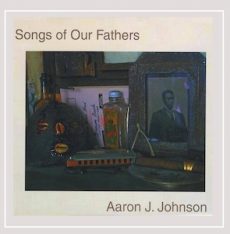
Trombonist Aaron Johnson is currently in Columbia University’s Musicology doctorate program and has released his debut album Songs Of Our Fathers and continues to perform.
More Posts: bandleader,history,instrumental,jazz,music,trombone