

Daily Dose Of Jazz…
Lennie Hayton was born Leonard George Hayton on February 14, 1908 in New York City into a Jewish family. He developed a penchant for the piano when he was six years old, showing unusual interest in the early classics from the rolls of the family player piano. His parents disliked jazz, so it wasn’t until he was sixteen that he really discovered it. He left high school to become pianist with the Broadway Hotel Orchestra of Cass Hagen, a boyhood friend.
While playing at the Park Central, Hayton was heard by Paul Whiteman and immediately engaged by him in 1928 as second pianist, playing piano and celeste as well as acting as a part-time arranger. Whilst with the orchestra, he played with Frankie Trumbauer, Bix Beiderbecke, Red Nichols, Joe Venuti and became friendly with Bing Crosby, then a member of The Rhythm Boys. However, by 1930 due to the impact of radio on audiences, Whiteman released ten members of the band. Hayton then joined the Charles Previn Orchestra.
Rejoining Crosby he embarked on a cross-country tour, landing in Hollywood. 1932 saw Hayton leading an orchestra for his first recordings of Cabin in the Cotton, Love Me Tonight, Brother, Can You Spare a Dime? and Some of These Days all became Bing hits. The following year , Hayton became the musical director for the Chesterfield radio series Music That Satisfies which again featured Crosby and ran for 13 weeks.
His involvement with Crosby continued as musical director for the singer’s 1933 film Going Hollywood at Metro-Goldwyn-Mayer. This led to a major career for Hayton who continued to work with Crosby and became a musical director for MGM and guided it through its prime years as foremost producer of movie musicals. Up until his retirement from the post in 1953, Lennie racked up four Oscar nominations: The Harvey Girls, The Pirate, Singin’ in the Rain and Star! He won the Academy Award for music for On the Town and Hello, Dolly!.
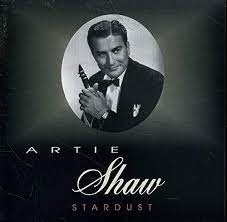
He arranged for Frank Sinatra, composed Apple Blossoms with Joe Venuti, Frankie Trumbauer, and Eddie Lang, and his other compositions included Flying Fingers, The Stage is Set, Mood Hollywood with Jimmy Dorsey, and Midnight Mood. Hayton also co-arranged the Hoagy Carmichael composition Stardust with Artie Shaw for Bluebird Records.
His first marriage to Helen Maude Gifford ended in her death in 1943. Three years later he married Lena Horne whom he met on the MGM lot. Throughout the marriage, Hayton also acted as Horne’s music director. Facing the stresses and pressures of an interracial relationship, they had a tumultuous marriage, first based upon her desire to advance her career and cross the color-line in show business, but she had learned to love him very much.
Pianist, composer, conductor and arranger Lennie Hayton, whose trademark was a captain’s hat worn at a rakish angle, died of a heart attack while separated from Horne, in Palm Springs, California on April 24, 1971.
More Posts: arranger,composer,conductor,history,instrumental,jazz,music,piano
Daily Dose Of Jazz…
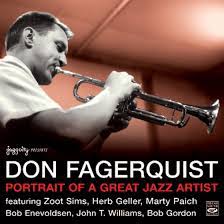
Donald Alton Fagerquist, born February 6, 1927 in Worcester, Massachusetts and studied trumpet privately under Ms. Marion Twiss at Roosevelt Elementary and lessons at Carl Seder’s Music as well as classes at North High School. He began playing around his hometown in 1940 with Paul rhode, Paul Gervais, Bud Boyce and the Ambassadors/Crusaders. By 1942 he had played a year each with the Dol Brissette Orchestra and the Bob Pooley Band.
At 16 Fagerquist was making a name for himself through the decade as a featured soloist with several major bands, including Mal Hallett, Gene Krupa, Artie Shaw, and Artie Shaw’s Gramercy Five. In the Fifties he was performing with Woody Herman, Les Brown, and the Dave Pell Octet. He played on the Ella Fitzgerald Sings the Jerome Kern Songbook album in 1963 under the baton of Nelson Riddle.
Despite high demand for his services as a lyrical soloist, Donald only recorded twice as a leader, a half-date for Capitol Records in 1955 that was reissued as part of the Dave Pell Octet compact disc, I Had the Craziest Dream, and a complete project for Mode in 1957 titled Music to Fill a Void. During the 1950s he recorded more than two dozen albums with Chet Baker, Louis Bellson, Hoagy Carmichael, Bob Cooper, Fred Katz, Shorty Rogers, Stan Kenton, Mel Tormé, Benny Goodman, Skip Martin and Pete Rugolo.
In 1956, Fagerquist signed on as a staff musician for Paramount Films, while still periodically recording with artists such as Shelly Manne, Mel Tormé, and Art Pepper. Throughout the early to mid-1960s, his solos could be heard on the recordings of Pete Rugolo, Frank Comstock, Nelson Riddle, Billy May, Paul Weston, Si Zentner, Dean Martin, Junior Mance, and many others.
However, by 1966 health issues forced him to withdraw from studio recordin. Trumpeter Don Fagerquist, who was a small group, big band, and studio session player, died from kidney disease at his home in Canoga Park, Los Angeles, California at the age of 46 on January 23, 1974.
More Posts: bandleader,history,instrumental,jazz,music,trumpet

Daily Dose Of Jazz…
Gene Schroeder was born on February 5, 1915 in Madison, Wisconsin to a pianist mother and a father who was a trumpeter. He studied at the Wisconsin School of Music, and when he was 11 he was playing now and then with his father’s band, and doubling on clarinet in his high school orchestra a few years later.
After a year at the University of Wisconsin Music School, Schroeder moved to Milwaukee, Wisconsin. He led his own band and played with local musicians including Wild Bill Davison. His next move was to New York City in 1939 and was briefly with the Wes Westerfield Trio, then headed a combo. Gene went on to spend a year apiece as a member of the groups of Joe Marsala and Marty Marsala.
By the summer of 1942, Schroeder was working again with Wild Bill Davison then beginning in 1943 at Nick’s with Miff Mole. After becoming Eddie Condon’s regular pianist, he played at the opening of the club Condon’s in 12 1945. He was with Condon most of the time from then on up to 1962 appearing on many recordings. During his long association with Condon’s Chicago jazz bands his talent was continually overshadowed, most likely due to his being a subtle player.
He had a three year stint with the Dukes of Dixieland from 1961 to 1964 and then worked in the late ’60s with Tony Parenti. Despite his busy activity, he only led one recording session in his career, four songs cut in 1944 for the Black & White label with a trio.
Pianist Gene Schroeder died at the age of 60 on February 16, 1975 in his hometown of Madison.
More Posts: bandleader,history,instrumental,jazz,music,piano
Daily Dose Of Jazz…
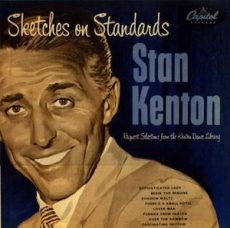
Reuben McFall was born on February 1, 1931 in Los Angeles, California to a musician father and grew up in the Belvedere neighborhood of East Los Angeles, long established as a Mexican-American enclave.
McFall attended Westlake College of Music in Hollywood, California, one of the first institutions in the county to offer a diploma in jazz. The school was founded in 1945 and ran until 1961.
As a sideman he performed with Freddie Slack, Vido Musso, Floyd Ray, Glen Henry, Lalo Guerrero. From 1946 to 1955 he recorded albums with Roy Porter and His Orchestra, Gerry Mulligan, Stan Kenton, Woody Herman, Shorty Rogers, Gerald Wilson and Teddi King.
Trumpeter, composer and jazz arranger Reuben McFall, who was also known as Ruben and Rubin and Ruban, is 93 years old.
More Posts: history,instrumental,jazz,music,trumpet
Daily Dose Of Jazz…
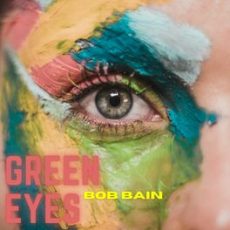
Bob Bain was born January 26, 1924 in Chicago, Illinois and began his professional career in the 1940s playing guitar in popular big band outfits led by Tommy Dorsey and Bob Crosby. He is credited with guitar on one of Dorsey’s biggest hits, Opus No. 1.
An unusually early adopter of the electric guitar, Bob started playing an early Gibson Les Paul model before switching to a modified 1953 Fender Telecaster. Like most jazz guitarists, he also favoured semi-acoustic models such as the Gibson L-5 and ES-150.
A long time collaborator with composer Henry Mancini, he is also credited with the guitar introduction to the theme from the popular 1950s television private detective series Peter Gunn. Bain contributed his guitar talents on another of Mancini’s significant soundtrack albums, the musical score to the movie Breakfast at Tiffany’s, as well as playing on the soundtrack to the television Western series Bonanza.
Guitarist Bob Bain, who was mainly known for his film music contributions, including Dr. Zhivago, where he played the balalaika in the score for certain scenes where Lara’s Theme is heard, died on June 21, 2018 in Oxnard, California. He was 94.

More Posts: guitar,history,instrumental,jazz,music