

Daily Dose Of Jazz…
Eldon Payne was born in Morristown, Tennessee on April 25, 1957. He graduated cum laude from the University of Tennessee in Knoxville with a B.S. in Business Administration in 1979. Then he moved to Tampa, Florida in the spring of 1980.
Retiring from Delta Air Lines with twenty five years of service in 2008, Eldon performed during that period with the University of Tennessee Campus Band, Tampa Bay Buccaneer Band, Shades of Blue, Boulevard Jazz Orchestra, The Mostly Pops Orchestra, Helios Jazz Orchestra, Cigar City Big Band, Swing Sound Orchestra, Frankie D. New York Orchestra, Clearwater Community Jazz Band, Sun City Center Big Band, George Carroll Big Band, Gulf Bay Big Band, Ten O’clock Big Band, Frank Parsons Band, Ed Geimer Big Band, Encore IV Big Band, and The Sarasota Jazz Project.
Over the course of his career Payne has performed at several Florida clubs and festivals as well as backing the likes of Margo Rey, Denise Moore, Kathy Kosins, Michael Lynche, Bryan Hughes, Lorri Hafer, Chuck Wansley, Whitney James, Alexis Cole and the late Kevin Mahagony.
Trombonist Eldon Payne, who never recorded as a leader, continues to perform and record as a sideman and studio musician.
More Posts: history,instrumental,jazz,music,trombone
Daily Dose Of Jazz…
Peter Curtis was born on April 24, 1970. His formal education bestowed a Bachelor of Music from Berklee College of Music, a Masters of Music from Yale University, and a Doctor of Music in Classical Guitar Performance and Literature with minor fields in Ethnomusicology and Music History from Indiana University.
He has performed or recorded with Claudia Acuna, Lynn Arriale, Seamus Blake, Don Braden, James Carter, Freddy Cole, Barbra Morrison, Eldad Tarmu and Ron Westray of the Jazz at Lincoln Center Orchestra. Peter has played the top jazz clubs in Los Angeles, California, New York’s Carnegie Hall, and on Black Entertainment Television.
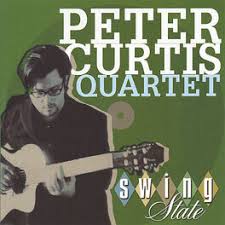
Having been to Europe, Curtis has been on club stages in Berlin, Brussels, Budapest, Florence, the Hague, Milan, Paris, Prague and Zurich. With his group, the Peter Curtis Quartet, he recently released his debut album Swing State. His classical chops have sent the guitarist recitals throughout the U.S. and Canada and was awarded the Andres Segovia memorial scholarship from the Banff Centre for the Arts.
Guitarist and composer Peter Curtis, a tenured professor of music at Riverside Community College in Riverside, California, continues to compose, perform and record.
More Posts: bandleader,guitar,history,instrumental,jazz,music

Daily Dose Of Jazz…
Frank Meester was born in Amsterdam, Netherlands on April 14, 1970 and studied philosophy and general literature at the University of Amsterdam and Erasmus University in Rotterdam, Netherlands. From 2010 to 2016 he was assistant lecturer in Philosophy and Professional Practice at The Hague University of Applied Sciences .
He went on to become the youngest of the writing duo Gebroeders Meester and wrote columns in Filosofie Magazine and de Volkskrant, among others. With Stine Jensen, they also wrote two books together about parenting and toured the country in 2018 and 2019 with the theater performance Het opvoedcircus.
Meester also plays in the Hot Club de Frank, founded in 1990 when he was just 20 years old. Two years later they expanded to a quartet and played in local cafes. In 1994 personnel changes took a turn at vocal swing and became a permanent salon band at the Amstel Hotel and the Amerstadam Bamboo Bar. They dropped their debut cd in 1996, De Heren van het Circus, to critical acclaim, and expanded once again to a quintet. Their sophomore release in 1999 hit success again being broadcast across the radio waves.
Another personnel transition has the band currently consisting of Meester, solo guitarist Harold Berghuis, violinist Jelle van Tongeren and saxophonist Wim Lammen. The band creates a new sound within gypsy jazz with different rhythms, other instruments and special arrangements. They have played festivals and European tours.
Double bassist Frank Meester, who has been published thirteen times, continues to perform with his sons Midas and Gilles in The Maestros.
More Posts: bandleader,bass,guitar,history,instrumental,jazz,music,vocal
Daily Dose Of Jazz…
Richard Hyman was born in New York City on March 8, 1927 and grew up in suburban Mount Vernon, New York. His older brother, Arthur, owned a jazz record collection and introduced him to the music of Bix Beiderbecke and Art Tatum. Trained classically by his uncle, concert pianist Anton Rovinsky, who taught him touch and a certain amount of repertoire while he pursued Chopin on his own.
Enlisting in the U.S. Army in 1945, Dick was transferred to the U.S. Navy band department. After leaving the Navy he attended Columbia University where he won a piano competition with the prize being 12 free lessons with swing-era pianist Teddy Wilson. It was during this period Hyman fell in love with jazz.
During the 1950s Relax Records released his first two solo piano versions of All the Things You Are and You Couldn’t Be Cuter. Hyman recorded two honky-tonk piano albums under the pseudonym Knuckles O’Toole and recorded more as Willie the Rock Knox and Slugger Ryan.
In the 1950s and early 1960s Dick worked as a studio musician and performed with Tony Bennett, Perry Como, Guy Mitchell, LaVern Baker, Ruth Brown, Mitch Miller and many more. He played with Charlie Parker for Parker’s only film appearance and had a stint as music director for Arthur Godfrey’s television show from 1959 to 1961.
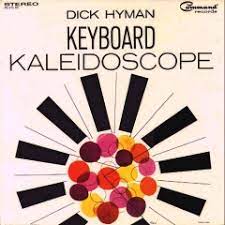
As a composer, arranger, conductor, and pianist he worked on eleven Woody Allen films as well as other films like Moonstruck and Scott Joplin. Hyman composed and performed scores for ballet and dance companies. In the 1960s, Hyman recorded several pop albums on Enoch Light’s Command Records using the Lowrey organ and then the Moog synthesizer.
Between 1970 and 2014 he recorded 112 albums as a leader, sixty-two as a sideman, and arranged four albums for Count Basie, Trigger Alpert and Flip Phillips. He has been a guest performer at jazz festivals and concert venues around the world. In 1995 pianist and composer Dick Hyman moved his wife Julia permanently to Venice, Florida.

More Posts: arranger,bandleader,composer,history,instrumental,jazz,music,piano

Daily Dose Of Jazz..
Benny de Weille was born on March 6, 1915 in Lübeck, Germany. He studied clarinet under Hans Helmke and was heavily influenced by Benny Goodman, whom he often emulated in his own ensembles.
Benny made recordings with Teddy Stauffer, Hans Rehmstedt, and Willy Berking in the 1930s and 1940s. In 1940 he led his own Bar Trio. Following World War II he worked at Radio Frankfurt and conducted the Nordwestdeutscher Rundfunk Orchestra.
Clarinetist and bandleader Benny de Weille, whose last recordings were in a Dixieland style in 1951, died on December 17, 1977 in Westerland, Germany.
More Posts: bandleader,clarinet,history,instrumental,jazz,music