

Daily Dose Of Jazz…
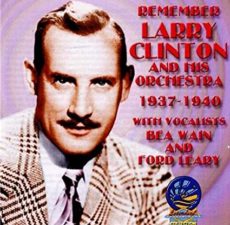
Ford Leary was born on September 5, 1908 in Lockport, New York. He married early, had a son, and left both wife and child for a music career. During the thirties he performed as part of the Frank Trumbaur band and with the Bunny Berigan band, the latter being one of his better positions while scuffling to make ends meet freelancing in New York City.
Ford would go on to work with Larry Clinton in the late Thirties and in the early 1940s with Charlie Barnet, Mike Riley, and Muggsy Spanier. As he was readying to begin a new career path as a replacement performer in the Broadway show Follow The Girls, he suffered a back injury from which he never fully recovered.
His short career ended in the late ‘40s when trombonist and vocalist Ford Leary, the only trombonist of note to die institutionalized at Bellevue Hospital, passed away on June 4, 1949 at age 40.


Daily Dose Of Jazz…
Jan Savitt was born Jacob Savetnick on September 4, 1907 in Shumsk, U.S.S.R. (now Ukraine) and reared in Philadelphia, Pennsylvania. He exhibited musical ability at an early age and began winning conservatory scholarships in the study of the violin. He was offered the position of concertmaster in Leopold Stokowski’s Philadelphia Symphony Orchestra, but turned it down, preferring to continue his studies at Curtis Institute. A year later, believing himself ready, he joined Stokowski and the association continued for seven years, during which time Savitt gained further laurels as a concert soloist and leader of a string quartet.
In 1938, Jan Savitt & His Top Hatters broadcast from 5–5:30 pm every Tuesday, thru Friday as the KYW staff orchestra at KYW/NBC in Philadelphia. Saturday’s weekly broadcast was one hour, coast-to-coast. The group also played at the Earl Theatre and performed with The Andrews Sisters and The Three Stooges.
He got his start in popular music sometime later as music director of KYW, Philadelphia, where he evolved the unique “shuffle rhythm” which remained his trademark. Numerous sustaining programs created such a demand for the “shuffle rhythm” that Savitt left KYW to form his own dance crew.
His band was notable for including George “Bon Bon” Tunnell,[3] one of the first Black singers to perform with a white band. Tunnell’s recording with Jan included Vol Vistu Gaily Star, co-composed by Slim Gaillard, and Rose of the Rio Grande. Helen Englert Blaum, known at the time as Helen Warren, also sang with him during the war years.
In the 1940s Savitt recorded short pieces used a filler before network shows for the National Broadcasting System’s Thesaurus series. Some of the pieces he created were I’m Afraid the Masquerade Is Over; If I Didn’t Care; Ring Dem Bells; and Romance Runs in the Family.
Violinist, bandleader and arranger Jan Savitt, known as “The Stokowski of Swing” from having played violin in Leopold Stokowski’s orchestra, passed away on October 4, 1948.
More Posts: arranger,bandleader,history,instrumental,jazz,music,violin
Daily Dose Of Jazz…
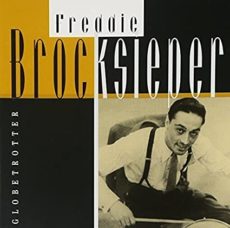
Fritz “Freddie” Brocksieper was born in Istanbul, Turkey on August 24, 1912, the son of a Greek-speaking Jewish woman and a German engineer, who was able to get through National-Socialism as an essential swing musician. His playing style on the drums was influenced above all by Gene Krupa and by 1930, he was playing professionally in Germany working in Nuremberg and Berlin throughout the decade. During World War II he played with the Golden Seven, Benny De Weille, Willy Berking, and the radio orchestra of Lutz Templin.
He recorded with his own ensembles, both large and small, in the later 1940s, and performed for American GIs in Stuttgart, Munich, and Berlin. An essential swing musician, Freddie was considered a leading figure of early European big-band jazz. With his bands, he made it to the front page of Stars and Stripes. Beginning in 1957 Bavarian radio regularly broadcast live concerts from his studio in Munich.
He continued performing in the 1960s and 1970s and was awarded a Deutscher Schallplattenpreis in 1980. From 1964 he played mainly in trios, and often with American soloists in Europe. Drummer Freddie Brocksieper passed away on January 17, 1990.

More Posts: bandleader,drums,history,instrumental,jazz,music
Daily Dose Of Jazz…
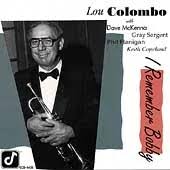
Lou Colombo was born in Brockton, Massachusetts on August 22, 1927 and started playing the trumpet when he was twelve. At seventeen he turned his attention to professional baseball and was signed with the Brooklyn Dodgers for seven years until a knee injury ended his career at 24.
Turning his attention to music Lou dove in full-time, mostly as an ensemble player and studio musician, playing and recording in the big bands of Dizzy Gillespie, Artie Shaw, Benny Goodman, Buddy Morrow, and Pérez Prado. He also worked sessions with Meredith D’Ambrosio on the 1989 recording South to a Warmer Place, George Masso on That Old Gang of Mine, 1996) and Jerry Jerome’s Something Borrowed, Something Blue.
Under his own name, Colombo recorded some albums one, including 1,990 at Concord Records, a tribute album for Bobby Hackett, one with Dave McKenna and Keith Copeland. Active on the Cape Cod jazz scene for five decades, trumpeter Lou Colombo passed away due to a traffic accident on March 3, 2012 at the age of 84.
More Posts: bandleader,cornet,flugelhorn,history,instrumental,jazz,music,trumpet
Daily Dose Of Jazz…
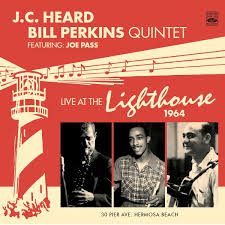
James Charles Heard, known as J. C. Heard was born on August 10, 1917 in Dayton, Ohio and grew up in Detroit, Michigan. As a young child, he performed as a tap dancer in amateur contests and vaudeville shows. He began to switch his focus to drumming around age 11 and started out teaching himself to play, then took lessons as a student at Cass Technical High School. Supporting his interest, his parents brought him to see major performers who toured to Detroit’s famous music venues, however, it was Chick Webb play in 1937 as a formative experience.
Becoming a protege of the drummer Jo Jones, through him he met and sat in with Count Basie. With Jones’s help, Heard got his first professional job with Teddy Wilson’s band in 1939. They played the Golden Gate Ballroom in Harlem and the Roseland Ballroom and recorded for Columbia Records. After the Wilson band’s breakup, he went on to perform in bands led by Benny Carter, Louis Jordan, Louis Armstrong, Benny Goodman, Duke Ellington, Woody Herman, and Dizzy Gillespie. He also performed at major jazz festivals and played alongside Roy Eldridge and Charlier Parker.
Heard’s style was a hybrid of swing and bop and was known for his innovative techniques and the hard swing he would bring to both large and small bands. He recorded with Charles Mingus, Ray Brown, Billie Holiday, Ray Charles, Nat King Cole, Dinah Washington, Lena Horne, and Sarah Vaughan. He also led his own bands, including a quintet that played at Cafe Society and a trio with Erroll Garner and Oscar Pettiford. Performing as a featured member of Cab Calloway’s band from 1942-1945, he appeared in several Hollywood films, including Stormy Weather.
During the Fifties Heard toured with Norman Granz’s Jazz at the Philharmonic in the 1950s and after a successful engagement in Japan in 1953, stayed for many years performing and teaching. Returning to New York in 1957, J.C. played with the Coleman Hawkins-Roy Eldridge Quintet and with Teddy Wilson’s trio. In 1966 he moved back to Detroit where he was influential as a bandleader and a mentor to younger musicians. In 1983, he again recorded an album as a leader, accompanied by saxophonist George Benson, pianist Claude Black, and Dave Young on bass. In 1981, Heard started a 13 piece big band which played around the state and at festivals, often featuring Dizzy Gillespie and other colleagues. This group recorded in 1986 and continued performing regularly until his death.
Drummer J. C. Heard passed away from a heart attack on September 27, 1988 at the age of 71 in Royal Oak, Michigan. His legacy is honored with a yearly jazz drumming competition held as part of the Detroit Jazz Festival.
More Posts: bandleader,drums,history,instrumental,jazz,music