

Daily Dose Of Jazz…
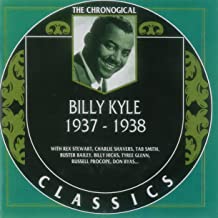
William Osborne Kyle was born on July 14, 1914 in Philadelphia, Pennsylvania and began playing the piano in school. By the early 1930s, he was working with Lucky Millinder, Tiny Bradshaw, and later the Mills Blue Rhythm Band. In 1938, he joined John Kirby’s sextet but was drafted in 1942. After the war, he worked with Kirby’s band briefly and also worked with Sy Oliver. He then spent thirteen years as a member of Louis Armstrong’s All-Stars, performing in the 1956 musical High Society.
A fluent pianist with a light touch, Kyle never achieved much fame, but he always worked steadily. He had a few opportunities to record as a leader, seventeen songs in all, just some octet and septet sides in 1937, two songs with a quartet in 1939, and outings in 1946 with a trio and an octet.
He is credited as the co-author of the song Billy’s Bounce recorded by the Modern Jazz Quartet in 1992 with Bobby McFerrin on the album MJQ and Friends. He didn’t record during his Armstrong years, however, he recorded with Al Hibbler and Buck Clayton.
Pianist Billy Kyle, best known as an accompanist, passed away on February 23, 1966 in Youngstown, Ohio.

More Posts: bandleader,composer,history,instrumental,jazz,music,piano
Daily Dose Of Jazz…
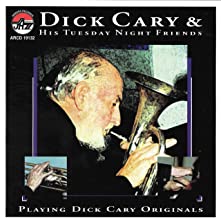
Dick Cary was born in Hartford, Connecticut on July 10, 1916 and earned a bachelor’s degree in music from Wesleyan University in 1938. He began performing in Connecticut and New York and landed a two-year full-time solo gig at Nick’s in Greenwich Village in New York City in 1941. The early 1940s saw him playing with Joe Marsala, the Casa Loma Orchestra, Brad Gowans, and as a staff arranger for Benny Goodman.
During a stint in the Army in 1944-46 while stationed on Long Island, Cary managed to continue recording with Muggsy Spanier and Wild Bill Davison among others. After his discharge, he worked with Billy Butterfield, then the pianist in the initial formation of Louis Armstrong’s All-Stars in 1947–48. In 1949–50 he was in Jimmy Dorsey’s orchestra, and throughout the 1950s worked with Eddie Condon, Pee Wee Russell, Max Kaminsky, Bud Freeman, Jimmy McPartland, and Bobby Hackett.
A move to Los Angeles, California in 1959 saw him becoming an active freelance, touring, and studio musician. Dick began writing and arranging music for the Tuesday Night Friends, who only performed annually at the Los Angeles Classic Jazz Festival and Sacramento Jazz Jubilee.
Trumpeter, composer, and arranger Dick Cary, who recorded eight albums asa leader and two-dozen as a sideman, passed away on April 6, 1994 in Glendale, California.
More Posts: arranger,composer,history,instrumental,jazz,music,trumpet
Daily Dose Of Jazz…
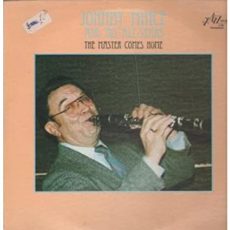
Johnny Mince, born John Muenzenberger on July 8, 1912 in Chicago Heights, Illinois played with Joe Haymes from 1929 to 1934. He recorded with Red Norvo and Glenn Miller in 1935. Working with Ray Noble from 1935-37 and Bob Crosby in 1936 he went on to become a member of the Tommy Dorsey Orchestra in 1937.
Mince played with Dorsey through 1941 and was one of the participants in his Clambake Seven recordings before entering the military. After an extended stint to the end of World War II, he became a studio musician for several decades. He taught locally in New York City and played in small-time ensembles in the 1950s and 1960s.
1974 saw Johnny returning to play with the Dorsey Orchestra after Tommy’s death, then followed this engagement with the New Paul Whiteman Orchestra in 1976, Yank Lawson, Bob Haggart, and the World’s Greatest Jazz Band. As a member of the Great Eight, he toured Europe in 1983. He continued to play at jazz revival festivals until his retirement due to ill health.
He recorded as a leader only late in his life, for Monmouth Evergreen in 1979, Jazzology Records in 1980, and Fat Cat Jazz in 1982. Never receiving much recognition beyond that of his fellow musicians, he did not lead his own band. As an unknown musician, Tommy Dorsey invited him to become his partner in starting his first band but Johnny’s father talked him out of it due to risk. Clarinetist Johnny Mince passed away on December 23, 1994 in Boca Raton, Florida.
More Posts: clarinet,history,instrumental,jazz,music
Daily Dose Of Jazz…
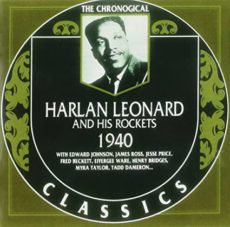
Harlan Leonard was born on July 2, 1905 in Kansas City, Missouri. He started his career in the Territory Band of George E. Lee in 1923, then moved to Benny Moten in 1924 and joined Thamon Hayes ‘ Kansas City Rockets in 1931 with several other musicians from the band. Disbanded in 1934, they formed the basis of the new Moten Orchestra. After Moten’s death in 1935, Leonard founded his own group, bringing several Moten musicians which became Harlan Leonard and his Rockets, and soon was one of the most famous bands in Kansas City.
After Count Basie’s departure for new YorkCity, he and Jay McShann were the strongest rivals. When the first Leonard band fell apart in 1936, he then took over the musicians of the Jimmy Keith band in 1937/38. In 1938 the young Charlie Parker also belonged to the band for five weeks but was dismissed because of unreliability.
In Chicago, Illinois in 1940, the band along with singer Myra Taylor recorded sessions for Victor Records. Returning to Kansas City in 1941, they toured the Midwest, then went to New York City but were unsuccessful so they returned home. Early 1943 Leonard went on a West Coast tour, playing one-nighters and a year engagement in Los Angeles, California.
After the band’s disbandment, Leonard remained in the Los Angeles area, performing occasionally in local clubs until retiring from the music business and working for the Internal Revenue Service.
Clarinetist, saxophonist, and Swing bandleader Harlan Leonard, who was one of the leaders of Kansas City Jazz with Jay McShann, and one of the links between the swing and the subsequent bebop, passed away on November 10, 1983.
More Posts: bandleader,clarinet,history,instrumental,jazz,saxophone
Daily Dose Of Jazz…
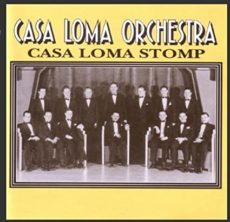
Grady Watts was born in Texarkana, Texas on June 30, 1908 and after attending the Allen Military Academy and the University of Oklahoma, he played in local jazz bands in Louisiana during the late 1920s. By 1931 he had joined the Casa Loma Orchestra, where he became a featured soloist and a composer.
Grady recorded copiously with the ensemble and remained with it until 1942. Among his compositions for the Orchestra was Rhythm Man, You Ain’t Been Livin’ Right, I Remember, and Touch and Go.
The mid-1940s saw Watts abandoning his full-time career as a performer and took jobs in artist & repertoire and as an executive in the chemical engineering industry. Trumpeter and composer Grady Watts passed away in Vero Beach, Florida in January 1986.

More Posts: composer,history,instrumental,jazz,music,trumpet