

Daily Dose Of Jazz…
Joe “Fox” Smith was born Joseph Emory Smith on June 28, 1902 in Ripley, Ohio into a family of musicians. His father was a bandleader and his six brothers played trumpet or trombone.
Known throughout his childhood as “Toots”, he originally started as a drummer but was convinced by Ethel Waters that he was a far better trumpeter. By the time he reached New York in 1920, he had his own style, which achieved “the vocalized sound, the blues spirit, and the swing.
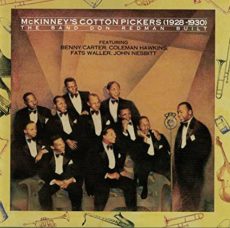
In 1921, Smith joined the Black Swan Jazz Masters in Chicago, Illinois directed at the time by Fletcher Henderson. He went on to work with the Jazz Hounds, the Broadway Syncopators, and finally with McKinney’s Cotton Pickers throughout the 1920s. He became famous from his work accompanying Bessie Smith, recording over 30 records. Some of the other artists he worked with include Billy Paige, Noble Sissle, Eubie Blake, and Allie Ross.
Trumpeter and cornetist Joe “Fox” Smith passed away from complications related to tuberculosis on December 2, 1937 in a Central Islip, New York asylum.
Daily Dose Of Jazz…
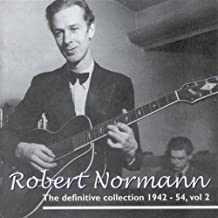
Robert Uno Normann was born on June 27, 1916 in Borge, Østfold, Norway. An autodidact performer on the banjo, accordion and tenor saxophone, he would eventually make the guitar as his main instrument. He was one of the swing era’s most sought after guitar soloists in Norway and was also a pioneer of the electric guitar.
He began his musical career as a wandering street and backyard musician at age 12 and became a professional musician in 1937. As a part of the Oslo jazz scene, he performed in several swing jazz groups, Freddy Valier, String Swing, and Gunnar Due. He simultaneously led his own quartet. During this period he played tenor saxophone with the Pete Brown Big Band from 1945 and various random jazz groups such as Frank Ottersen, and Willy Andresen. He got several career offers from international artists, including from Benny Goodman and Barney Kessel, that he turned down.
He never listened to recordings by Django Reinhardt but got his inspiration from listening to Teddy Wilson and Leon Chu Berry, and various accordionists. From 1955, he was less active in the jazz context because of significant alcohol problems. As a studio musician, Robert participated in close to 1300 productions, composed music to multiple folk texts, film, theater, and small pieces of music inspired by jazz and traditional Norwegian folk music.
Normann retired as an active musician in 1982 and devoted his time to small scale farming and inventions. Guitarist and jazz guitar pioneer Robert Normann, who made his first electric guitar in 1939 by constructing a pickup of copper wire, magnets and pitch stolen from public phones, passed away at the age of 81 on May 20, 1998 in Kvastebyen, Sarpsborg, Østfold, Norway.
More Posts: accordion,bandleader,banjo,guitar,history,instrumental,jazz,music,tenor saxophone
Daily Dose Of Jazz…
Philip L. Bodner was born June 13, 1917 in Waterbury, Connecticut and played in the Forties and 1950s as a sideman for studio recordings in New York City. He played on jazz sessions with Benny Goodman, with Miles Davis and Gil Evans in 1958.
Organizing The Brass Ring, a group modeled after Herb Alpert, in the mid-1960s they had popular success. Bodner also played with Oliver Nelson and J.J. Johnson during that decade. His associations in the 1970s included Oscar Peterson, Yusef Lateef, Peanuts Hucko, Wild Bill Davison, Ralph Sutton and he also played the signature piccolo part on the disco hit The Hustle by Van McCoy. Other work in the 1970s included playing with Ralph Sutton and Johnny Varro, working with Mingus Epitaph, and arranging Louie Bellson’s tribute to Duke Ellington’s Black, Brown and Beige.
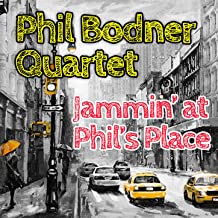
The 1980s saw him working in a swing style with Marty Napoleon, Mel Lewis, George Duvivier, Maxine Sullivan, and Barbara Carroll. He released an album under his own name, Jammin’ at Phil’s Place, on Jazzmania Records in 1990, with Milt Hinton, Bobby Rosengarden, and Derek Smith as sidemen.
Multi-instrumentalist and studio musician Philip Bodner, active in jazz and popular music idioms. Best known as a reedist, he played clarinet, saxophone, oboe, English horn, piccolo, flute, conductor and arranger passed away on February 24, 2008 at age 90 in New York City.
More Posts: clarinet,english horn,flute,history,instrumental,jazz,music,oboe,piccolo,saxophone
Daily Dose Of Jazz…
Rubin “Zeke” Zarchy was born on June 12, 1915 in New York City. He first learned the violin, but after a stint as a bugler with his Boy Scout troop, he switched permanently to trumpet while in his early teens.
In 1935 Zarchy was working with the Joe Haymes Orchestra, followed by Benny Goodman, and then Artie Shaw. He went on to work through the end of the decade with Bob Crosby and Red Norvo, Tommy Dorsey, and Glenn Miller.
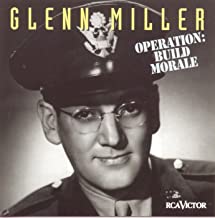
Between 1942 and 1945 he played in US Army bands: he was part of what became Miller’s Army Air Force Band (officially, the 418th Army Band), playing lead trumpet as Master First Sergeant. Zeke’s trumpet can be heard on recordings as Benny Goodman’s Bugle Call Rag, Glenn Miller’s Moonlight Cocktail, and Bob Crosby’s South Rampart Street Parade.
After the war, Frank Sinatra invited Zarchy to move to Los Angeles, California where he became a first-call studio musician. He played on numerous recordings, including those led by Boyd Raeburn, Jerry Gray, Sarah Vaughan, and Frank Capp. He appeared in film in The Glenn Miller Story in 1954.
During the 1960s and 1970s, Zeke played in the CBS house bands of several television variety shows, including The Smothers Brothers Comedy Hour, The Danny Kaye Show and The Jonathan Winters Show, and was a member of the NBC Staff Orchestras in New York and Los Angeles.
In his later years, he made many music tours of Europe, South America, and Australia, as well as thirty-two concert trips to Japan. He tutored several young trumpet players who became successful performers and studio musicians. Trumpeter Zeke Zarchy passed away in Irvine, California, on April 11, 2009.
More Posts: history,instrumental,jazz,music,trumpet
Daily Dose Of Jazz…
Glenn Gray Knoblauch was born on June 7, 1900 in Metamora, Illinois. Known professionally as Glen Gray, his father was a saloon keeper and railroad worker who died when he was two years of age. Along with an older sister, his widowed mother remarried a coal miner and moved her family to Roanoke. He went on to graduate from Roanoke High School, in 1917 where he played basketball and acquired his nickname, Spike.
Glen attended the American Conservatory of Music in 1921 but left during his first year to go to Peoria, Illinois, to play with George Haschert’s orchestra. From 1924 to 1929, he played with several orchestras in Detroit, Michigan.
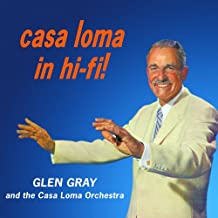
In 1956, he went back into the studio to record the first of what became a series of LPs for Capitol Records, which recreated the sounds of the big band era in stereo. Casa Loma in Hi-Fi was the result, with 14 high-fidelity recordings.
Swing saxophonist Glen Gray passed away from lymphoma on August 23, 1963 in Plymouth, Massachusetts aged 63.
More Posts: bandleader,history,instrumental,jazz,saxophone