

Daily Dose Of Jazz…
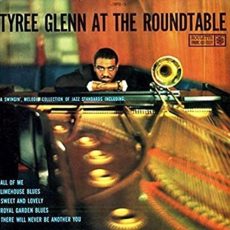
Tyree Glenn was born William Tyree Glenn on November 23, 1912 in Corsicana, Texas. He played trombone and vibraphone with local Texas bands before moving to Washington, D.C. in the early Thirties. He performed with several prominent bands of the Swing Era, playing with Bob Young and Tommy Myles before moving to the West Coast.
While he was living out West, Tyree first played with groups headed by Charlie Echols followed by Eddie Barefield, Eddie Mallory and Benny Carter. By the end of the decade from 1939 to 1946 he played with Cab Calloway. He toured around Europe with Don Redman’s big band in 1946, then joined Duke Ellington until 1951 as a wah-wah trombonist in the Tricky Sam Nanton tradition and Ellington’s only vibraphonist, being well-featured on the Liberian Suite. After his time with Ellington he played with Howard Biggs’s Orchestra.
During the 1950s, Glenn did studiowork, led his quartet at the Embers, did some television, radio and acting work, and freelanced in swing and Dixieland bands. In 1953 he joined Jack Sterling’s New York daily radio show, with which he remained until 1963. During 1965–68, he toured the world with Louis Armstrong’s All-Stars, staying with the group until Armstrong passed in 1971.
He would go on to record with Louis Bellson, Gene Krupa, Buck Clayton, Clark Terry and during his last few years he led his own group, recording seven albums. Trombonist Tyree Glenn, was also a studio musician, actor and composer who penned Sultry Serenade, which was recorded by Duke Ellington and Erroll Garner, moved to Englewood, New Jersey where he passed away from cancer on May 18, 1974.
More Posts: trombone
Daily Dose Of Jazz…
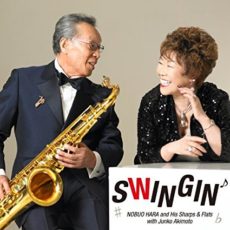
Nobuo Tsukahara, better known as Nobuo Hara was born November 19, 1926 in Toyama, Japan. He played in a military band during World War II and in a Tokyo officer’s club after the war. Realizing classical music was not going to pay a living wage he ventured into jazz and joined the ensemble Sharps and Flats, taking leadership in 1952, a position he held for over six decades. This band helped to make jazz popular in Japan after WWII and they recorded copiously as well as appearing at the Newport Jazz Festival in 1967.
In 2007 at 80 years old he still the led Nobuo Hara and His Sharps and Flats, the 17-piece big band. Sharps and Flats have accompanied Chiemi Eri and included sidemen such as Norio Maeda, Shotaro Moriyasu, and Akitoshi Igarashi. Noted for their sweet rhythms and their swing they have continued to mesmerize audiences even today.
He has performed and/or recorded with Quincy Jones, Count Basie, Miles Davis, Sammy Davis Jr., Perry Como, Henry Mancini, Silvie Vartan, Nat King Cole, Yves Montand, Sarah Vaughan, Diana Ross, and the list goes on and on.
Saxophonist Nobuo Hara passed away from pneumonia on June 21, 2021 in Tokyo, Japan

More Posts: saxophone
Daily Dose Of Jazz…
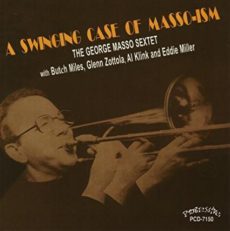
George Masso was born November 17, 1926 in Cranston, Rhode Island. Most notable for his work from 1948 to 1950 as a member of the Jimmy Dorsey band, but finding the life of a professional jazz musician financially difficult, Masso quit performing following his work with Dorsey and began teaching.
Returning to music in 1973, George recorded and/or performed with Bobby Hackett and Benny Goodman. In 1975 he became member of the World’s Greatest Jazz Band and by the late 1980s and early 1990s, he had recorded with George Shearing, Barbara Lea, Ken Peplowski, Scott hamilton, Warren Vache, Bobby Rosengarden, Woody Herman, Spike Robinson, Bob Haggart, Totti Bergh, Harry Allen and Yank Lawson.
He recorded numerous albums leading sessions on the Sackville, Nagel-Heyer, Arbors, Famous Door, World Jazz and Dreamstreet labels over the course of his career. Trombonist, bandleader, vibraphonist, and composer George Masso, who specialized in swing and Dixieland, rarely performs at 90 years old.

More Posts: trombone,vibraphone
Daily Dose Of jazz…
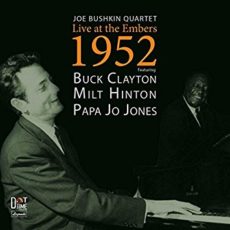
Joe Bushkin was born on November 7, 1916 in New York City and began his career playing trumpet and piano with New York City dance bands. He acquired a lot of experience performing with Frank LaMare’s Band at the Roseland Ballroom in Brooklyn, New York.
In 1935 he joined Bunny Berigan’s band, played with Eddie Condon from 1936 to 1937, and with Max Kaminsky and Joe Marsala, before rejoining Berigan in 1938. He then left to join Muggsy Spanier’s Ragtime Band in 1939. From the late Thirties through to the late 1940s he also recorded with Eddie Condon as well as performing on radio and television. After his World War II service he worked with Louis Armstrong, Bud Freeman and Benny Goodman.
Best-known for his composition Oh! Look at Me Now with John DeVries, composed when he was working in Tommy Dorsey’s band. The song would become Frank Sinatra’s first hit. In his 60s, Bushkin’s semi-retirement was ended by an offer from Bing Crosby for them to tour together in 1976 and 1977. He also appeared on Crosby’s 1975 Christmas TV special with Fred Astaire, performed in a concert series at New York’s St. Regis Hotel in 1984 that celebrated his 50 years in show business.
Pianist Joe Bushkin passed away in Santa Barbara, California on November 3, 2004, three days shy of his 88th birthday, which he had dreamed of celebrating the 88 piano keys.

More Posts: piano
Daily Dose Of Jazz…
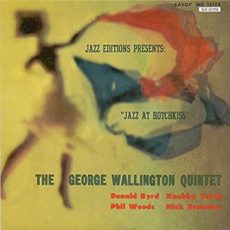
George Wallington was born Giacinto Figlia on October 27, 1924 in Palermo, Sicily and then moved to New York City with his family in 1925. His father sang opera and introduced his son to classical music, but Wallington listened to jazz after hearing the music of saxophonist Lester Young. Acquiring the name Wallington in high school by the neighborhood kids for his flashy clothes, he left school at the age of 15 to play piano in the city.
From 1943 to 1953 Wallington played with Dizzy Gillespie, Joe Marsala, Charlie Parker, Serge Chaloff, Allan Eager, Kai Winding, Terry Gibbs, Brew Moore, Al Cohn, Gerry Mulligan, Zoot Sims, and Red Rodney. He recorded as a leader for Savoy and Blue Note in 1950, toured Europe in 1953 with Lionel Hampton’s big band and in 1954-60 he led bands in New York City that contained rising musicians including Donald Byrd, Jackie McLean and Phil Woods. During this period he recorded as leader with these musicians for the Prestige and Atlantic labels.
1960 saw George leaving music and moving to Florida to work in the family air conditioning business. He cited the stress of endless touring as the reason, however, he returned to music in 1984 and recorded three albums. He also performed at the 1985 Kool Jazz Festival in New York.
Pianist and composer George Wallington, whose best-known compositions are Lemon Drop, and Godchild, passed away in Cape Coral, Miami, Florida on February 15, 1993.
More Posts: piano